
Pruning
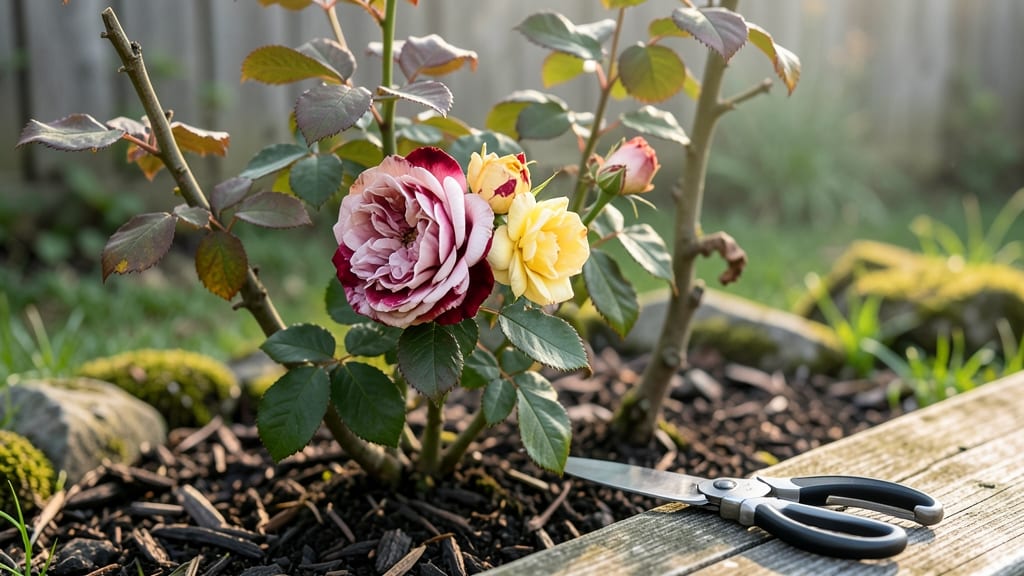
Pruning roses after flowering isn't just cleanup—it’s the secret to next year’s shockingly lush blooms. 🌹 I learned this the hard way when my roses turned into skinny, leggy sticks after years of half-hearted cuts.
The right timing and technique make all the difference, whether you’re in a cold-zone winter or a mild coastal climate.
Most gardeners wait until late fall or early spring, but the exact moment depends on your region. In colder zones, prune after the first hard frost to protect fresh cuts from freezing. Warmer climates can handle it in late winter—just avoid pruning when new growth starts.
Grab sharp pruners, disinfect them with rubbing alcohol, and you’re ready to shape those canes for stronger stems and more flowers.
What you’ll end up with is roses that bounce back twice as fast, with thicker canes and buds forming right where you made your cuts. The key is cutting at a 45-degree angle just above an outward-facing bud—this encourages growth away from the center, preventing crowded stems.
Plus, you’ll reduce disease risk by removing dead wood and improving airflow.
This method works for hybrid teas, floribundas, and shrub roses alike. The only real mistake? Pruning too late in spring or cutting into old wood without a bud. Let’s get those canes looking sharp for a showstopping next season.
📚 In This Guide
- What you need
- Instructions
- Tips and common mistakes
- Wrapping up and next steps
What you need
- ● Bypass pruners: A sharp, high-quality pair (e.g., Felco or Corona) for clean cuts on stems up to ½ inch thick. Invest in ergonomic handles to reduce hand fatigue.
- ● Loppers: Bypass or anvil-type (with a sharp blade) for thicker stems (½ to 1½ inches). Look for long handles (18–24 inches) for leverage.
- ● Pruning saw: A curved or straight-bladed saw for stems thicker than 1½ inches. Replace blades when dull to avoid tearing wood.
- ● Gloves: Heavy-duty, thorn-proof gloves (e.g., Mechanix or rose-specific designs) to protect your hands from scratches and bacteria.
- ● Disinfectant (70% isopropyl alcohol or bleach solution): Clean tools between cuts to prevent disease spread. 1 part bleach to 9 parts water works well.
- ● Rubbing alcohol wipes: For quick tool disinfection on the go.
- ● Pruning sealant: (e.g., Tanglefoot or tree paint) to seal large cuts—only needed for diseased or damaged wood.
- ● Work apron or bandana: To keep debris and thorns off your clothes.
- ● Knee pads: For comfort if you’re pruning low-growing or sprawling roses.
- ● Weather: Choose a dry, overcast day to avoid stressing the plant. Early morning or late afternoon is ideal.
- ● Safety gear: Safety glasses (to shield from debris) and closed-toe shoes.
- ● Cleanup supplies: A bucket or bag for clippings (compost them later!) and a small broom to sweep up debris.
Step-by-Step guide to pruning roses after they bloom
Here's how to refresh your roses for stronger blooms next season—without cutting back too much.
🌿 Step 1: Wait Until After the Final Bloom Cycle
Don't prune until after all blooms have faded and died back naturally. This ensures you're not removing next year's flower buds hidden in the stems. If you prune too early, you risk cutting off dormant buds that would have produced next season's blooms.
Watch for dead, brown flower heads—this is your signal. I wait until late summer or early fall in most climates, but if you're in a warm zone where roses bloom later, hold off until after the first frost or when new growth slows dramatically.
✂️ Step 2: Remove Dead, Diseased, or Weak Canes
Start by cutting out any canes that are dead, diseased, or crossing others. Use clean, sharp pruners to make 45-degree cuts just above an outward-facing bud. This prevents water from pooling and causing rot.
Look for blackened, mushy stems or canes with peeling bark—these are gone. Also remove any canes thinner than a pencil, as they won’t produce strong blooms. I like to bundle the removed canes and dispose of them in the trash, not the compost, to avoid spreading disease.
🌱 Step 3: Thin Out Crowded Canes for Better Airflow
Roses need room to breathe, so aim to leave 3-5 strong, healthy canes per bush. If your rose has more, select the thickest, straightest canes and cut the rest back to the ground. This encourages stronger growth from the remaining stems.
You’ll know you’ve thinned enough when sunlight can reach the center of the bush without obstruction. If you leave too many canes, they’ll compete for nutrients, leading to weak blooms. I always step back and squint at the bush—if it looks dense, it’s time to prune more.
⏰ Step 4: Shape the Bush and Encourage Next Year’s Blooms
Now, shape the remaining canes by cutting back one-third to one-half of their length. Make cuts just above an outward-facing bud to encourage new growth that will bloom next season. Avoid leaving stubs—always cut cleanly above a bud.
For climbing roses, prune by shortening last year’s growth to 2-3 feet from the ground, leaving 3-5 strong canes to support next year’s blooms. The goal is to open up the center of the bush so air circulates and diseases like black spot can’t take hold.
Tips & tricks for pruning roses after flowering
Here’s what I’ve learned after years of pruning roses—these tricks will help you avoid common mistakes and get the best results for next season’s blooms.
Timing is Everything: The most critical part of Step 1 is waiting for all blooms to fully fade and turn brown. I’ve made the mistake of pruning too early, only to realize later that I’d accidentally cut off next year’s flower buds. If you’re unsure, wait until after the first frost in your area—it’s a foolproof signal that the growing season is winding down. For warm climates, look for new growth to slow dramatically before pruning.
Tool Prep Makes All the Difference: Before you start Step 2, take 5 minutes to clean and sharpen your pruners. I use rubbing alcohol on a cloth to wipe down the blades and then sharpen them on a fine stone. Dull blades crush stems instead of making clean cuts, which can damage the plant and invite disease. Also, disinfect your tools with a 10% bleach solution between cuts if you’re working with diseased canes.
Visual Cues for Pruning Success: In Step 3, when thinning canes, step back and squint at your bush—this helps you see density more clearly. You want sunlight to reach the center, so if you can’t see light penetrating, you’ve still got work to do. For Step 4, when shaping, imagine a golf ball on top of each bud you’re cutting above. The cut should be just below that imaginary ball to ensure new growth emerges outward, not inward.
Climbing Roses Need Special Attention: For climbing roses mentioned in Step 4, focus on shortening last year’s growth to 2-3 feet from the ground. This might feel drastic, but it’s essential for encouraging strong, new growth that will support next year’s blooms. I’ve seen climbers produce stunning flowers after this kind of aggressive pruning—it’s worth the initial shock to the plant!
Pro Tips for Pruning Roses After Flowering
- Here’s what I’ve learned after years of pruning roses—these tricks will help you avoid common mistakes and get the be...
- Timing is Everything: The most critical part of Step 1 is waiting for all blooms to fully fade and turn brown. I’ve m...
- Tool Prep Makes All the Difference: Before you start Step 2, take 5 minutes to clean and sharpen your pruners. I use ...
Frequently asked questions
Got questions about pruning roses after they’ve bloomed? You’re not alone! Here are some of the most common concerns—and straightforward answers—to help you prune like a pro.
When is the exact best time to prune roses after flowering?
Prune 4–6 weeks after the last bloom of the season (late summer to early fall in most climates). This gives your roses time to recover before winter dormancy. For repeat-blooming varieties, a light trim after each flush of flowers keeps them tidy and encourages more blooms!
What if I missed the window—can I still prune in fall?
Yes, but lightly! Avoid heavy pruning after early October in colder zones, as new growth won’t harden off before frost. Focus on removing dead/diseased canes and shaping. In mild climates, a minimal trim in late fall is fine—but prioritize cleanup over aggressive cuts.
Do I need to sterilize my pruners between cuts?
Absolutely!
Sterilizing with rubbing alcohol (70%+) or a 10% bleach solution prevents spreading fungal diseases (like black spot) from cut to cut. Wipe blades before and after each rose—and between different plants. Think of it like hand-washing for your tools!
Will pruning too late stunt next year’s blooms?
Pruning too late (after early fall) can stress roses, leading to weaker growth or fewer blooms next season. Late cuts also leave canes vulnerable to winter damage. Stick to the 4–6 week rule, and your roses will reward you with bigger, healthier blooms in spring!
What’s the difference between pruning hybrid teas vs. shrub roses?
| Hybrid Teas | Shrub Roses |
|---|---|
| Prune back to outer bud (45° angle) to encourage upward growth and large blooms. | Prune to strong outward-facing buds for bushier shape and more flowers. |
| Remove 1/3 of last year’s growth to rejuvenate. | Lightly thin old wood (3–5 years) to improve air circulation. |
| Goal: Long, single stems with dramatic blooms. | Goal: Full, rounded shape with continuous blooms. |
Pro tip: Shrub roses are more forgiving—don’t stress over perfection!
Wrapping up and next steps
Pruning roses after flowering isn’t just about tidying up—it’s an investment in next year’s showstopping blooms! 🌹 With the right tools, timing, and technique, you’ll keep your roses healthy, vigorous, and ready to thrive.
Now that you’re armed with knowledge, there’s only one step left: roll up your sleeves and get pruning!
Start with just a few stems to build confidence, then expand as you gain comfort. Before you know it, your garden will be bursting with lush, vibrant roses—and you’ll be the proud gardener who made it happen. Happy pruning! 🌿