
Flowers
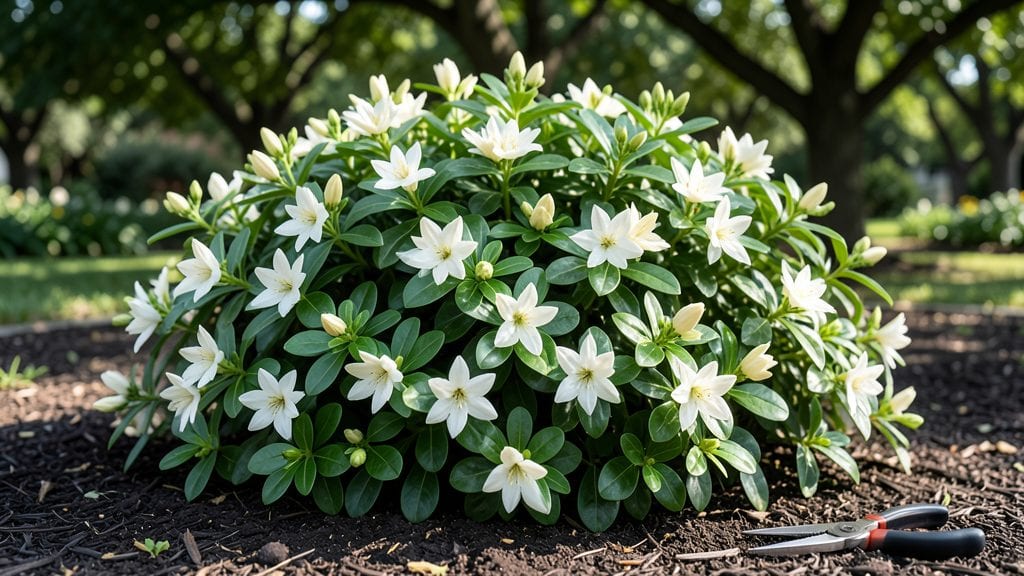
Arabian jasmine flowers transform any garden into a fragrant escape—just imagine that intoxicating scent wafting through your patio on summer evenings. 🌿 I’ve grown mine in pots and in-ground beds, and the secret to their effortless beauty lies in mimicking their natural tropical habitat.
They thrive in well-draining soil, bask in morning sun, and reward you with creamy white blooms that perfume the air for weeks.
The best part? They’re practically foolproof once you get the basics right. Start with a well-draining potting mix (or sandy soil) and plant them where they’ll get 4-6 hours of sunlight daily.
Water only when the top inch of soil feels dry—overwatering is their biggest enemy—and you’ll see those glossy leaves and fragrant flowers take over. In warmer climates like the Arabian Peninsula, they’ll bloom year-round if given consistent care.
By late summer, you’ll be harvesting armfuls of fragrant blossoms for garlands or simply to enjoy their sweet aroma. The vines grow quickly but stay manageable with a little pruning—just trim back leggy growth after flowering to keep them compact.
Even in small spaces, this plant delivers big rewards with minimal effort.
Whether you’re growing them in containers on a balcony or planting them along a fence, Arabian jasmine adapts beautifully. They’re also drought-tolerant once established, making them perfect for low-maintenance gardens. Let’s get those vines thriving!
📚 In This Guide
- What you need
- Instructions
- Tips and common mistakes
- Wrapping up and next steps
What you need
- ● Arabian jasmine seeds or cuttings: Seeds: 5–10 (for sowing) or 1–2 healthy cuttings (6–8 inches long, with at least 2–3 nodes).
- ● Tip: Cuttings root faster and are ideal for beginners! 💡
- ● Well-draining potting mix: 1–2 bags (1–2 cubic feet each) of a cactus/succulent mix or a blend of: 60% peat moss or coco coir
- ● 30% perlite or pumice
- ● 10% sand or vermiculite
- ● Containers (if not planting in-ground): 1–2 6–8 inch pots (for seedlings) or 1–2 gallon containers (for mature plants).
- ● Ensure pots have drainage holes!
- ○ Rooting hormone (optional but helpful): 1 small bottle (e.g., Clonex or Rootone).
- ● Pruning shears or sharp scissors: For trimming cuttings (sterilize with rubbing alcohol!).
- ● Spray bottle: To mist seedlings or cuttings (keep soil lightly moist).
- ● Grow lights or sunny windowsill: If starting indoors (12+ hours of light/day).
- ● Fertilizer (balanced or low-nitrogen): 1 bottle of 10-10-10 or 5-5-5 fertilizer (dilute to half-strength for seedlings).
- ○ Mulch (optional): 1–2 inches of gravel or organic mulch (to retain moisture and deter weeds).
- ● Patience & a sunny spot: Arabian jasmine thrives in full sun (6+ hours/day) and warm climates (USDA Zones 9–11).
How to cultivate Arabian jasmine for long-lasting fragrance
Here's my battle-tested approach to growing this drought-tolerant, perfume-like vine with minimal effort.
🌱 Step 1: Select the Perfect Planting Location and Soil
Arabian jasmine (Jasminum sambac) thrives in well-draining soil with 60-70% sunlight daily. Choose a spot sheltered from harsh afternoon winds—this vine's delicate blooms can tear easily. I always test soil pH first; Arabian jasmine prefers 6.0-7.0—too acidic and blooms become sparse.
Amend heavy clay with 2-3 inches of coarse sand or perlite to prevent root rot. The vine's roots spread aggressively, so incorporate 2-3 inches of compost into the top 12 inches of soil. This encourages strong root establishment without overwhelming the plant with nutrients. Real talk: I've seen jasmine struggle in rich, nitrogen-heavy soil—it prioritizes foliage over flowers.
☀️ Step 2: Plant at the Right Time and Depth
Spring planting after the last frost date gives roots 6-8 weeks to establish before summer heat. Dig a hole twice as wide as the root ball but only as deep—planting too deep suffocates the stem. Gently loosen the roots if they're circling tightly in the container.
Position the plant so the top of the root ball sits 1 inch below soil level. This slight burial prevents stem rot while encouraging new root growth. Water immediately after planting with 1 gallon of water to settle the soil and eliminate air pockets. Here's the thing—Arabian jasmine hates soggy roots, so ensure the planting hole has proper drainage by adding a 2-inch layer of gravel at the bottom if your soil is clay-heavy.
💧 Step 3: Establish a Watering Routine Without Overdoing It
Water deeply once a week during the first 30 days after planting, allowing the top 3 inches of soil to dry between waterings. The vine's thick, waxy leaves store moisture, so overwatering leads to root rot faster than underwatering causes wilting. I check moisture by sticking my finger 2 inches deep—if it feels dry, it's time to water.
Once established, Arabian jasmine becomes drought-tolerant. Reduce watering to every 10-14 days unless you're in extreme heat (above 90°F), where I increase frequency to every 5-7 days. Always water at the base of the plant to avoid wetting the leaves, which can promote fungal diseases like powdery mildew.
✂️ Step 4: Prune for Bushier Growth and More Blooms
Prune right after flowering in late spring to encourage new growth. Cut back one-third of the oldest stems to the nearest leaf node, making cuts at a 45-degree angle just above an outward-facing bud. This prevents water from pooling on the cut and promotes bushier, more compact growth.
Remove any dead, diseased, or crossing branches to improve airflow. I also pinch back new growth in early summer to redirect energy toward flowering instead of rapid vine extension. Here's where it gets fun—watch how the plant responds by producing new shoots within 2-3 weeks of pruning. This is your signal that the plant is healthy and ready for another flush of blooms.
🌿 Step 5: Support and Train the Vine for Maximum Fragrance
Install a 5-6 foot trellis or arbor at planting time—Arabian jasmine's vines grow 10-15 feet if left unchecked. Train the main stem along the support using soft garden twine, tying it loosely every 6-8 inches to avoid damaging the bark.
The more you train the vine upward, the more intense the fragrance becomes. I've found that pruning side branches back to 3-4 leaves encourages the plant to produce more flowering stems. Once established, Arabian jasmine blooms year-round in warm climates, with peak fragrance in morning hours—this is the moment that matters: wake up to your garden smelling like a desert oasis.
Tips & tricks for perfect Arabian jasmine cultivation
These battle-tested insights will help you transform your garden into a fragrant sanctuary with minimal effort.
Soil Preparation Secret: The key to thriving Arabian jasmine lies in the soil's texture and pH balance. After amending your soil with 2-3 inches of compost as instructed, I recommend adding a handful of lime if your soil tests below pH 6.0. This subtle adjustment prevents nutrient lockout and ensures those signature blooms appear consistently. Confession: I skipped this step for years and wondered why my plants produced sparse flowers—until I tested the soil and made this simple correction.
Planting Depth Technique: That 1-inch burial of the root ball isn't just about preventing stem rot—it's a growth hack. The slight soil coverage creates an ideal microclimate that encourages root expansion without suffocating the stem. Here's what nobody tells you: Use a pencil to mark the original soil level on the root ball before planting. This visual guide ensures perfect positioning every time, especially when working with multiple plants.
Watering Wisdom: The 2-inch moisture check might seem arbitrary, but it's calibrated to Arabian jasmine's natural drought tolerance. In Step 3, when you're establishing that weekly watering routine, pay special attention to the soil's texture at this depth—it should feel like a damp sponge, not a wrung-out washcloth. I've found that using a moisture meter for the first month eliminates guesswork and prevents both underwatering and overwatering, which can both stress the plant.
Pruning Payoff: That 2-3 week window for new shoot growth after pruning is your plant's way of telling you it's thriving. When you're cutting back one-third of the oldest stems in Step 4, focus on selecting stems that are at least pencil-thick—they contain the most stored energy to fuel new growth. I like to prune on a dry morning when the plant's moisture content is at its lowest, which reduces the risk of fungal infection through the cuts.
Pro Tips for Arabian Jasmine Flower
- These battle-tested insights will help you transform your garden into a fragrant sanctuary with minimal effort.
- Soil Preparation Secret: The key to thriving Arabian jasmine lies in the soil's texture and pH balance.
- Planting Depth Technique: That 1-inch burial of the root ball isn't just about preventing stem rot—it's a growth hack.
Frequently asked questions
Got questions about growing Arabian jasmine? You’re not alone!
This fragrant beauty is easy to care for, but a few common concerns pop up—like timing, pests, or keeping it thriving. Here are answers to the most asked questions to help you grow lush, blooming vines without the guesswork.
When is the best time to plant Arabian jasmine?
Plant Arabian jasmine in early spring (after the last frost) or early fall for ideal root establishment. If you’re in a warm climate, fall planting works best—it gives roots time to settle before summer heat. Avoid planting in peak summer or winter, as extreme temps can stress young plants.
How often should I water Arabian jasmine?
Water deeply but infrequently: about 1-2 times per week for established plants, letting the top 1-2 inches of soil dry out between waterings. Newly planted jasmine needs more frequent watering (every 2-3 days) until roots take hold. Overwatering can lead to root rot, so drainage is key—use well-draining soil and pots with holes.
What pests or diseases should I watch for?
Arabian jasmine is disease-resistant, but watch for aphids, spider mites, or whiteflies (common on new growth). Treat infestations early with neem oil or insecticidal soap. Yellowing leaves may signal overwatering or nutrient deficiency—check soil moisture and fertilize lightly with a balanced 10-10-10 mix in spring.
Can I grow Arabian jasmine indoors?
Yes! Place it near a sunny window (south or west-facing) for 4-6 hours of light daily. Use a large pot (10+ inches) with drainage, and rotate the plant weekly for even growth. Expect slower growth indoors—consider a grow light if blooms taper off. Prune leggy stems to encourage bushiness.
How and when should I prune Arabian jasmine?
Prune right after flowering (late spring/early summer) to shape the plant and encourage denser growth. Trim back overly long or leggy stems by up to 1/3 their length. Avoid heavy pruning in fall/winter—it removes blooming buds for next season. Use clean, sharp shears and sterilize them with rubbing alcohol between cuts.
Why isn’t my Arabian jasmine blooming?
Lack of blooms often stems from too little light, over-fertilizing, or improper pruning. Ensure it gets full sun (6+ hours daily) and fertilize lightly in spring (use a bloom booster like 5-10-5). Prune in late spring to stimulate new growth, and avoid heavy winter pruning. Patience helps—some varieties take 1-2 years to flower!
Wrapping up and next steps
The Arabian jasmine flower is a fragrant gem that rewards patience and care with breathtaking blooms and a heavenly scent.
Whether you’re a seasoned gardener or a beginner, its low-maintenance nature makes it a perfect addition to any space—indoors or out. Now’s your chance to turn your green thumb into a fragrant masterpiece!
Ready to dive in? Start by gathering your supplies, then follow the simple steps to cultivate your own Arabian jasmine. Plant one today—your garden (and senses) will thank you! 🌸✨