
Companion Plants
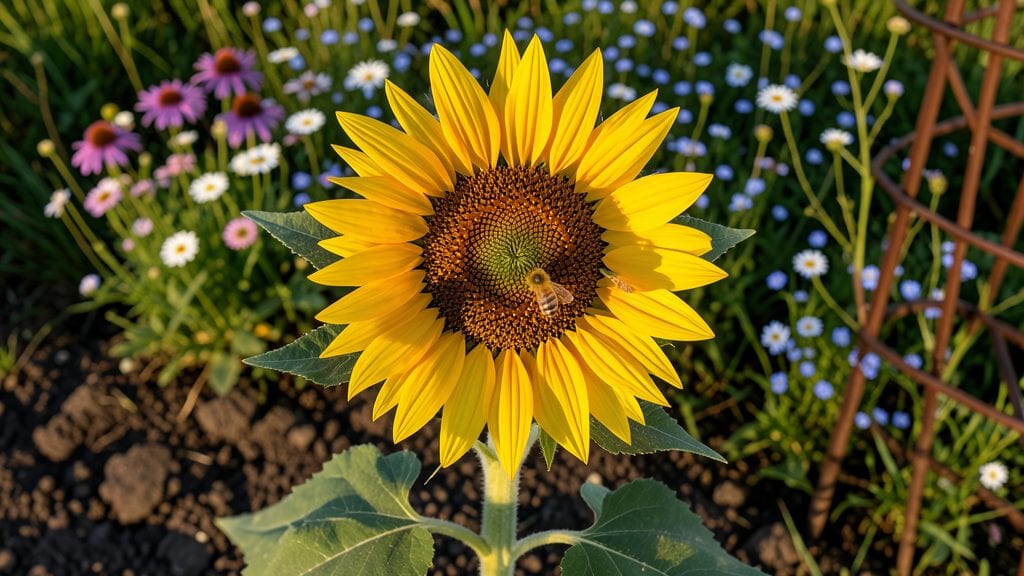
The busy bee sunflower isn’t just a towering summer star—it’s a pollinator powerhouse that turns your garden into a bee buffet. 🌻 I planted a patch last year, and within days, bees were buzzing like they'd never seen a snack before.
The key? Pairing them with the right companions to stretch that nectar feast from early spring through frost.
Start with tall varieties like 'Mammoth' for late-season bees and short varieties like 'Teddy Bear' for early blooms. Add basil, borage, and lavender around the base—they repel pests while keeping bees coming back.
Place them where they'll get 6+ hours of sun, but keep an eye on spacing to avoid shade wars.
By mid-July, your sunflowers will be the centerpiece, but the real magic happens when goldenrod, coneflowers, and asters take over as the sunflowers fade. Bees will never leave, and your garden becomes a year-round pollinator hotel instead of a seasonal stopover.
The flowers stay vibrant, the bees stay happy, and you get the satisfaction of a thriving ecosystem.
Works in borders, containers, or full sun beds—just adjust spacing for the variety. The secret? Layer plants by bloom time so the party never ends. Here's how to design it like a pro without the guesswork.
📚 In This Guide
- What you need
- Instructions
- Tips and common mistakes
- Wrapping up and next steps
What you need
- ● Busy Bee Sunflower seeds – 10-20 seeds (or 1-2 plants if buying seedlings). Look for Helianthus annuus varieties labeled for pollinator appeal.
- ● Companion plants – Choose from: Basil (1-2 plants)
- ● Borage (3-5 plants)
- ● Dill (2-3 plants)
- ● Marigolds (5-10 plants)
- ● Nasturtiums (10-15 plants)
- ● Well-draining potting mix or garden soil – 5-10 gallons (for containers) or amended native soil (for in-ground planting). Aim for a pH of 6.0-7.5.
- ○ Organic compost or fertilizer – 1-2 cups per plant (optional but recommended for nutrient boost). Use a balanced 10-10-10 or compost tea.
- ● Watering can or hose with a gentle spray nozzle – For consistent moisture without disturbing seedlings.
- ○ Garden stakes or trellis (optional but helpful) – If planting taller companions like dill or borage.
- ● Gloves – To protect hands from soil and prickly stems.
- ● Trowel or small shovel – For digging planting holes (2-3 inches deep for sunflowers, 1-2 inches for companions).
- ● Measuring tape or ruler – To space plants 12-18 inches apart (sunflowers) and 6-12 inches apart for companions.
- ● Mulch (straw or shredded leaves) – 1-2 inches to retain moisture and suppress weeds.
- ● Sunlight access – Full sun (6+ hours daily) for optimal growth.
- ● Weather awareness – Plant after the last frost date in your zone (typically late spring).
- ● Bee bath or shallow water dish – To attract pollinators with a water source.
- ● Pollinator-friendly pesticide (neem oil or insecticidal soap) – For organic pest control.
- ● Decorative stones or pebbles – To add visual appeal to your garden bed.
- ● Garden journal – To track blooming times and companion plant success!
Step-by-Step guide to designing a Busy Bee sunflower pollinator garden
Here's how to create a thriving ecosystem that keeps bees buzzing all season long.
🌱 Step 1: Select Your Sunflower Variety and Planting Site
Choose a Busy Bee sunflower variety known for its season-long nectar production—look for types like 'Autumn Beauty' or 'Moulin Rouge' that bloom from early summer to frost. These varieties provide continuous forage, which is critical for sustaining pollinator populations. Plant in a location receiving full sun (6+ hours daily) with well-draining soil—bees appreciate easy access to flowers without muddy obstacles.
Real talk: Avoid planting near windy areas where bees might struggle to navigate. A slightly sheltered spot near a fence or wall works best. If your soil is heavy clay, amend with 2-3 inches of compost before planting to improve drainage and nutrient availability. The goal is a site where both sunflowers and their pollinator partners thrive without competition.
🌿 Step 2: Pair with Strategic Companion Plants
Plant 4 Busy Bee sunflowers surrounded by pollinator magnets like basil, borage, and coneflowers—these plants provide early, mid, and late-season nectar, ensuring bees have food from spring through fall. Basil attracts hoverflies and bees, while borage's open blue flowers are a favorite for bumblebees. Space companions 12-18 inches apart to prevent crowding while maximizing flower density for pollinators.
Here's the thing—avoid planting sunflowers near mint or fennel unless you want them to dominate the space. Instead, intersperse with native wildflowers like black-eyed Susans or bee balm. These combinations create a continuous bloom cycle, which is what keeps bees returning to your garden all season.
☀️ Step 3: Maintain for Season-Long Blooms and Pollinator Health
Water deeply 2-3 times per week during dry spells, focusing on the base of plants to avoid wetting flowers—bees won’t visit soggy blooms. After the first flush of blooms, deadhead spent sunflower heads to encourage secondary flowering and prolong the nectar supply. This simple step extends the garden’s value to pollinators by 4-6 weeks into the fall.
Leave some seed heads standing for wildlife forage—goldfinches and other birds rely on them in winter. If you notice leaves yellowing or wilting, check for aphids or spider mites, which can stress plants. A neem oil spray applied in the evening prevents these pests without harming bees. Healthy plants mean more nectar, which means happier pollinators.
⏰ Step 4: Extend the Season with Succession Planting
For a true season-long pollinator powerhouse, stagger sunflower plantings every 2-3 weeks starting in early spring. This ensures overlapping blooms from June through October, giving bees a nonstop buffet. Pair late-season sunflowers with astors or goldenrod—both bloom in fall when other flowers fade. Bees will reward you with increased pollination across your entire garden.
Don't skip this (I learned the hard way). A single planting means a short-lived nectar window—bees will abandon the garden once flowers fade. By layering varieties, you create a living ecosystem that supports pollinators through every stage of their lifecycle. It’s the difference between a garden that’s just pretty and one that’s truly functional.
Tips & tricks for perfect Busy Bee sunflower gardens
A few key strategies will help you transform your garden into a buzzing pollinator paradise that bees will return to season after season.
Sunflower Selection: When choosing your Busy Bee sunflower varieties, prioritize those with large, open flower faces like 'Autumn Beauty'—these provide the easiest access for bees to reach nectar. The deeper petals of 'Moulin Rouge' also create perfect landing platforms. I've found that planting a mix of these varieties creates visual interest while maximizing nectar production for different pollinator species.
Companion Plant Placement: In Step 2, when arranging your pollinator magnets, create a concentric circle pattern with sunflowers at the center surrounded by basil, then borage, then coneflowers. This mimics natural ecosystems where bees move from short to tall flowers. The 12-18 inch spacing is crucial—any closer and you'll create competition for nutrients, any farther and bees will have to work harder to navigate between plants.
Deadheading Technique: The 4-6 week extension from deadheading in Step 3 works best if you use the pinch-and-twist method rather than cutting. Simply pinch the stem just above a leaf node and twist sharply—this prevents disease entry points while encouraging new growth. I've seen gardens double their flowering season by mastering this technique, especially when combined with the evening neem oil spray mentioned for pest control.
Seasonal Layering: For the succession planting in Step 4, I recommend creating a planting calendar with your first batch in early May, second in late May, and final in early June. This creates a three-week bloom overlap that covers the critical summer pollination window. The key is to choose varieties with staggered maturity dates—early bloomers like 'Teddy Bear' followed by mid-season 'ProCut' and late-season 'Autumn Beauty' creates that perfect progression.
Pro Tips for Busy Bee Sunflower
- A few key strategies will help you transform your garden into a buzzing pollinator paradise that bees will return to season after season.
- Sunflower Selection: When choosing your Busy Bee sunflower varieties, prioritize those with large, open flower faces like 'Autumn Beauty'—these provide the easiest access for bees to reach nectar.
- Companion Plant Placement: In Step 2, when arranging your pollinator magnets, create a concentric circle pattern with sunflowers at the center surrounded by basil, then borage, then coneflowers.
Frequently asked questions
Got questions about growing Busy Bee Sunflower with pollinator-friendly companions? Here are answers to the most common ones—so you can create a buzzing, thriving garden with ease!
What’s the best time to plant Busy Bee Sunflowers with companion plants?
Plant Helianthus annuus 'Busy Bee' seeds 2–3 weeks after your last frost date (when soil is at least 55°F). Pair it with cool-season companions like borage or dill for early pollinator support, then add warm-season friends like marigolds or basil once temperatures rise. Direct-sow sunflowers ½–1 inch deep, 6–12 inches apart.
Which pollinator companions attract the most bees to sunflowers?
Top bee magnets to plant nearby include:
- Borage ( nectar-rich, deters pests)
- Calendula ( early-season bee food)
- Yarrow ( long-blooming, drought-tolerant)
- Catmint ( attracts hoverflies too)
- Clover ( ground cover + early pollen)
How long does it take for Busy Bee Sunflowers to bloom with companions?
From seed to flower, expect 60–70 days under ideal conditions (full sun, consistent moisture). Plant companions with staggered bloom times—like nasturtiums (30 days) or cosmos (50 days)—to ensure season-long nectar. Busy Bee’s compact 12–18" height also works well in containers with thyme or oregano!
Are there plants I should avoid near Busy Bee Sunflowers?
Skip planting sunflowers near:
- Potatoes (compete for nutrients)
- Corn (hosts the same pests)
- Pole beans (may stunt sunflower growth)
- Strong herbs like mint (aggressive spreaders)
Do Busy Bee Sunflowers need extra watering with companion plants?
Sunflowers are drought-tolerant once established, but young plants (and shallow-rooted companions like basil) need 1–1.5 inches of water weekly. Use mulch (straw or grass clippings) to retain moisture and suppress weeds. Drip irrigation is ideal—it delivers water directly to roots without wetting foliage (which can attract powdery mildew).
Can I grow Busy Bee Sunflowers in containers with companions?
Choose a 5-gallon+ pot with drainage holes and plant 1 sunflower + 2–3 companions (e.g., thyme, nasturtiums, or marigolds). Use a lightweight potting mix and place the container in full sun (6+ hours/day). Just ensure the pot is 12+ inches deep—sunflowers have tapping roots!
Wrapping up and next steps
Transforming your garden into a busy bee sunflower haven isn’t just about aesthetics—it’s a gift to pollinators and your local ecosystem! These vibrant blooms, paired with the right companion plants, create a thriving hub of activity that keeps bees buzzing from spring to frost.
Whether you’re a seasoned gardener or just starting out, every small step—like adding a few nectar-rich plants—makes a big difference. 🌻🐝
Ready to take the next step? Start small:
- Pick one companion plant from this guide and plant it alongside your sunflowers this week.
- Watch your garden come alive with pollinators—and maybe even snap some photos to share!
- Expand your plot next season by experimenting with new pairings.