
Light Requirements
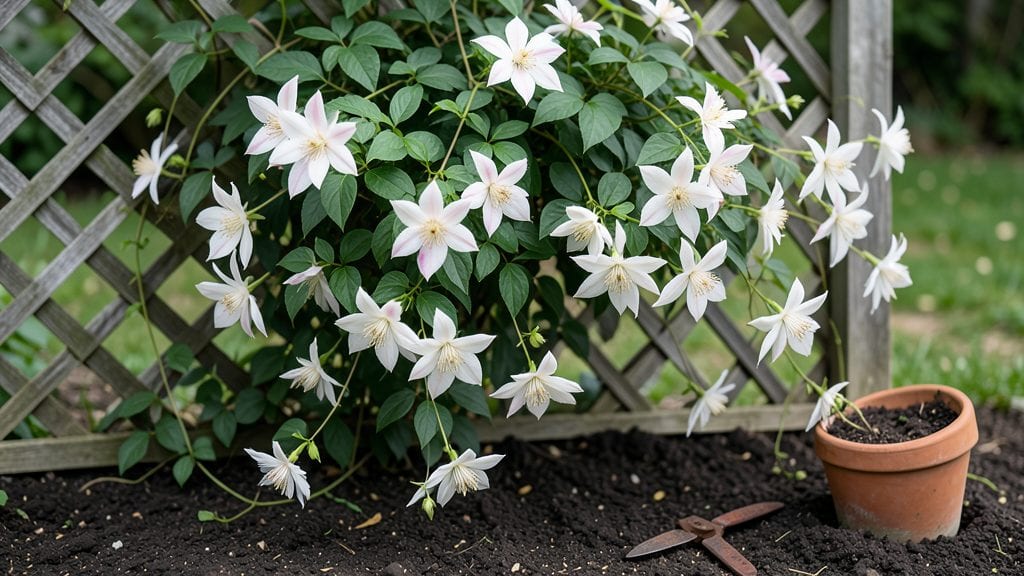
Full shade flowering vines bring stunning color to spots where sun-loving climbers would fail. 🌿 I’ve transformed my darkest corner into a lush vertical garden using plants like Clematis armandii and Actinidia kolomikta—both thrive where others wilt.
The secret lies in choosing the right species and giving them the support they crave.
These vines need minimal sunlight but still demand proper care—think of them as dramatic divas with low-light tolerance. A sturdy trellis or arbor lets them climb while keeping foliage off the ground, and well-draining soil prevents soggy roots.
With the right placement, you’ll get bold blooms that last all season, even in shady spots.
Imagine waking up to clusters of fragrant white flowers on Hoya carnosa or the deep purple blooms of Clematis cascading like a living waterfall. These vines add height, texture, and drama without needing sunlight, making them perfect for fences, pergolas, or even indoor vertical gardens.
The payoff? A shady spot that feels like a tropical oasis.
Whether you’re working with a north-facing wall or a dense tree canopy, these vines adapt beautifully. Start with one or two varieties to test what thrives in your space—once you see the results, you’ll want to fill every shadowy corner. Ready to turn your darkest spot into a showstopper?
📚 In This Guide
- What you need
- Instructions
- Tips and common mistakes
- Wrapping up and next steps
What you need
- ● Flowering vines (full shade-tolerant): 1-3 plants per trellis (e.g., Clematis, Hoya, Ficus pumila, or Cobaea scandens)
- ● Check tags for USDA zones 5-10 compatibility.
- ● Trellis or support structure: 1-2 sturdy trellises (metal, wood, or PVC), at least 6-8 feet tall
- ○ Optional: Decorative lattice or obelisk for aesthetic appeal.
- ● Potting mix: 1 bag well-draining, peat-based potting mix (or amend garden soil with perlite for aeration).
- ○ Optional: Slow-release fertilizer (e.g., 10-10-10 NPK ratio).
- ● Containers: 1-2 10-15 gallon pots with drainage holes (or in-ground planting area).
- ● Tools: Garden gloves 🧤
- ● Trowel or hand shovel
- ● Pruning shears (for trimming)
- ○ Optional: Mulch (e.g., pine bark) to retain moisture.
- ● A shady location with less than 3 hours of direct sunlight daily (e.g., north-facing walls, under eaves).
- ● Access to water (vines need consistent moisture but no soggy soil).
- ○ Optional: A moisture meter to monitor soil hydration.
Step-by-Step guide to thriving full shade flowering vines
Here's how to transform shady corners into vibrant displays using four proven vine varieties.
🌱 Step 1: Select the Right Vines for Your Space
Choose four vines that thrive in full shade (0-3 hours of direct sun): clematis (Jackmanii or Armandii varieties), climbing hydrangea (Hydrangea petiolaris), star jasmine (Trachelospermum jasminoides), and English ivy (Hedera helix). Each brings different textures and bloom times. I prefer starting with established nursery plants—transplanting mature vines means instant impact and fewer germination surprises.
Check the mature height of your support structure first. English ivy can climb 30+ feet if given the chance, while star jasmine typically maxes out at 10-15 feet. Match vine size to your trellis or arbor to avoid overwhelming small spaces. For example, a 6-foot trellis works beautifully with hydrangea vines, while a 12-foot fence can handle clematis' vigorous growth.
🪴 Step 2: Prepare the Planting Site
Dig holes twice as wide as the root ball but only as deep as the container. Full shade plants need rich, well-draining soil—amend the planting hole with 3 inches of compost mixed into the native soil. I always test drainage by filling the hole with water; if it drains within 15 minutes, your site is ready. Slow drainage means adding 1 inch of perlite or coarse sand to improve aeration.
Install your support structure before planting. For trellises, drive stakes 12 inches deep at each corner to prevent toppling. Secure climbing hydrangea with soft ties (never wire, which can damage bark) and clematis with twine or mesh. Star jasmine and ivy can cling naturally, but providing early support encourages thicker growth. Space plants 3-5 feet apart to allow air circulation and prevent fungal issues.
💧 Step 3: Plant and Water Thoroughly
Remove the vine from its container and loosen roots if they're circling. Position the plant so the top of the root ball sits 1 inch below soil level—this prevents stem rot from poor drainage. Backfill with native soil mixed with compost, pressing gently to remove air pockets. Water immediately with 1 gallon per plant to settle the soil and eliminate air gaps.
Mulch around the base with 2-3 inches of shredded bark, keeping it 6 inches away from the stem to prevent rot. Water deeply every 3-4 days during the first 6 weeks, checking that the top 2 inches of soil feel moist (not soggy). Overwatering in shade is a common mistake—these vines prefer consistent moisture, not saturation. I set a timer to remind myself, especially during hot, humid spells.
☀️ Step 4: Provide Indirect Light and Prune Strategically
Full shade vines tolerate dappled light better than deep, dark corners. If your space is truly dark, supplement with a 15-watt LED grow light for 4-6 hours daily during spring and fall. This boosts flowering for clematis and hydrangea. Watch for yellowing leaves—a sign of too little light. Move the plant to a slightly brighter spot if this happens.
Prune in early spring before new growth appears. For clematis, cut back last year's growth by half to encourage vigorous new shoots. Hydrangea vines need minimal pruning—just remove dead stems and shape lightly. Star jasmine and ivy respond well to light trimming after flowering to maintain shape. Always sterilize pruners with rubbing alcohol between cuts to prevent disease spread.
✂️ Step 5: Maintain and Encourage Season-Long Blooms
Feed vines in early spring with a balanced 10-10-10 fertilizer, applying ½ cup per plant. Repeat in mid-summer to prolong flowering. I avoid high-nitrogen fertilizers—they promote leafy growth at the expense of blooms. Water deeply once weekly during dry spells, increasing to twice weekly if temperatures exceed 85°F. Drip irrigation is ideal—it delivers moisture directly to roots without wetting foliage, reducing fungal risks.
Deadhead spent blooms on clematis and hydrangea every 2 weeks to encourage continuous flowering. For star jasmine and ivy, remove only heavily damaged or crossing stems. By late fall, reduce watering to once every 10-14 days and apply a 3-inch layer of mulch to protect roots from winter temperature swings. This simple routine keeps vines healthy and vibrant year after year.
Tips & tricks for perfect full shade flowering vines
Here's what nobody tells you about keeping these shade-loving beauties thriving when sunlight is scarce.
Support Structure Matters: In Step 2, when installing your support, don't just eyeball the depth of those 12-inch stakes. Use a level to ensure your trellis or arbor is perfectly vertical—even a slight tilt can cause vines to grow unevenly. For clematis specifically, consider adding a secondary support wire halfway up the structure. This creates a "tiered" growing space that encourages more blooms by preventing the vines from becoming top-heavy.
Light Supplementation Strategy: The 4-6 hours of daily grow light mentioned in Step 4 is your secret weapon for truly dark spaces. Position the light so it illuminates the foliage from above, not just the ground. I like to angle it slightly toward the west side of the vine to simulate natural afternoon light. For hydrangeas, this extra light can make the difference between sparse blooms and lush, vibrant clusters. Remember to turn it off at night—these vines need darkness too!
Pruning Precision: When you're cutting back clematis in early spring (Step 4), look for the distinctive "crown" where last year's growth meets this year's new shoots. Cut just above this crown at a 45-degree angle to prevent water from pooling. For star jasmine, which flowers on old wood, avoid any heavy pruning—just trim back any crossing stems to maintain airflow. The key is to shape rather than shear, preserving the natural growth habit of each vine.
Seasonal Watering Adjustments: The once-weekly watering guideline in Step 5 works for average conditions, but when temperatures hit 85°F, you'll need to adapt. Instead of doubling to twice weekly, try watering in the early morning and late evening to reduce evaporation. For container-grown vines, check soil moisture daily—they dry out much faster than in-ground plants. A simple soil moisture meter (around $10) is worth the investment for these heat waves.
Pro Tips for Full Shade Flowering Vines
- Here's what nobody tells you about keeping these shade-loving beauties thriving when sunlight is scarce.
- Support Structure Matters: In Step 2, when installing your support, don't just eyeball the depth of those 12-inch stakes.
- Light Supplementation Strategy: The 4-6 hours of daily grow light mentioned in Step 4 is your secret weapon for truly dark spaces.
Frequently asked questions
Got questions about growing full shade flowering vines? You’re not alone! Here are answers to the most common concerns—so you can dive in with confidence.
What are the best full shade flowering vines for beginners?
Start with Clematis (like Clematis montana), Hoya carnosa, or Fatsia japonica. These are hardy, low-maintenance, and thrive in low-light spots. For quick color, try Mandevilla (with extra humidity) or English ivy (great for verticals!).
When is the best time to plant full shade flowering vines?
Plant in early spring (after last frost) or early fall (6–8 weeks before frost). Avoid summer heat stress—vines need time to establish roots before winter. If planting container vines, do it anytime (just keep them watered!).
How often should I water full shade flowering vines?
Water deeply 1–2 times per week (more in extreme heat or dry soil). Check soil moisture—if the top inch is dry, it’s time to water. Mulch (2–3 inches) helps retain moisture. Overwatering can cause root rot, so ensure pots/containers have drainage holes.
Why aren’t my full shade vines flowering?
Lack of light, over-fertilizing (too much nitrogen), or improper pruning can stunt blooms. Try morning sun (even partial), use a balanced fertilizer (like 10-10-10), and prune after flowering. Some vines (like Hoya) bloom better with stress—let them dry out slightly between waterings.
Can I grow full shade flowering vines in containers?
Use large pots (10+ gallons) with drainage, and choose trailing varieties like Philodendron hederaceum or Ceropegia woodii. Rotate containers for even light exposure, and fertilize monthly during growing season. Just ensure the vine has something to climb (trellis, cage, or stake).
Wrapping up and next steps
Transforming shady spots into vibrant, blooming havens is easier than you think! Full shade flowering vines like Clematis and Hoya prove that sunlight isn’t the only ingredient for beauty—just the right conditions and a little care.
With the perfect mix of soil, support, and patience, you’ll enjoy lush, colorful displays year after year.
Ready to bring life to your garden’s dark corners? Start by picking one vine from our top picks, then grab your gloves and get planting! 🌿✨ Your shady retreat is just a vine away.