
Container Gardens
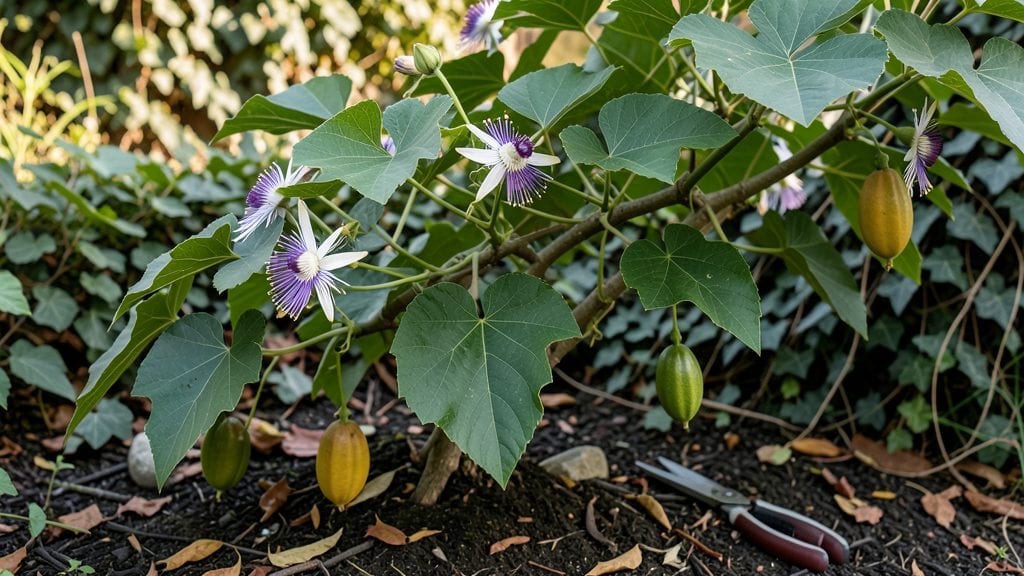
Growing passion flower is easier than you’d think—sometimes those delicate vines sprout in just 3-5 days—and their starburst blooms are as stunning as they are edible. 🌱 I remember my first vine unfurling those intricate flowers within weeks, and the sweet-tart fruit that followed. made me realize how easy this could be.
The key is mimicking their tropical roots without the fuss of a greenhouse.
You’ll need well-draining soil, a sturdy trellis or arbor, and patience for the first few months as the vines climb. Passion flowers thrive in 6-8 hours of sunlight daily and prefer slightly acidic soil—think mulch and compost to keep them happy.
Water consistently but avoid soggy roots, and watch for those first tendrils reaching upward like eager fingers.
By summer, you’ll be harvesting fruit that tastes like a mix of pineapple and citrus, and the flowers will attract hummingbirds like magnets. The vines grow aggressively, so prune in early spring to shape them and encourage more blooms. Even in containers, they’ll climb and flourish with the right care.
Whether you’re growing in pots or planting directly in the ground, passion flowers adapt surprisingly well. Just remember: the faster they germinate, the sooner you’ll taste that unique tropical flavor. Let’s get those seeds started!
📚 In This Guide
- What you need
- Instructions
- Tips and common mistakes
- Wrapping up and next steps
What you need
- ● Passion flower seeds: 5–10 seeds (fast-growing varieties like Passiflora edulis or Passiflora caerulea work best).
- ● Potting mix: 1–2 gallons of well-draining, organic potting soil (or a blend of 60% compost, 30% coconut coir, and 10% perlite).
- ● Containers: 5–10 gallon pots with drainage holes (or a raised bed with at least 12" depth).
- ● Fertilizer: Balanced, slow-release fertilizer (10-10-10) or organic options like worm castings or fish emulsion.
- ● Watering can or hose: With a gentle spray nozzle for moisture control.
- ● Trellis or support structure: 6–8 ft tall (bamboo stakes, wire cages, or a sturdy fence).
- ● Pruning shears: Sharp, sterilized shears for trimming.
- ○ Seed-starting kit: Optional for indoor germination (includes heat mat or grow lights).
- ● Mulch: Straw or wood chips to retain moisture and suppress weeds.
- ● pH testing kit: To ensure soil pH is 6.0–7.0 (passion flowers prefer slightly acidic to neutral soil).
- ● Compost tea: Boosts soil health and disease resistance.
- ● Garden gloves: Protect your hands from thorns (yes, some varieties have them!).
- ○ Sunlight meter: Optional for tracking 6+ hours of daily sun exposure.
Step-by-step instructions for growing passion flower vines
Here's how to get those exotic starburst blooms growing fast—no waiting years for results.
🌱 Step 1: Start Seeds Indoors for Speed
Passion flower seeds germinate quickly when given the right head start. Fill a small seed tray with sterile seed-starting mix and moisten it until damp but not soggy. Scatter seeds on the surface—don't bury them—since they need light to sprout. I press them gently into the mix so they stay in place, then cover the tray with plastic wrap to keep humidity high.
The key to fast germination is warmth—place the tray on a seedling heat mat set to 75-80°F. You'll see tiny sprouts in just 7-10 days. Keep the mix consistently moist by misting lightly every other day, but never let it sit in water. Once seedlings appear, remove the plastic immediately to prevent fungal issues.
☀️ Step 2: Provide Bright Light for Strong Stems
Passion flower seedlings need full-spectrum grow lights within 2-3 inches of the plants for 14-16 hours daily. Without enough light, they'll grow leggy and weak. I use a simple LED bulb on a timer to automate this—no need to fuss with manual adjustments. Rotate the tray daily so all sides get even light exposure.
You'll notice strong seedlings have deep green leaves and compact spacing between nodes. If they stretch toward the light or develop pale yellow leaves, the light source is too far away. Keep the soil lightly moist but never waterlogged—passion flowers hate soggy roots.
🪴 Step 3: Transplant When True Leaves Form
Once seedlings develop their second set of true leaves (the first pair are cotyledons), it's time to move them to 4-inch pots. Use a well-draining potting mix blended with 20% perlite to prevent root rot. Gently remove each seedling, keeping the root ball intact, and place it in its own pot.
Passion flowers grow fast once established, so give them room to spread. I bury the stems slightly deeper than they were in the seed tray—this encourages stronger root development. After transplanting, water thoroughly and place the pots in a bright, indirect light spot for a week to help them adjust.
✂️ Step 4: Train Vines for Maximum Growth
When your passion flowers reach 6-8 inches tall, it's time to start training them. Choose a strong trellis or sturdy post and guide the main vine along it, tying it loosely with soft twine every 6-8 inches. Passion flowers grow aggressively—some varieties can reach 20 feet in a single season!
Prune back any leggy growth that isn't producing leaves or flowers. I always cut just above a leaf node to encourage bushier growth. Deadhead spent blooms regularly to redirect the plant's energy into new flowers. With proper training, you'll see those iconic edible starburst blooms in as little as 3-4 months from seed.
Tips & tricks for fast-germinating passion flower vines
Here's what nobody tells you about speeding up those starburst blooms—no patience required.
Germination Speed: The 7-10 day window for sprouts is your target, but consistency is everything. I've found that keeping the seed-starting mix at exactly 75-80°F creates the perfect environment—any cooler and germination slows dramatically. Use a small thermometer tucked into the mix to monitor temperature. If your home runs cooler, consider placing the tray on top of your refrigerator (not inside) for that extra warmth boost.
Lighting Hack: Those 14-16 hours of daily light aren't just about duration—the distance matters too. Position your full-spectrum grow lights just 2-3 inches above the seedlings, but adjust as they grow. I use a simple clothespin to hang the lights and can easily raise them as the plants stretch. Watch for leaves touching the light source—this causes scorching that looks like brown spots along the edges.
Transplanting Tip: When moving your seedlings to 4-inch pots, don't rush the process. Wait until you see that second set of true leaves—this means the roots are strong enough to handle the transition. I like to water the seedlings thoroughly in their seed tray first, then gently squeeze the root ball to encourage compactness before transferring. This minimizes shock and gives you a head start on bushier growth.
Training Secret: The 6-8 inch height mark is your cue to start training, but don't wait until the last minute. Begin guiding the main vine along your trellis when it hits 6 inches—this gives the plant time to adjust to the support. I use soft twine that's loose enough to allow natural movement but secure enough to prevent tangling. This prevents the vine from getting too heavy for the trellis later on.
Pro Tips for Growing Passion Flower
- Here's what nobody tells you about speeding up those starburst blooms—no patience required.
- Germination Speed: The 7-10 day window for sprouts is your target, but consistency is everything.
- Lighting Hack: Those 14-16 hours of daily light aren't just about duration—the distance matters too.
Frequently asked questions
Got questions about growing your own passion flower vines? You’re not alone! Here are some of the most common concerns—plus quick answers to get you growing with confidence.
How long does it take for passion flower seeds to germinate?
Passion flower seeds are fast—expect germination in 10–21 days with proper warmth (70–80°F) and moisture. Soak seeds overnight before planting to speed things up! Patience pays off, but if nothing sprouts after 3 weeks, try fresh seeds or check moisture levels.
When is the best time to plant passion flower seeds indoors?
Start seeds 8–10 weeks before your last frost (typically February–March in most climates). Use a seed-starting mix and keep them in a warm, bright spot. Passion flowers love heat, so don’t rush—wait until soil temps hit 60°F+ before transplanting outdoors after frost.
Can passion flowers grow in containers, and what size pot do I need?
Passion flowers thrive in 5-gallon+ containers with drainage holes. Choose a deep pot (12–18 inches) and use a well-draining mix like 50% potting soil + 50% perlite. Vines can get long (10–30 feet!), so plan for a trellis or sturdy support—even in small spaces!
What pests should I watch for, and how do I treat them?
Common pests include aphids, spider mites, and whiteflies. Spray vines with neem oil or insecticidal soap for mild infestations. For stubborn bugs, introduce ladybugs or blast off pests with water. Healthy plants (with balanced fertilizer) resist pests better—so keep them happy!
Are there non-edible passion flower varieties that still look stunning?
Yes! While Passiflora edulis (granadilla) and P. caerulea (blue passionflower) produce edible fruit, varieties like ‘Blue Moon’ or ‘Incense’ passionflower are purely ornamental but just as dramatic. They’re hardy, drought-tolerant, and attract hummingbirds—win-win!
Wrapping up and next steps
Growing passion flowers is a rewarding journey—whether you’re drawn to their stunning, edible blooms or their fast-growing vines. With the right container setup, sunlight, and care, you’ll soon enjoy vibrant flowers and even harvest passion fruit in no time! 🌸
Ready to dive in? Start by choosing your variety (like the easy-to-grow Passiflora edulis or Passiflora caerulea) and gather your supplies. Then, give your plant the love it deserves—water consistently, prune regularly, and watch it thrive. Your edible garden adventure begins now!
Next step: Pick a sunny spot, plant your seeds or cuttings, and let the magic happen! 🌱