
Blooming
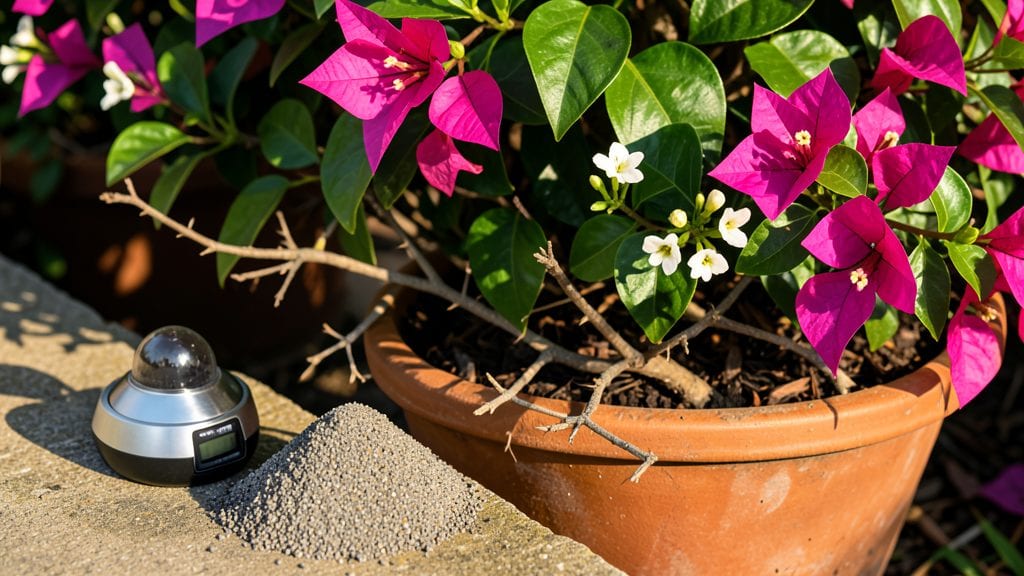
Getting bougainvillea to flower starts with sunlight, pruning, and the right balance of water and food—three things most gardeners overlook. 🌸 I’ve watched my bougainvillea go from a bare, leggy mess to a riot of color just by making a few key adjustments, and you can too.
The secret isn’t complicated, but it is precise: too much water, not enough sun, or pruning at the wrong time will leave you staring at green stems with no blooms in sight.
Here’s the truth: bougainvillea thrives in full sun (at least 6-8 hours daily), hates soggy roots, and needs a light hand with fertilizer—too much nitrogen means leaves, not flowers.
My plants now burst with color from spring through fall because I prune aggressively in late winter and feed with a low-nitrogen, high-phosphorus blend every 6-8 weeks. The blooms aren’t just pretty; they’re reliable, and the plant stays compact and bushy instead of flopping over.
By the time summer rolls around, you’ll have vibrant clusters of paper-like bracts (the "flowers") that last for weeks. The key is consistency: prune once a year, water deeply but infrequently, and keep those leaves dusted off so they can soak up sunlight.
No more guessing—just predictable, show-stopping blooms that turn heads at your front gate or patio.
Works for container-grown plants too, as long as the pot drains well and you move it into sunlight when weather cools. Let’s fix that bare bougainvillea once and for all—your neighbors will thank you.
📚 In This Guide
- What you need
- Instructions
- Tips and common mistakes
- Wrapping up and next steps
What you need
- ● Bougainvillea plant – Choose a healthy, mature specimen (3+ years old for best results).
- ● Pruning shears or sharp bypass pruners – Must be clean and sterilized (rubbing alcohol works!).
- ● Gloves – Thick gardening gloves to protect from thorns (trust us, they’re sharp!).
- ○ Balanced fertilizer – A 10-10-10 or 20-20-20 NPK ratio (e.g., Miracle-Gro All Purpose). Optional: Slow-release granules for convenience.
- ● Phosphorus-rich fertilizer – Look for a 5-10-10 or 7-9-5 NPK (e.g., bone meal or bloom booster) to encourage flowering.
- ● Watering can or hose with a gentle spray nozzle – Avoid soaking the soil; bougainvilleas hate soggy roots!
- ● Mulch – Organic options like pine bark or straw (2–3 inches thick) to retain moisture and regulate temperature.
- ● Full sun exposure – 6+ hours of direct sunlight daily (no compromise here!).
- ● Well-draining soil – Bougainvilleas despise waterlogged roots. Amend clay soil with perlite or coarse sand (50/50 mix).
- ● Container or garden spot – If potted, ensure the container has drainage holes and is at least 12–18 inches deep.
- ● Epsom salt – 1 tablespoon per gallon of water (monthly spray for magnesium boost).
- ● Plant growth regulator – Paclobutrazol (B-Nine) to control excessive growth (use sparingly!).
- ● Support stakes or trellis – For climbing varieties (e.g., bougainvillea ‘San Diego Red’).
- ● pH test kit – Ideal soil pH: 6.0–7.0 (adjust with lime or sulfur if needed).
Step-by-Step guide to encouraging bougainvillea blooms
Here's the method that transforms tough bougainvillea into a flowering powerhouse.
🌿 Step 1: Master the Pruning Technique
Bougainvillea blooms only on new growth, so aggressive pruning is key. Use clean, sharp pruners to cut back one-third of the plant's total growth in early spring, just as new shoots begin to emerge. Target leggy stems and overcrowded areas first—these are the spots where blooms will appear most vigorously.
Never prune into old, bare wood. You'll know you've pruned correctly when you see fresh, green growth within 2-3 weeks. This is your signal that the plant is responding. For established plants, a second light pruning in midsummer keeps the shape tidy and encourages another flush of flowers before fall.
☀️ Step 2: Position for Maximum Sunlight
Bougainvillea demands full sun exposure—at least 6-8 hours daily—to produce those vibrant bracts. If your plant isn't flowering, check its location first. Move it to a south-facing spot where it gets unfiltered sunlight. You'll notice the leaves turn a deeper green and stems thicken within a few weeks of proper light.
In cooler climates, supplement with a grow light during winter months when daylight shrinks. Keep the light 4-6 inches above the plant and run it for 12-14 hours daily. The goal is to mimic summer conditions year-round, which tricks the plant into continuous blooming.
💧 Step 3: Implement Strategic Watering and Feeding
Bougainvillea is drought-tolerant but needs consistent moisture during its growing season. Water deeply once weekly during spring and summer, allowing the top 2-3 inches of soil to dry out between waterings. Overwatering causes root rot and stunted blooms—this is the #1 mistake gardeners make.
Feed with a balanced, water-soluble fertilizer (10-10-10 or 20-20-20) every 4-6 weeks during active growth. Switch to a low-nitrogen, high-phosphorus formula (5-10-10) when buds begin to form to encourage flowering. You'll see new buds appear within 2-3 weeks of the right feeding schedule.
✂️ Step 4: Deadhead and Maintain Year-Round
Remove spent blooms immediately after they fade to redirect the plant's energy into new flowers. Use your fingers or small pruners to pinch off the entire flower cluster at its base. This simple act keeps bougainvillea blooming continuously in warm climates.
In winter, reduce watering to every 3-4 weeks and stop fertilizing entirely. The plant enters a natural dormancy period, and forcing growth now will exhaust its energy reserves. Check for pests—especially scale or spider mites—before resuming care in spring. A quick spray with neem oil keeps them at bay.
Tips & tricks for perfect bougainvillea blooms
Here's what nobody tells you about pushing bougainvillea to flower—these are the subtle details that make all the difference.
Pruning Precision: When you cut back that one-third of growth in Step 1, focus on stems that are at least pencil-thick—they'll produce the most vigorous new blooms. Thin out crowded areas first, as these compete for nutrients. Confession: I skipped this detail for years and wondered why my plant only produced sporadic flowers. The key is removing the oldest, woodiest stems completely while leaving younger, more flexible growth intact. This creates the perfect balance for new blooms to form on those fresh shoots.
Sunlight Strategy: The 6-8 hours of sunlight in Step 2 isn't just about quantity—it's about quality. If your bougainvillea gets afternoon sun (after 2 PM), that's ideal because the intense light triggers blooming. Morning sun alone won't cut it. For container plants, rotate them weekly so all sides get equal exposure. I learned this the hard way after watching one side of my plant stay bare while the other bloomed profusely.
Fertilizer Timing: That 2-3 week window after switching to low-nitrogen, high-phosphorus fertilizer in Step 3 is critical. This is when your plant shifts from vegetative growth to flowering mode. Watch for tiny buds forming at the stem tips—this is your cue that the fertilizer is working. If you don't see buds after 4 weeks, your plant might need more phosphorus or less nitrogen. I keep a small notebook to track when I fertilize and when buds appear—it's become my secret weapon for consistent blooms.
Deadheading Discipline: The moment those vibrant bracts fade, remove the entire flower cluster—not just the dead blooms. This redirects the plant's energy to new growth instead of seed production. I set a reminder on my phone for every 2 weeks during bloom season to check for spent flowers. The difference in continuous blooming is night and day compared to letting flowers go to seed.
Pro Tips for Get Bougainvillea To Flower
- Here's what nobody tells you about pushing bougainvillea to flower—these are the subtle details that make all the difference.
- Pruning Precision: When you cut back that one-third of growth in Step 1, focus on stems that are at least pencil-thick—they'll produce the most vigorous new blooms.
- Sunlight Strategy: The 6-8 hours of sunlight in Step 2 isn't just about quantity—it's about quality.
Frequently asked questions
Why isn’t my bougainvillea flowering even though it’s getting sunlight?
Bougainvillea needs bright, direct sunlight (6+ hours/day) to trigger blooms. If it’s not flowering, check for:
- Shade from trees or buildings
- Overwatering (root rot blocks nutrients)
- Lack of pruning (old growth stops producing flowers)
How long does it take for bougainvillea to flower after pruning?
With proper care, you’ll see new flower buds in 4–8 weeks after pruning. Timing depends on:
- Climate (warmer = faster blooms)
- Fertilizer type (phosphorus-rich feeds speed it up)
- Pruning time (spring/early summer is ideal)
Can I grow bougainvillea indoors and still get flowers?
Indoor bougainvillea is possible but tricky. You’ll need:
- A south-facing window or grow lights (12+ hours/day)
- Well-draining soil (cactus mix works)
- Frequent pruning to control size
What should I do if my bougainvillea leaves turn yellow?
Yellow leaves usually mean:
- Overwatering (let soil dry between waterings)
- Nutrient deficiency (feed with bloom booster fertilizer)
- Too much shade (move to full sun)
Is it true bougainvillea flowers are actually leaves?
Yes! The vibrant paper-like “flowers” are modified leaves called bracts. The tiny white/yellow blooms hidden inside are the true flowers. Bracts last longer (weeks vs. days) and come in pink, purple, orange, and red—making bougainvillea a showstopper!
Wrapping up and next steps
Getting your bougainvillea to bloom is all about patience, consistency, and a little extra love! 🌸 With the right balance of sunlight, pruning, and nutrition, you’ll soon be rewarded with vibrant, colorful flowers that’ll brighten up your garden.
Remember, healthy growth leads to stunning blooms—so keep an eye on those care tips and enjoy the process!
Now that you’re armed with the know-how, why not share your progress with fellow plant lovers? Snap a photo of your flourishing bougainvillea and tag us—we’d love to see your hard work pay off! 📸✨