
How To
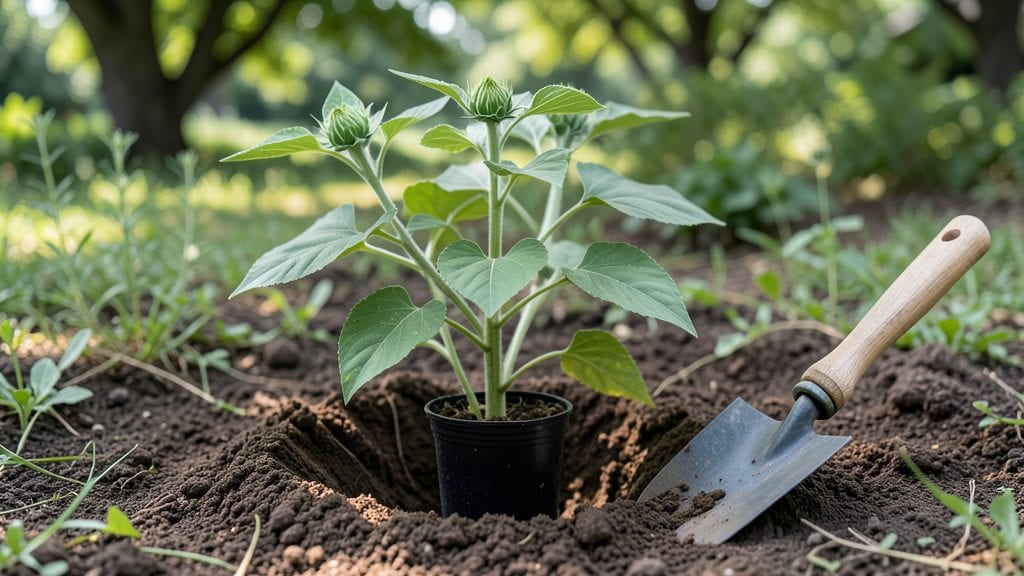
Transplanting sunflower seedlings the right way means the difference between 10-foot giants and leggy, struggling plants. 🌻 I’ve watched seedlings wilt after rough handling, only to thrive when moved carefully—here’s how to do it without stress.
The key isn’t brute force; it’s timing, soil prep, and gentle technique that keeps roots intact.
Start when seedlings have 2-3 sets of true leaves and nights stay above 55°F, typically 2-3 weeks after sowing indoors or when outdoor soil warms. Dig holes just deep enough to bury the stem up to the first leaves—no deeper, or they’ll rot.
Space them 12-18 inches apart (closer for dwarf varieties) to give roots room to spread, and water deeply before and after to settle soil around delicate stems.
📚 In This Guide
- What you need
- Instructions
- Tips and common mistakes
- Wrapping up and next steps
What you need
- ● Sunflower seedlings: 3–6 weeks old, hardened-off (acclimated to outdoor conditions), with 2–3 true leaves and sturdy stems.
- ● Garden soil or potting mix: Well-draining, amended with compost (avoid heavy clay). Quantity: Enough to fill your planting area to a depth of 12–18 inches.
- ● Transplanting tool: A trowel or small shovel (4–6 inches wide) for digging holes.
- ● Watering can or hose: With a gentle spray nozzle (or a watering wand for precision).
- ○ Stakes or cages (optional but recommended): 4–6 foot tall bamboo stakes or wire cages (1 per seedling) to support growth.
- ● Fertilizer: Balanced, slow-release granular fertilizer (10-10-10 ratio) or compost tea. Quantity: 1–2 tbsp per hole.
- ● Mulch: Straw, wood chips, or shredded leaves (1–2 inches thick) to retain moisture and suppress weeds.
- ● Planting markers: Biodegradable labels or popsicle sticks to track varieties.
- ● Epsom salt: 1 tbsp dissolved in 1 gallon of water (for magnesium boost, especially in sandy soil).
- ● Shade cloth: Lightweight fabric (30–50% shade) to protect seedlings from harsh afternoon sun during the first 2–3 days post-transplant.
- ● Root stimulator: Liquid or powder (e.g., mycorrhizal fungi) to encourage root growth.
Step-by-Step instructions for transplanting sunflower seedlings
Here’s how to move delicate sunflower seedlings outdoors with minimal shock.
🌱 Step 1: Harden Off Seedlings Gradually
Begin hardening off seedlings 7-10 days before transplanting by placing them outside in a sheltered spot for 1-2 hours the first day. Choose a location with partial shade to avoid sudden sun exposure, which can scorch tender leaves. Over the next 5-7 days, gradually increase outdoor time by 1 hour daily, eventually leaving them outside overnight.
Watch for wilting or yellowing leaves—this signals stress. If you see this, move seedlings back indoors for an extra day before continuing. The goal is to let them adapt to wind, temperature fluctuations, and direct sunlight without overwhelming them. Sunflowers are resilient, but abrupt changes can stunt growth.
🌿 Step 2: Prepare the Transplant Site
Select a location with full sun (at least 6-8 hours daily) and well-draining soil. Sunflowers hate soggy roots, so avoid low-lying areas where water pools. Loosen the soil to a depth of 12 inches using a garden fork or tiller, breaking up compacted layers. Amend the soil with compost if it’s heavy clay or sandy, as sunflowers thrive in fertile, loose soil.
Space seedlings 18-24 inches apart in rows 2-3 feet apart to allow for their massive root systems and towering growth. Mark planting spots with stakes or a garden marker to ensure proper spacing—crowding leads to weak stems and disease. If transplanting in containers, use pots at least 12 inches deep with drainage holes.
💧 Step 3: Dig and Transplant Carefully
Water seedlings deeply the day before transplanting to hydrate roots and reduce stress. Dig holes slightly deeper than the seedling’s root ball to encourage downward growth. Gently remove each seedling from its container, supporting the stem to avoid breakage. Place it in the hole, ensuring the soil line matches the original depth—burying too deep can suffocate the stem, while planting too shallow leaves roots exposed.
Fill the hole with soil, pressing lightly around the base to eliminate air pockets. Water immediately after planting to settle the soil and remove any gaps. Avoid overhead watering for the first 48 hours—direct water to the base instead to prevent fungal diseases like damping-off. Mulch around the base with 2-3 inches of straw or shredded leaves to retain moisture and suppress weeds.
☀️ Step 4: Monitor and Support New Growth
Keep the soil evenly moist for the first 2 weeks after transplanting, watering deeply every 2-3 days if rainfall is scarce. Sunflowers are drought-tolerant once established, but seedlings need consistent moisture to develop strong roots. Check soil moisture by sticking your finger 1 inch deep—if it’s dry, water thoroughly.
Install stakes or cages at planting if your variety grows 6 feet or taller—sunflowers top-heavy and prone to snapping in wind. Tie stems loosely to supports with soft plant ties as they grow, adjusting as needed. Watch for pest activity, especially aphids or beetles, which can stress young plants. Aphids cluster on new growth, so spray with neem oil if you spot them early.
Tips & tricks for transplanting sunflower seedlings
Transplanting sunflowers successfully hinges on patience and precision—here’s how to ensure your seedlings thrive from day one.
Gradual Adaptation: During the hardening-off process in Step 1, pay close attention to weather conditions. If temperatures are forecasted to drop below 50°F during the 1-2 hours of outdoor exposure, bring seedlings back inside immediately. Cold stress can cause irreversible damage to tender leaves, even if they’ve been hardening off for days. I’ve seen seedlings recover from wilting but never from overnight cold exposure.
Soil Preparation Insight: In Step 2, when amending soil with compost, aim for a ratio of 25% compost to 75% native soil—this balance provides nutrients without overwhelming the seedlings. For heavy clay soils, mix in sand or perlite to improve drainage, as sunflowers will outgrow poor soil conditions quickly. A simple soil test before planting can reveal if additional amendments are needed.
Transplanting Technique: Step 3’s emphasis on matching the soil line is critical. If you’re unsure about the original depth, gently pull the seedling from its container and measure the root ball against the stem. The soil line should sit at the base of the stem—any higher risks stem rot, while any lower leaves roots vulnerable. Watering immediately after planting helps settle the soil and eliminates air pockets that could strangle new roots.
Post-Transplant Care: After the 48-hour no-overhead-watering period in Step 3, introduce a light mulch layer to lock in moisture and regulate soil temperature. Avoid piling mulch directly against stems, as this can trap moisture and promote fungal growth. For container-grown sunflowers, ensure pots are elevated to prevent waterlogging, which is especially critical in Step 4’s 2-week moisture-sensitive period.
Pro Tips for Transplant Sunflower Seedlings
- Transplanting sunflowers successfully hinges on patience and precision—here’s how to ensure your seedlings thrive from day one.
- Gradual Adaptation: During the hardening-off process in Step 1, pay close attention to weather conditions.
- Soil Preparation Insight: In Step 2, when amending soil with compost, aim for a ratio of 25% compost to 75% native soil—this balance provides nutrients without overwhelming the seedlings.
Frequently asked questions
Got questions about transplanting sunflower seedlings?
You’re not alone! Here are answers to the most common concerns—plus pro tips to keep your sunflowers reaching for the sky.
When is the best time to transplant sunflower seedlings?
Transplant sunflower seedlings after the last frost when soil temperatures reach at least 55°F (13°C). Aim for mornings or overcast days to reduce stress. Seedlings with 2–3 true leaves are ideal—waiting too long risks overcrowding and weaker stems.
How long after sowing can I transplant sunflower seedlings?
Sunflowers germinate quickly (5–10 days), but transplant 10–14 days after sowing when seedlings are sturdy. If they’re leggy or pale, harden them off (acclimate to outdoor conditions) for 3–5 days first to avoid shock. Pro tip: Use a seedling heat mat if nights are chilly!
What if my seedlings look weak or wilted after transplanting?
Wilting is normal for a day or two—sunflowers are tough! Ensure they’re in well-draining soil and water deeply at the base (not overhead). If leaves yellow or droop persistently, check for root rot (too much water) or underwatering. Mulch lightly to retain moisture.
Can I transplant sunflowers directly from containers or should I harden them off?
Always harden off seedlings for 3–7 days by placing them outside in partial shade, gradually increasing sun exposure. Skip this step, and seedlings may bolt (flower too early) or struggle. For container-grown sunflowers, water thoroughly before transplanting to minimize root damage.
What’s the best spacing for transplanted sunflower seedlings?
Give sunflowers room to grow! Space dwarf varieties 12–18 inches apart, standard types 2–3 feet apart, and giant sunflowers 3–4 feet apart. Overcrowding leads to weak stems and disease. Deep holes (12–18 inches) encourage strong root growth.
Can I transplant sunflowers in cold weather?
Avoid transplanting if frost is forecasted. Sunflowers are frost-sensitive, and cold soil can stunt growth. If you must plant early, use row covers or choose cold-tolerant varieties like ‘Autumn Beauty’. Wait until soil warms up for best results!
Wrapping up and next steps
Transplanting sunflower seedlings doesn’t have to be stressful—with the right timing, preparation, and care, your plants will thrive and reward you with stunning blooms! 🌻 Remember to harden off seedlings, use proper spacing, and keep them well-watered to avoid shock.
Whether you’re a beginner or a seasoned gardener, these steps will set your sunflowers up for success.
Now that you’re ready to transplant, grab your gloves and get growing! Next, check out our guide on maintaining sunflowers after transplanting to keep them happy and healthy all season long. Happy gardening! 🌱