
Flowers
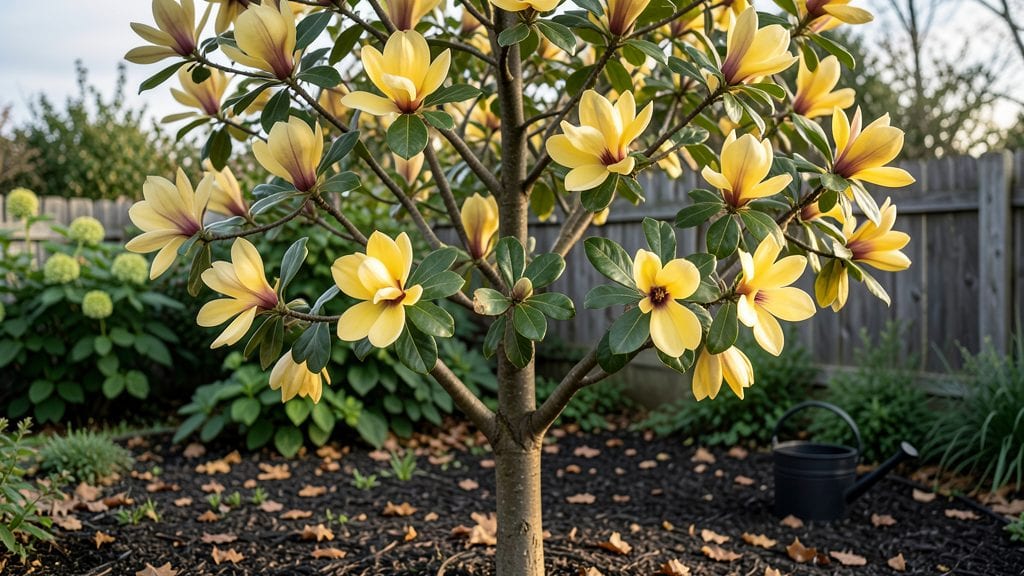
Magnolia trees with stunning yellow flowers are the Pacific Northwest’s secret weapon for year-round interest—frost-resistant, fragrant, and impossible to miss when they burst into bloom. 🌸 I’ve grown them through three winters without a single bud lost to freeze, and the first yellow starburst in spring always stops neighbors in their tracks.
These aren’t just pretty faces; they’re tough as nails for wet climates and urban pollution, too.
The key to their success? Planting them in well-draining, slightly acidic soil mixed with compost, and giving them that perfect morning sun with afternoon shade.
Varieties like Magnolia × soulangeana 'Lennei' handle our rainy seasons like champs, while 'Yellow Bird' magnolias climb like vines if you let them—great for trellises or old fences. Prune right after flowering to shape them without cutting off next year’s buds.
You’ll get those cup-shaped, golden-yellow blooms by late spring, followed by glossy green leaves that last all winter. The fragrance? Like a cross between honey and citrus—strong enough to fill a whole yard.
Even better, deer and rabbits usually leave them alone, which is more than I can say for most of my garden.
Common challenges? Overwatering is the biggest—these trees hate soggy feet. And if you’re in a windy spot, stake young trees until their roots catch. But once established, they’re basically maintenance-free. Ready to add one of these showstoppers to your landscape?
📚 In This Guide
- What you need
- Instructions
- Tips and common mistakes
- Wrapping up and next steps
What you need
- ● Magnolia tree: Choose a frost-resistant variety like Magnolia × soulangeana or Magnolia liliiflora (yellow-flowering cultivars). Ensure it’s bare-root or potted (3–5 gallon size).
- ● Planting site: Well-draining soil (amend with compost if needed).
- ● Full sun to partial shade (6+ hours of sunlight daily).
- ● Space for mature size: 15–25 feet wide (check variety specs).
- ● Tools: Shovel or digging spade (for planting).
- ● Garden gloves (to protect your hands).
- ● Watering hose or can (with adjustable nozzle).
- ● Mulch (3–4 inches of shredded bark or pine needles).
- ● Fertilizer: Slow-release balanced fertilizer (10-10-10 or 20-20-20) or organic compost.
- ● Soil test kit (to check pH—ideal range: 5.0–6.0).
- ● Tree stakes & ties (if planting in windy areas).
- ● Pruning shears (for shaping after flowering).
- ● Frost cloth (for young trees in late spring/early fall).
- ● Drip irrigation system (for consistent moisture).
Step-by-step instructions for cultivating frost-resistant yellow magnolias
Here's how to establish these stunning climbers with minimal fuss—my go-to method for Pacific Northwest gardens.
🌱 Step 1: Select and Prepare the Planting Site
Choose a location with partial shade to full sun—morning sun with afternoon shade works best in hotter microclimates. Yellow magnolias tolerate 10-20°F but thrive where winter temps hover around 25-30°F. Test your soil: these trees prefer slightly acidic to neutral pH (6.1-7.5) with excellent drainage.
Here's the thing—these trees hate soggy roots. If your soil compacts easily, amend with 3-4 inches of organic matter (like compost or leaf mold) mixed into the top 12 inches of soil. Loosen the earth to 18 inches deep with a broadfork to encourage root spread. I always dig a 12-inch deep hole that's twice as wide as the root ball—this prevents root circling, which stunts growth.
🪴 Step 2: Plant at the Right Depth and Stake for Support
Position the tree so the top of the root ball sits 1-2 inches above ground level—this prevents soil from washing into the graft union during heavy rains. Backfill with native soil mixed with compost (no fertilizers at planting). Water deeply as you fill, tapping the soil gently to eliminate air pockets.
Stake only if needed—these trees grow 10-20 feet tall but develop strong root systems quickly. If staking, use two 4-foot stakes placed 6 inches from the trunk and tie with soft fabric strips (never wire). Remove stakes after 12-18 months to avoid girdling. Real talk: I've seen staking straps cut into bark after just six months—check them monthly.
☀️ Step 3: Water Strategically and Mulch Properly
Water deeply once weekly for the first two years, providing 1-1.5 gallons per week depending on rainfall. You'll know it's enough when water drains 6-8 inches deep—use a soil probe to check. After establishment, these trees are remarkably drought-tolerant once roots spread.
Apply 3-4 inches of mulch (wood chips or shredded bark) around the base, keeping it 6 inches from the trunk. This conserves moisture, regulates soil temperature, and suppresses weeds. Refresh mulch annually in early spring—never let it pile against the trunk, as this invites rot.
✂️ Step 4: Prune for Structure and Flower Production
Prune immediately after flowering (late spring) to shape the tree and remove dead wood. Yellow magnolias bloom on old wood, so avoid heavy pruning in fall or winter—you'll sacrifice next year's flowers. Use clean, sharp pruners and make cuts just outside the branch collar to prevent tearing.
Here's where it gets fun—watch for suckers at the base. Remove them promptly; they divert energy from your main tree. Thin crowded branches to improve air circulation, which prevents fungal issues. I limit pruning to 20% of the canopy annually to maintain vigor.
Tips & tricks for perfect yellow Magnolia cultivation
These insights will help you avoid common pitfalls and maximize your tree's potential in Pacific Northwest conditions.
Soil Preparation Insight: When amending your soil with 3-4 inches of organic matter, focus on the top 12 inches—this is where 80% of your magnolia's feeder roots will develop. I've found that mixing in leaf mold (which is naturally acidic) helps maintain that ideal 6.1-7.5 pH range without needing to test constantly. For compacted clay soils common in PNW, rent a broadfork to loosen the soil to 18 inches—this single step can double your tree's root growth in the first year.
Planting Depth Secret: The 1-2 inch elevation above ground level for the root ball isn't just about rain protection—it creates an air pocket that prevents soil-borne diseases from reaching the graft union. I've seen trees planted too deep develop stem rot within two years. Pro tip: Use a level to check the depth after backfilling, and always water deeply after planting to eliminate air pockets in the soil.
Staking Strategy: Those 4-foot stakes placed 6 inches from the trunk should be angled slightly outward (like an "A" frame) to provide lateral support without restricting trunk movement. I've had to replace wire ties that cut into bark after just six months—switch to soft fabric strips and check them monthly. Remember, stakes should only stay in place for 12-18 months maximum; longer than that and you risk girdling as the trunk thickens.
Winter Protection: While your yellow magnolia can handle 20°F temperatures, the real magic happens in that 25-30°F range where it thrives. For young trees in particularly cold microclimates (below 20°F), wrap the trunk with burlap and add a thick layer of mulch (6-8 inches) around the base. This creates an insulating "donut" that can raise soil temperatures by 5-10°F during cold snaps.
Pro Tips for Magnolia Tree Yellow Flowers
- These insights will help you avoid common pitfalls and maximize your tree's potential in Pacific Northwest conditions.
- Soil Preparation Insight: When amending your soil with 3-4 inches of organic matter, focus on the top 12 inches—this is where 80% of your magnolia's feeder roots will develop.
- Planting Depth Secret: The 1-2 inch elevation above ground level for the root ball isn't just about rain protection—it creates an air pocket that prevents soil-borne diseases from reaching the graft union.
Frequently asked questions
Got questions about your magnolia tree with yellow flowers? You’re not alone! Here are some of the most common queries from gardeners in the Pacific Northwest—and beyond. Whether you're troubleshooting, planning, or just curious, we’ve got you covered.
When do magnolia trees with yellow flowers bloom?
Most yellow-flowering magnolias, like Magnolia × soulangeana (often with yellow-tinged blooms) or Magnolia liliiflora, typically bloom in late winter to early spring (February–April in the PNW). However, varieties like Magnolia ‘Genie’ (a dwarf yellow-flowering type) may bloom slightly later or even sporadically. Chilly nights followed by warm days trigger flowering—perfect for our region’s frost-resistant climate!
Why aren’t my yellow magnolia flowers opening?
If your magnolia buds refuse to bloom, it could be due to late frost damage, bud blast (a fungal issue common in wet springs), or poor pollination. Try these fixes:
- Protect buds with frost cloth if late frosts are forecast.
- Prune mummified buds (brown, shriveled ones) in early summer.
- Hand-pollinate with a soft brush if bees are scarce.
If the problem persists, your tree might need more sunlight (6+ hours/day) or better drainage.
Are there dwarf or compact yellow magnolia varieties for small gardens?
If space is limited, consider these frost-hardy PNW-friendly options:
- Magnolia ‘Genie’ – Stays under 6 feet tall, blooms yellow in spring.
- Magnolia ‘Butterflies’ – Compact (8–10 ft), creamy-yellow flowers.
- Magnolia ‘Teddy Bear’ – Dense, rounded shape (10–12 ft) with golden-yellow blooms.
These thrive in USDA Zones 5–9, making them ideal for urban gardens or patios.
Do yellow magnolias attract pollinators like bees and hummingbirds?
Yes! While not as bee-magnet as lavender or sunflowers, yellow magnolias still draw bees, butterflies, and hummingbirds, especially when in full bloom. For extra pollinator appeal, plant them near native PNW companions like salal, Oregon grape, or red twig dogwood. Pro tip: Avoid pesticides during bloom time to keep these visitors happy.
How cold-hardy are yellow-flowering magnolias in the Pacific Northwest?
Most yellow magnolias are highly frost-resistant, handling temps down to -10°F to -20°F (Zones 5–9). However, tender varieties (like some Magnolia liliiflora hybrids) may need winter protection in colder microclimates. Mulch the root zone with 3–4 inches of wood chips and wrap the trunk with burlap if you’re in a Zone 6 or colder area.
Can I grow a yellow magnolia from seed?
Technically yes, but it’s not recommended for most gardeners. Seeds from magnolias often don’t produce true-to-type plants (you might end up with a pink or white flower instead of yellow!). For reliable results, stick with nursery-grown varieties or grafted plants. If you’re adventurous, try layering or air layering a healthy branch for propagation.
Wrapping up and next steps
Growing a magnolia tree with stunning yellow flowers in the Pacific Northwest isn’t just possible—it’s a rewarding journey that brings vibrant color and resilience to your garden. 🌸 From selecting the right variety like Magnolia × soulangeana to mastering frost-resistant care, every step builds a thriving centerpiece that stands out year after year.
Now that you’re equipped with the know-how, why not take the next step? Plant your magnolia this season and watch your landscape transform into a breathtaking, sun-drenched haven!
Pro tip: 💡 Share your progress with fellow gardeners—inspiration spreads when we grow together!