
Flowers
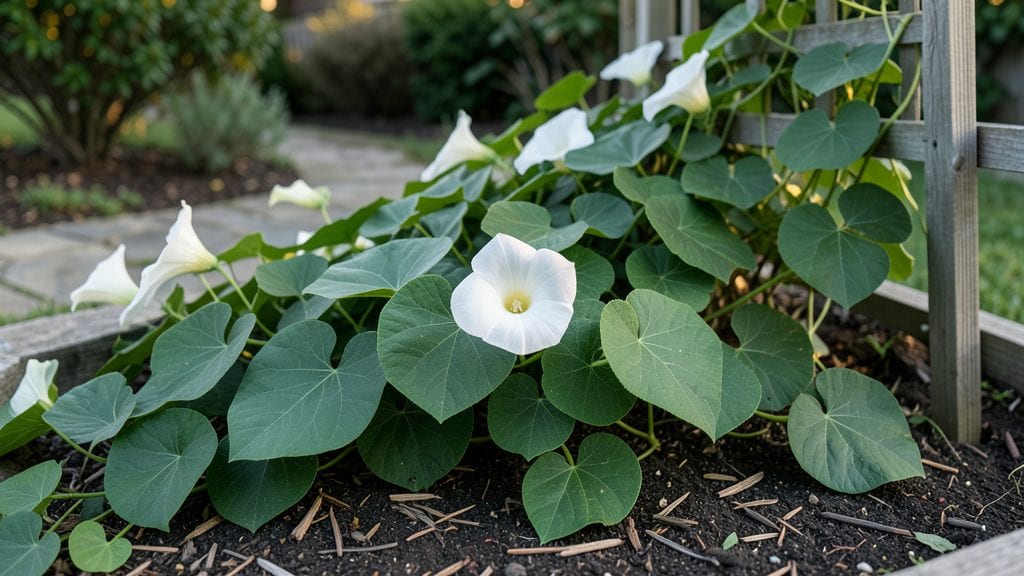
The moon flower bush (Ipomoea alba) grows faster than most vines you'll try—6 feet in a single season if you give it the right conditions.
I planted mine last June, and by August, it was already draping over the arbor like a whitewater cascade, its silvery-green leaves shimmering in the Pacific Northwest drizzle.
The real magic happens at night when those trumpet-shaped blooms unfurl under moonlight, filling the air with a sweet, intoxicating fragrance that hums with pollinators until dawn.
This climber thrives in zones 10-12 but handles the PNW's cooler summers better than most tropicals—just plant it after your last frost when soil warms to 60°F.
It’s not fussy about soil as long as it drains well; I’ve seen it flourish in everything from sandy loam to amended clay, though it rewards you best with regular compost.
Water it deeply once a week during dry spells, but don’t let it sit soggy—root rot is the only real enemy here, and it’s easily avoided.
By mid-summer, you’ll be pinching back leggy stems to encourage bushier growth and more blooms. The flowers may take a few weeks to appear, but once they do, they’ll keep coming in waves until frost.
Deadhead spent blooms to coax more, and watch as your vine becomes the star of every evening stroll. The only real challenge? Squirrels and deer love the seeds—so save some for next year’s fast start.
Perfect for trellises, arbors, or even container training if you prune aggressively. In the PNW, it’ll die back in winter but bounce back from the roots every spring—no digging required. Start yours now, and you’ll have a moonlit garden show by summer’s end.
📚 In This Guide
- What you need
- Instructions
- Tips and common mistakes
- Wrapping up and next steps
What you need
- ● Moon flower bush: 🌱 Seeds: 5–10 seeds (fast-germinating, so a small pack is plenty!)
- ● Young plant or cutting: 1–2 healthy plants (3–6 inches tall, potted or bare-root)
- ● Soil: Well-draining potting mix (2–3 gallons for seedlings) or
- ● Garden soil amended with compost (1 part compost to 3 parts soil)
- ● Containers (if starting indoors): Seedling trays (with drainage holes) or
- ● Small pots (4–6 inches deep, 1–2 per seedling)
- ● Fertilizer: Balanced liquid fertilizer (10-10-10 or 20-20-20, diluted to half-strength)
- ○ Slow-release granular fertilizer (optional, for established plants)
- ● Planting tools: Trowel or small shovel
- ● Garden gloves (to protect from thorns!)
- ● Watering: Watering can or hose with a gentle spray nozzle
- ● Misting bottle (for seedling humidity)
- ○ Support structures (optional but helpful): Trellis, fence, or sturdy stakes (4–6 feet tall for climbing vines)
- ● Soft ties or twine (to secure vines gently)
- ● Mulch: Straw or wood chips (2–3 inches deep, to retain moisture)
- ● Location: Full sun to partial shade (6+ hours of sunlight daily in PNW’s cooler climates).
- ● Climate: Hardy to USDA Zones 10–11 (but can be grown as an annual or overwintered indoors in colder PNW zones).
- ● Patience: Seeds germinate in 7–14 days—keep soil moist but not soggy!
- ● Thorn awareness: Wear gloves when handling—this beauty has sharp thorns!
Step-by-Step instructions for growing moon flower bushes
Here's how to get these stunning perennials thriving in your Pacific Northwest garden quickly.
🌱 Step 1: Choose the Perfect Planting Location
Moon flower bushes love partial shade, making them ideal for Pacific Northwest gardens where full sun can be harsh. Look for a spot that gets morning sun and afternoon shade—this protects the delicate blooms from afternoon heat while giving them enough light to flourish. The soil should drain well, so avoid low-lying areas where water pools after rain.
I always test the soil by digging a 6-inch hole and checking for moisture retention. If water sits in the hole after 30 minutes, amend the soil with 2-3 inches of compost to improve drainage. Moon flowers appreciate slightly acidic to neutral soil, so a pH test kit helps confirm your soil's readiness before planting.
🪴 Step 2: Prepare the Soil and Plant
Dig a hole that's twice as wide as the root ball but only as deep. This encourages roots to spread horizontally rather than settling too low, which can cause rot. Gently loosen the roots if they're circling the pot—this prevents transplant shock and helps the bush establish faster.
Place the moon flower bush in the hole and backfill with native soil mixed with 1 cup of bone meal for phosphorus, which supports strong root growth. Water deeply right after planting to settle the soil and remove air pockets. You'll know it's done right when the soil surface looks slightly compacted but not muddy.
☀️ Step 3: Water and Mulch for Fast Establishment
Water the newly planted moon flower bush once a week for the first month, ensuring the soil stays consistently moist but not soggy. Pacific Northwest summers can be dry, so I use a 2-inch layer of organic mulch around the base to retain moisture and regulate soil temperature. Keep mulch 3 inches away from the stem to prevent rot.
Here's the thing—moon flowers are drought-tolerant once established, but they need consistent moisture during their first year. You'll see new growth within 3-4 weeks if the soil stays evenly damp. If leaves start curling, it's a sign of underwatering, while yellowing leaves mean overwatering.
✂️ Step 4: Prune and Fertilize for Continuous Blooms
Deadhead spent blooms regularly to encourage more flowers. I prune lightly in early spring to shape the bush and remove any dead or diseased branches. Avoid heavy pruning unless necessary—moon flowers bloom on new wood, so aggressive cuts can reduce flowering. Use clean, sharp shears to make cuts just above a leaf node for the best regrowth.
Fertilize in early spring with a balanced 10-10-10 fertilizer to support vigorous growth. Apply it lightly around the base, keeping it away from the stem. Over-fertilizing can lead to excessive foliage at the expense of blooms, so follow the package instructions carefully. You'll notice stronger stems and more abundant flowers within 4-6 weeks.
Tips & tricks for perfect moon flower bush growth
Took me a while to figure these out, so here's how to get your moon flower bushes thriving faster in your Pacific Northwest garden.
Soil Test Tip: In Step 1, when you're testing that 6-inch hole for moisture retention, pay attention to how quickly water drains. If it disappears within 10 minutes, your soil drains too fast—mix in an extra inch of compost to hold moisture. If it's still standing after 30 minutes, you'll need to add perlite or sand to improve drainage. The goal is that water should disappear completely in about 15-20 minutes for perfect moon flower conditions.
Root Preparation Secret: When loosening those circling roots in Step 2, don't just pull them apart—make small vertical cuts with your fingers or a clean knife to encourage outward growth. This creates more surface area for nutrient absorption, which helps your bush establish faster. I've seen plants with this treatment show new growth within those first 3-4 weeks instead of waiting for the full month.
Watering Wisdom: That weekly watering schedule in Step 3 works best when you water deeply each time—about 1 gallon per plant. Instead of light sprinkles, use a slow watering can or soaker hose to saturate the soil down to 6 inches. This encourages deep root development, which makes your moon flowers more drought-resistant once established. Check soil moisture by sticking your finger 2 inches deep between waterings.
Fertilizer Timing: For that balanced 10-10-10 fertilizer in Step 4, I've found the best results come from splitting the application. Use half the recommended dose in early spring when you see new growth, then apply the remaining half after 6 weeks. This prevents nutrient burn while still giving your plants the phosphorus boost they need for strong roots and abundant blooms.
Pro Tips for Moon Flower Bush
- Took me a while to figure these out, so here's how to get your moon flower bushes thriving faster in your Pacific Northwest garden.
- Soil Test Tip: In Step 1, when you're testing that 6-inch hole for moisture retention, pay attention to how quickly water drains.
- Root Preparation Secret: When loosening those circling roots in Step 2, don't just pull them apart—make small vertical cuts with your fingers or a clean knife to encourage outward growth.
Frequently asked questions
Got questions about growing your moon flower bush? You’re not alone! Here are some of the most common queries from gardeners in the Pacific Northwest and beyond.
How fast does a moon flower bush grow?
The Ipomoea alba (moon flower bush) is a fast grower! With the right conditions—well-draining soil, full sun to partial shade, and consistent watering—you can expect vines to climb 10–15 feet in just one growing season. In mild PNW climates, it thrives year-round, while colder winters may slow growth temporarily.
Is it easy to grow from seed?
Yes! Moon flower seeds are fast-germinating (often sprouting in 7–14 days) and simple to start. Soak seeds overnight to soften the hard coat, then plant them just below the soil surface in warm, moist soil. For cooler PNW springs, start seeds indoors 4–6 weeks before the last frost or direct-sow after soil temps hit 60°F+.
Can moon flower bushes survive PNW winters?
In most of the Pacific Northwest, moon flower bushes are perennial and winter-hardy down to USDA Zone 8. In colder areas (like parts of Eastern WA or OR), they may die back but often regrow from the roots in spring. For extra protection, mulch heavily around the base or grow them as annuals and replant each year.
Are there any pests or diseases to watch for?
Moon flower bushes are generally pest-resistant, but watch for aphids (sap-sucking insects) or spider mites in dry conditions. Treat infestations with insecticidal soap or neem oil. Overwatering can lead to root rot, so ensure soil drains well. Powdery mildew may appear in humid PNW summers—improve airflow and avoid overhead watering to prevent it.
What’s a good alternative if I want fast-growing vines but fewer flowers?
If you love the fast growth of moon flower but prefer fewer blooms, consider Morning Glory (Ipomoea purpurea) or Hops (Humulus lupulus). Both climb quickly and are low-maintenance. For a fragrant alternative, try Clematis or Wisteria, though they may take longer to establish.
Pro Tip:
Need instant height? Train your moon flower bush up a trellis, fence, or pergola early in the season. The vines twine naturally, so minimal tying is needed—just give them something sturdy to climb!
Wrapping up and next steps
The moon flower bush is a stunning, low-maintenance perennial that thrives in the Pacific Northwest’s climate—bringing fragrant blooms and easy-care beauty to your garden. 🌙 With its fast germination and hardy nature, it’s the perfect addition for both beginners and seasoned gardeners alike.
Ready to transform your outdoor space? Start by gathering your supplies, choosing the right spot, and following the simple steps outlined above. Before you know it, your garden will be alive with the enchanting glow of moon flower blooms!