
Plants
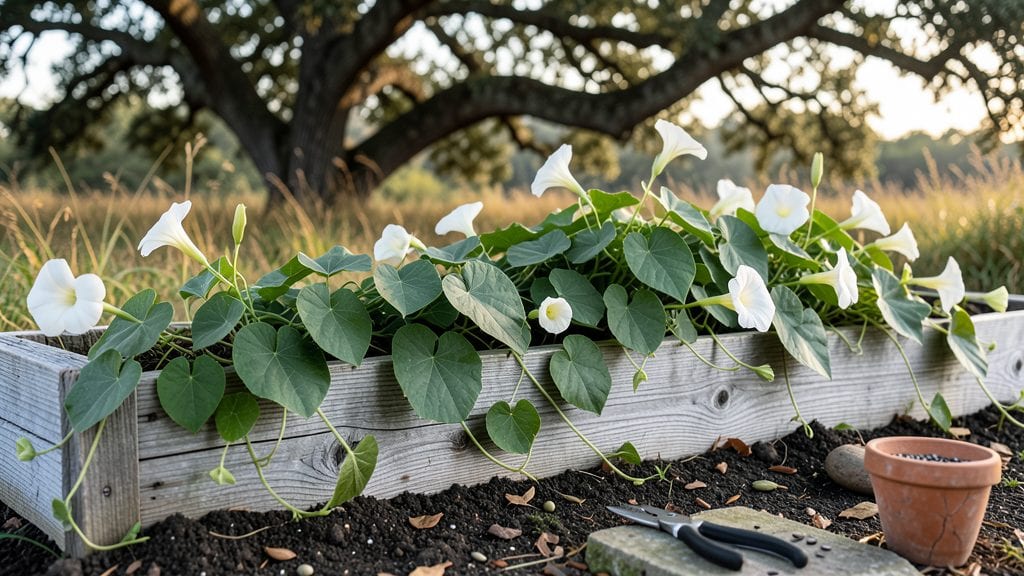
These moonflower vine pictures alone can’t capture the magic—there’s nothing quite like the dramatic reveal of their silvery-white blooms at dusk, transforming your garden into a nocturnal dream. 🌙 These fast-growing climbers (Ipomoea alba) aren’t just beautiful; they’re the ultimate statement plant for gardeners. who love drama and texture.
I planted mine last spring along a wooden trellis, and by midsummer, it was already climbing 15 feet high, blanketing the structure in velvety foliage before the flowers even appeared.
The magic happens after sunset when the blooms open wide, releasing their intoxicating fragrance that lingers until dawn. Pair them with tropical plants like hibiscus or night-blooming jasmine for a moonlit garden effect, or let them climb a simple chain-link fence for an effortless, romantic look.
Even in small spaces, their vigorous growth creates instant vertical interest—no pruning required once established.
Imagine your garden at twilight: soft white flowers glowing against dark foliage, their petals cupped like delicate lanterns. Moonflowers thrive in warm climates but can also be grown as annuals in cooler zones, making them incredibly versatile.
The key is giving them full sun and consistent moisture—they'll reward you with blooms that last until morning light fades them away.
Perfect for cottage gardens, tropical escapes, or even urban balconies with trellises. Once you see them in person, you'll understand why gardeners obsess over these ethereal climbers—they're nature's own nightlight. Ready to bring this magical beauty to your space?
📚 In This Guide
- What you need
- Instructions
- Tips and common mistakes
- Wrapping up and next steps
What you need
- ● Moonflower Vine Seeds or Cuttings – Choose Ipomoea alba seeds (or a healthy vine if propagating from cuttings). Pro tip: Seeds germinate best when fresh!
- ● Well-Draining Potting Mix – A blend of 50% garden soil, 30% compost, and 20% perlite/sand (for aeration). 💡 Avoid heavy clay soil!
- ● Containers or Garden Bed – For seedlings: 4–6" pots (2–3 seeds per pot).
- ● For mature vines: Large containers (12"+ diameter) or a trellis-ready garden bed (6–8 ft long for climbing).
- ● Trellis or Support Structure – A 6–10 ft tall trellis, fence, or pergola (moonflowers climb aggressively!). Use garden twine or netting for DIY setups.
- ● Watering Can or Hose with Soaker Nozzle – Moonflowers love moisture but hate soggy roots. ✨ Early morning watering is ideal!
- ● Pruning Shears – For trimming dead leaves or guiding vine growth.
- ● Fertilizer (Balanced 10-10-10 or Organic Compost Tea) – Apply every 4–6 weeks during growing season.
- ● Mulch (Straw or Wood Chips) – Helps retain moisture and suppress weeds.
- ○ Photography Gear (Optional for moonflower vine pictures) – Tripod + remote shutter (for low-light night blooms).
- ● External flash or LED light panel (to highlight flowers).
- ● Macro lens (to capture delicate details).
- ● Gloves & Sunscreen – Moonflower vines have mildly irritating sap; protection is a must!
How to capture stunning moonflower vine blooms for your garden
Here's how I photograph these magical night-blooming vines at their most dramatic.
🌿 Step 1: Scout for Perfect Blooming Conditions
Moonflowers (Ipomoea alba) open their pale lavender-blue blossoms only after sunset, so I scout locations 2-3 hours before dusk when buds are just beginning to unfurl. Look for vines with fully opened flowers—they'll last until sunrise, giving you a 3-4 hour window for photography. The best shots come on warm summer evenings when humidity isn't too high, as dew can blur details.
I avoid overcast nights—moonlight or artificial light becomes essential for proper exposure. If you're shooting without moonlight, bring a softbox light (set to cool white, 5600K) to gently illuminate the flowers without washing out their natural glow. Position yourself where the vine drapes naturally over a textured background—wooden trellises or rustic fences work beautifully.
📸 Step 2: Set Up Equipment for Night Photography
Use a DSLR or mirrorless camera with a fast lens (f/2.8 or wider) to capture low-light details. I set my aperture to f/2.8 for sharpness and attach a remote shutter release to avoid camera shake. For the moonflower's delicate petals, I use a macro lens (100mm or longer) to fill the frame with intricate details.
Adjust your ISO to 800-1600—any higher and you risk graininess. I shoot in RAW format to recover details in post-processing. For long exposures (if moonlight is strong), use a tripod and a 2-second timer to prevent blur. If shooting handheld, keep your shutter speed at 1/60th second or faster to freeze motion from slight breezes.
☀️ Step 3: Capture the Magic at Peak Bloom
The golden hour before midnight is prime time—flowers are fully open, and moonlight enhances their ethereal glow. Focus on the center of the bloom, where the white throat contrasts with the petals. I use manual focus to ensure crisp details, especially on the throat's star-shaped markings, which are the vine's most striking feature.
Experiment with backlighting by positioning the moon or softbox behind the vine to create a silhouette effect against the sky. For close-ups, I shoot at f/4 to maintain depth of field while keeping the petals sharp. If you're photographing multiple blooms on the vine, include a few unfurled buds to show the progression—this adds dynamic interest to your composition.
✂️ Step 4: Edit for Ethereal Beauty
In post-processing, I boost contrast slightly to highlight the petals' texture but avoid over-saturating the lavender hues. Use a soft vignette to draw attention to the center of the bloom. For night shots, I reduce noise at ISO 1600+ using Lightroom’s noise reduction tool while preserving detail. If shooting with artificial light, apply a cool tone to mimic moonlight.
For a dreamy effect, I lower shadows slightly to soften the background and increase highlights on the petals’ edges. Avoid heavy editing—moonflowers are stunning in their natural state. Save a before-and-after comparison to showcase your technique while keeping the flowers’ organic beauty intact.
Tips & tricks for ethereal moonflower vine photography
These subtle adjustments will transform your moonflower shots from good to breathtaking.
Scouting Secret: The 2-3 hour window before dusk is your golden opportunity—this is when buds begin their magical transformation. I always scout locations where vines drape over textured surfaces like wooden trellises or rustic fences. Look for areas with indirect moonlight paths that will naturally illuminate the blooms during your shoot. A vine with both fully open flowers and partially unfurled buds creates dynamic visual interest.
Lighting Technique: When using your softbox light at 5600K, position it at a 45-degree angle rather than directly behind the flowers. This creates subtle shadows that accentuate the petals' delicate texture while maintaining that ethereal glow. For the most natural look, I dim the light to about 50% power—just enough to illuminate without overpowering the moonflowers' natural luminescence.
Focus Precision: The star-shaped markings in the white throat are your most important detail. Use manual focus to ensure these intricate patterns remain sharp, especially when shooting at f/4 for close-ups. I find that focusing on the center of the throat and then slightly adjusting to the petal edges creates the most balanced composition. This technique works particularly well with the 100mm macro lens mentioned in Step 2.
Post-Processing Insight: When applying your soft vignette in Step 4, I recommend using a radial gradient centered on the flower's throat. This draws the viewer's eye directly to the most striking feature while maintaining the dreamy quality. For night shots, I always increase the exposure by just 0.1-0.2 stops to brighten the petals without losing their natural color integrity—this subtle adjustment makes a surprising difference in the final image.
Pro Tips for Moonflower Vine Pictures
- These subtle adjustments will transform your moonflower shots from good to breathtaking.
- Scouting Secret: The 2-3 hour window before dusk is your golden opportunity—this is when buds begin their magical transformation.
- Lighting Technique: When using your softbox light at 5600K, position it at a 45-degree angle rather than directly behind the flowers.
Frequently asked questions
Got questions about growing and enjoying moonflower vines? You’re not alone! Here are some of the most common queries—plus quick, practical answers to help you cultivate this enchanting night-blooming beauty like a pro.
How fast does a moonflower vine grow?
A moonflower vine is a fast grower—expect 6 to 10 feet of lush, trailing growth in just one season! With proper support (like a trellis or fence), it can climb aggressively, so be ready to prune or guide it as needed. For best results, plant in spring after the last frost for maximum vigor.
When is the best time to plant moonflower seeds?
Moonflower seeds thrive when planted after the last frost (typically late spring or early summer). They’re sensitive to cold, so avoid planting in fall—they won’t survive winter. For a head start, you can soak seeds overnight to soften the hard outer shell and speed up germination (usually 7–14 days).
Why aren’t my moonflowers blooming?
Moonflowers are night-bloomers, so they might seem dormant during the day—but here’s why they might skip blooms entirely:
- Too much shade: They need 6+ hours of sunlight daily.
- Overcrowding: Thin vines to improve airflow and light exposure.
- Poor soil: Amend with compost for nutrients.
- Late planting: Seeds need warm soil (70°F+) to germinate successfully.
Can moonflower vines survive winter?
Moonflower vines are annuals in most climates—they die back after frost. However, in USDA Zones 9–11, they may return if planted in fall (though blooms are less reliable). For colder areas, save seeds or treat them as a summer ephemeral. Pro tip: Mulch the base in fall to protect roots from freezing.
What can I plant alongside moonflower vines?
Moonflowers pair beautifully with:
- Tall climbers: Passionflower, morning glories, or clematis (for vertical drama).
- Ground covers: Sweet potato vine or nasturtiums (to fill gaps).
- Night-scented companions: Evening primrose or jasmine (for a fragrant garden).
Are moonflower vines toxic to pets?
Moonflower vines (Ipomoea alba) are non-toxic to cats and dogs, according to the ASPCA. However, always monitor pets—some animals may nibble on leaves, which could cause mild stomach upset. If you’re unsure, check with your vet or consult the ASPCA’s plant database.
Wrapping up and next steps
The moonflower vine is more than just a stunning night-blooming beauty—it’s a dreamy addition to any garden, offering easy care and mesmerizing visuals. Whether you’re drawn to its silvery leaves or its fragrant, moonlit blooms, this vine promises a touch of magic with minimal effort. 🌙✨
Ready to transform your space? Grab some moonflower seeds or cuttings and start growing your own—your garden (and nighttime views) will thank you! Plant a seed today and let the enchantment begin.