Flowers
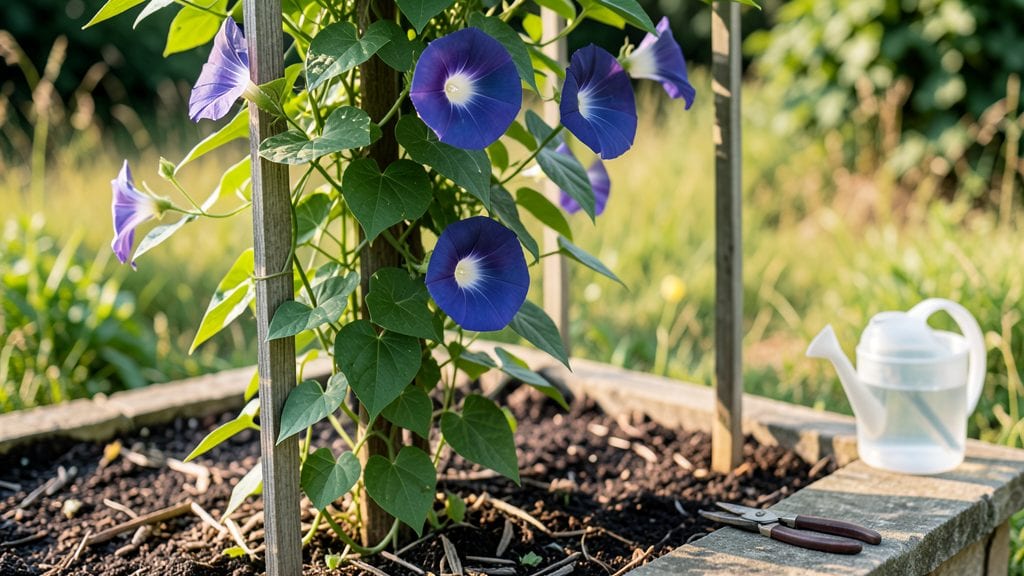
The morning glory flower vine transforms any Pacific Northwest garden into a dazzling summer sky with its fast-germinating starbursts of blue, purple, and pink—just like the batch I planted last June that climbed a trellis in three weeks. 🌿—turning a blank fence into a living tapestry by July.
The secret lies in their love of cool evenings and moist soil, which makes them thrive where other vines struggle.
You’ll need direct-sown seeds (they hate transplanting), well-draining soil mixed with compost, and a sturdy support like a trellis or fence. Morning glories adore full sun but appreciate afternoon shade in hotter inland areas—perfect for our mix of coastal and inland PNW climates.
Spacing seeds 6 inches apart gives them room to sprawl without crowding, and they’ll reward you with blooms starting in late June if planted early.
Once established, these vines are nearly foolproof—water them when the top inch of soil dries, and deadhead spent blooms to encourage more flowers. They’ll climb 10-15 feet in a season, so position supports near where you want them to shine.
The best part? They self-seed like crazy, often popping up where you least expect them the following year.
For creative designs, weave them through arbors, train them up mailbox posts, or let them spill over raised beds. Pair them with clematis for layered color or sunflowers for height contrast.
Even in small spaces, morning glories deliver instant drama—just don’t let them take over your prized roses unless you’re aiming for a wild, romantic tangle.
📚 In This Guide
- What you need
- Instructions
- Tips and common mistakes
- Wrapping up and next steps
What you need
- ● Morning glory seeds: Choose fast-growing varieties like Heavenly Blue or Scarlet O’Hara (1–2 packets, ~50–100 seeds total). Opt for organic, non-GMO seeds for best results.
- ● Growing medium: Well-draining potting soil (1–2 bags, 1–2 cubic feet each) or a seed-starting mix (for indoor germination).
- ○ Compost or worm castings (1–2 cups) to boost nutrient levels (optional but recommended for PNW’s nutrient-poor soils).
- ● Containers or garden bed: Biodegradable seed pots (50–100 count) or
- ● A raised garden bed (minimum 6" deep) with full sun exposure (6+ hours/day).
- ● Watering can or spray bottle with a fine mist nozzle (for gentle hydration).
- ● Garden twine or trellis (4–6 ft tall) to support climbing vines (e.g., bamboo stakes, wire mesh, or a DIY wooden frame).
- ● Timing: Plant seeds directly outdoors 2–3 weeks after your last frost date (typically mid-May to early June in the PNW). Morning glories hate transplanting!
- ● Sunlight: Ensure your spot gets full sun (even partial shade can reduce blooms).
- ○ Soil temp: Seeds need soil temps of 60°F+ (15°C+) to germinate—wait for warm spells or use a heat mat indoors (optional).
- ● Water source: Keep soil consistently moist (not soggy) until germination (~7–14 days).
- ● 🌡️ Cold snap? Cover young seedlings with frost cloth if nights dip below 50°F (10°C).
- ● 🔄 Succession plant every 2 weeks for nonstop blooms all summer!
- ● 🐝 Skip the fertilizer—morning glories thrive in lean soil and may flop if overfed.
Step-by-step instructions for growing morning glory vines
Here’s how to get those vibrant blooms thriving in your Pacific Northwest garden—fast.
🌱 Step 1: Choose the Right Seeds and Planting Time
Morning glory seeds germinate quickly but need warm soil to sprout. In the Pacific Northwest, wait until after the last frost date—usually mid-May—when soil temperatures reach at least 60°F. I like to plant mine in late spring because cooler soil slows germination, and you’ll miss the summer blooms if you start too early.
Pick a sunny spot with full sun to partial shade—morning glory vines tolerate some afternoon shade in hotter regions. If you’re growing them on a trellis or fence, make sure the structure is at least 6 feet tall—these vines grow fast and need support. I’ve seen them reach 10-15 feet in a single season if given the right conditions.
💧 Step 2: Direct-Sow Seeds for Best Results
Morning glory seeds don’t transplant well, so plant them directly in the garden about ½ inch deep. Space seeds 6-8 inches apart in rows 18-24 inches apart—this gives them room to spread without overcrowding. I like to plant them in early summer for a late-summer to fall bloom, but you can also sow a second batch in mid-summer for extended color.
Water gently after planting—just enough to moisten the soil without disturbing the seeds. Keep the soil consistently moist but not soggy until germination, which usually happens in 7-14 days. If the soil dries out too much before sprouting, the seeds may not germinate at all. A light misting with a spray bottle works best.
☀️ Step 3: Provide Support and Encourage Vigorous Growth
As soon as seedlings appear, install a trellis or fence for them to climb. Morning glories twine naturally, but they need something sturdy to grip—especially in windy Pacific Northwest gardens. I use 6-foot metal trellises or a strong chain-link fence for support. If you’re growing them in containers, a small obelisk or tomato cage works well.
Once the vines start climbing, water deeply once a week unless it rains. These plants are drought-tolerant once established, but they need consistent moisture during their first few weeks to encourage strong root growth. You’ll know they’re thriving when you see new leaves unfurling every few days—that’s your sign to keep the water coming.
✂️ Step 4: Deadhead and Maintain for Continuous Blooms
Morning glories bloom only in the morning, so if you want more flowers, deadhead spent blooms daily. Simply pinch off the faded flowers before they set seed—this redirects the plant’s energy into producing new buds. I do this in the late afternoon when the flowers have already closed, making it easy to spot which ones need removing.
Fertilize lightly with a balanced, water-soluble fertilizer every 4-6 weeks to keep the vines strong. Too much fertilizer can lead to leafy growth at the expense of flowers, so I use half the recommended dose. If you notice yellowing leaves, that’s a sign of over-fertilizing—cut back and focus on watering instead.
🌿 Step 5: Enjoy the Show and Plan for Next Year
Morning glories are annuals, but they self-seed prolifically in the Pacific Northwest’s mild climate. If you want more next year, let a few flowers go to seed—they’ll drop to the ground and sprout in spring. I’ve had volunteers pop up in the same spot for years without any extra effort.
At the end of the season, cut back the vines to the ground and remove any remaining seed pods if you don’t want more plants. The roots are tough and may resprout if left, but a clean cut ensures a fresh start next year. Store seeds from your best-performing plants in a cool, dry place for next season’s garden.
Tips & tricks for perfect morning glory flower vine growth
These simple tricks will help you grow vibrant morning glory vines that thrive in your Pacific Northwest garden.
Soil Temperature Secret: That 60°F soil temperature is your golden number—morning glory seeds won't germinate reliably below this. I've learned the hard way that cooler spring soil can delay sprouting by weeks. If you're planting in early May and your soil feels chilly, consider using a black plastic mulch to warm it up faster. This simple trick can shave off critical days in your growing season.
Planting Depth Matters: The ½-inch depth for planting is crucial—any deeper and they won't sprout, any shallower and they'll dry out. I like to use my finger to make small holes just the right size, then drop in 2-3 seeds per hole. This gives you backup plants if some don't germinate. Water gently afterward with a spray bottle to avoid disturbing the seeds.
Germination Timing: Those 7-14 days for germination can feel like forever, but consistency is key. I set a reminder on my phone for the 7th day to check for sprouts, then again on the 14th day. If you're not seeing any green by day 14, your seeds might need warmth or moisture. Try covering them with a thin layer of clear plastic wrap (remove once sprouts appear) to create a mini greenhouse effect.
Support System: Your 6-foot trellis should be installed before the vines get too tall—once they're climbing, they'll wrap around anything sturdy. I've seen morning glories reach 10-15 feet in a single season, so make sure your support can handle that weight. For container growing, a simple tomato cage works wonders and takes up less space. The key is getting that support in place early!
Pro Tips for Morning Glory Flower Vine
- These simple tricks will help you grow vibrant morning glory vines that thrive in your Pacific Northwest garden.
- Soil Temperature Secret: That 60°F soil temperature is your golden number—morning glory seeds won't germinate reliably below this.
- Planting Depth Matters: The ½-inch depth for planting is crucial—any deeper and they won't sprout, any shallower and they'll dry out.
Frequently asked questions
Got questions about growing morning glory flower vines in the Pacific Northwest? You’re not alone! Here are some of the most common queries—and their answers—to help you cultivate these fast-growing beauties with confidence.
How long does it take for morning glory seeds to germinate?
Morning glory seeds are fast—expect germination in 5–14 days under ideal conditions (warm soil, consistent moisture, and direct sunlight). In the cooler PNW climate, pre-soaking seeds overnight or using a heat mat can speed things up. Patience is key, but don’t be surprised if tiny sprouts pop up in less than a week!
Can morning glories survive Pacific Northwest winters?
Most morning glory varieties are annuals and won’t survive freezing PNW winters. However, some Ipomoea nil cultivars (like ‘Heavenly Blue’) may reseed themselves if left to go dormant. For year-round color, treat them as summer ephemerals or grow them in containers that can be moved indoors before frost.
What’s the best way to train morning glory vines on a trellis?
Use a strong trellis, fence, or arbor (at least 6–10 feet tall) to support their rapid growth. Gently weave or spiral vines as they climb—avoid tying them tightly, as their stems can bruise. For extra speed, try a “twine guide”: wrap a loose twine around the trellis and let vines twirl upward naturally. Pro tip: Prune leggy growth to encourage bushier blooms!
Are morning glories toxic to pets or humans?
While morning glories (Ipomoea spp.) aren’t highly toxic, some varieties contain ergine, a mild hallucinogen (especially in seeds). Ingesting large quantities can cause nausea or vomiting. Keep pets and kids away from seeds, but the leaves and flowers are generally safe in moderation. When in doubt, opt for pet-friendly alternatives like clematis or honeysuckle.
Why aren’t my morning glories blooming?
Lack of blooms often stems from over-fertilizing (too much nitrogen), shady conditions, or crowded vines. Try this: Deadhead spent blooms to encourage more flowers, ensure they get 6+ hours of sun, and use a balanced fertilizer (low in nitrogen). If vines are sprawling but bare, they may need more sunlight or a stronger trellis to climb.
What’s a good alternative to morning glories for fast-growing vines?
If you love the speed and drama of morning glories but want variety, try these PNW-friendly alternatives:
- Sweet pea (Lathyrus odoratus) – Fragrant, fast, and cold-tolerant.
- Clematis – Hardy perennials with stunning blooms (choose dwarf varieties for containers).
- Black-eyed Susan vine (Thunbergia alata) – Bright orange blooms, heat-loving but great in summer.
- Honeysuckle (Lonicera) – Native-friendly, attracts pollinators, and thrives in partial shade.
Wrapping up and next steps
The morning glory flower vine is a vibrant, fast-growing addition that can transform your Pacific Northwest garden into a lush, colorful paradise with minimal effort.
Whether you're a seasoned gardener or just starting, these easy-to-grow vines offer quick rewards and stunning visual appeal—perfect for trellises, fences, or even container gardens. 🌸
Ready to dive in? Start by selecting your favorite varieties, gathering your supplies, and planting with confidence. Your garden’s next masterpiece could be just a seed away! Happy growing!