
Trees
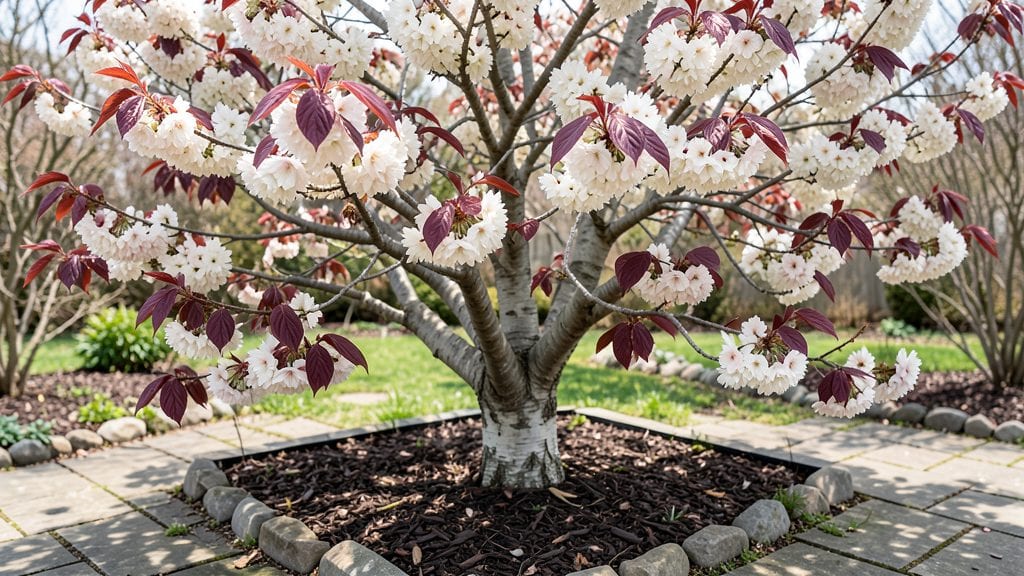
A pink and white flowering tree turns a plain yard into a springtime masterpiece—imagine clouds of blossoms cascading over patios or framing front doors like nature’s own confetti. 🌸 I’ve planted three varieties over the years, and each one transformed my garden’s focal point from "meh" to "must-see."
The key isn’t just choosing a tree, but positioning it where its drama shines brightest.
These trees aren’t just pretty faces—they’re seasonal showstoppers. Cherry blossoms burst in April, dogwoods linger into May, and magnolias steal the show in late spring with their glossy leaves and fragrant blooms.
Pair one with dwarf conifers for contrast or hostas at its base for texture, and you’ve got a year-round visual feast. The best part? They thrive in full sun to partial shade, so almost any yard can host one.
You’ll love waking up to petals drifting onto your deck or hosting spring gatherings under their canopy. A well-placed tree adds $10,000+ to home value (really!) and becomes the heart of your outdoor space.
Whether it’s a 15-foot cherry or a 20-foot magnolia, the impact is immediate—and the memories last longer than the blooms.
Need help picking? Start with your yard’s sunlight and space—then let your heart choose. A flowering tree isn’t just a plant; it’s a living centerpiece that turns heads every spring. Let’s find your perfect match!
📚 In This Guide
- What you need
- Instructions
- Tips and common mistakes
- Wrapping up and next steps
What you need
- ● Pink & white flowering tree: Choose a variety like Cercis canadensis (Eastern Redbud), Prunus serrulata (Cherry Blossom), or Lagerstroemia (Crape Myrtle). Ensure it’s disease-resistant and suited to your climate zone.
- ● High-quality potting soil (5-10 bags): Use a well-draining mix (e.g., 60% topsoil, 30% compost, 10% perlite or sand). For containers, opt for a lightweight potting blend.
- ● Organic mulch (2-3 cubic feet): Shredded bark or wood chips to retain moisture and suppress weeds.
- ● Slow-release fertilizer (10-20 lbs): Look for a balanced 10-10-10 or 20-20-20 NPK ratio for young trees; switch to low-nitrogen (5-10-10) for established bloomers.
- ○ Tree stakes (2-4, optional): 4-6 ft tall, galvanized or bamboo for support during the first growing season.
- ● Tree ties or soft fabric strips: To secure stakes without damaging the trunk.
- ● Shovel or spade: For digging holes (1.5x wider and as deep as the root ball).
- ● Garden trowel: For amending soil or planting smaller varieties.
- ● Wheelbarrow or bucket: To mix soil and mulch (5-gallon capacity recommended).
- ● Pruning shears: Bypass pruners (sharp, 6-8 inch blades) for shaping and deadheading.
- ● Hose with adjustable nozzle: For watering (or a drip irrigation kit for efficiency).
- ● Gloves (heavy-duty): To protect hands from thorns (e.g., Prunus varieties) or rough bark.
- ● Measuring tape: To ensure proper spacing (typically 15-25 ft apart for mature trees).
- ● Sunlight assessment: Confirm your tree’s full sun (6+ hrs/day) or partial shade (4-6 hrs) needs.
- ○ Soil test kit (optional but helpful): Check pH (ideal: 6.0-7.0) and nutrient levels before planting.
- ● Local frost dates: Plant in early spring (after last frost) or fall (6-8 weeks before first frost).
- ● Permits (if applicable): Check local regulations for large trees or protected species.
How to plant and care for a stunning pink-and-white flowering tree
Here's the expert method to transform your garden with a showstopping vertical accent.
🌱 Step 1: Select the Perfect Spot for Maximum Impact
Choose a location with full sun exposure—at least 6-8 hours of direct sunlight daily. Pink-and-white flowering trees like Bradford pear or crabapple thrive when planted where they'll receive morning sun and afternoon light. Avoid spots with afternoon shade, which weakens blooms and encourages leggy growth.
Dig a hole twice as wide as the tree's root ball but no deeper—this prevents root suffocation. The top of the root ball should sit 1-2 inches above ground level to prevent water pooling. Amend the native soil with 2-3 inches of compost mixed into the bottom of the hole for better drainage and nutrient retention.
🪴 Step 2: Plant with Proper Spacing and Support
Position the tree so its trunk is straight and the widest part of the root ball sits level with the surrounding soil. Gently loosen any circling roots with your fingers—never cut them, as this can damage the tree. Backfill the hole with the amended soil, pressing lightly to remove air pockets but not compacting too firmly.
Water deeply immediately after planting—about 10 gallons for a small tree—to settle the soil and eliminate air gaps. Stake the tree only if necessary (windy areas or weak stems), using two stakes placed diagonally from the trunk. Use soft tree ties to secure the trunk without girdling it, leaving room for growth.
☀️ Step 3: Water and Fertilize for Strong Establishment
For the first two weeks, water every 2-3 days until the soil 12 inches deep feels consistently moist. After that, water deeply once a week unless rainfall provides 1 inch of moisture. Overwatering causes root rot, while underwatering stresses the tree—both lead to weak blooms.
Apply a balanced, slow-release fertilizer (10-10-10) three months after planting, following label instructions. Avoid high-nitrogen fertilizers, which promote leafy growth at the expense of flowers. Mulch the base with 2-3 inches of organic mulch, keeping it 6 inches away from the trunk to prevent moisture buildup and pests.
✂️ Step 4: Prune for Shape and Health
Prune in late winter or early spring before buds swell, removing dead, crossing, or weak branches first. Cut just outside the branch collar—the swollen area where the branch meets the trunk—to encourage proper healing. Thin out 10-20% of the canopy to improve airflow and sunlight penetration, which boosts flower production.
Never prune in fall, as new growth won’t harden off before winter. If you must shape the tree, do so lightly in summer after flowering, focusing on removing only the most errant branches. Avoid heavy pruning, which can reduce next year’s blooms. Always sterilize pruners with rubbing alcohol between cuts to prevent disease spread.
🌿 Step 5: Maintain for Long-Term Blooms
Monitor for aphids or scale insects, which suck sap and weaken flowers. Treat early with neem oil or insecticidal soap, applying in the early morning to avoid harming beneficial insects. Avoid chemical pesticides, which can damage the tree’s delicate blooms.
Every 2-3 years, apply a layer of compost around the drip line (the edge of the tree’s canopy) to replenish nutrients. Test soil annually—most flowering trees prefer slightly acidic to neutral pH (6.0-7.0). If your tree’s blooms fade early, it may need more sunlight or a phosphorus boost (use a 5-10-5 fertilizer in early spring).
Tips & tricks for perfect pink-and-white flowering trees
These expert insights will help you create a stunning vertical centerpiece that blooms beautifully year after year.
Sunlight Strategy: The 6-8 hours of full sun requirement is non-negotiable for vibrant pink-and-white blooms. I always scout the planting location throughout the day—morning sun is ideal, but afternoon light works too. If you notice leaves yellowing or sparse blooms, your tree might need more direct sunlight. Consider supplementing with a reflective surface like a light-colored wall or mulch to bounce extra light onto the tree.
Root Ball Preparation: When amending the soil with 2-3 inches of compost, mix it thoroughly into the bottom of the hole—not just on top. This creates a nutrient-rich zone where roots will establish immediately. I've seen trees struggle when the compost sits as a separate layer, causing uneven root growth. Also, avoid compacting the soil too firmly when backfilling—roots need room to expand!
Watering Wisdom: That initial 10-gallon deep watering is crucial for settling the soil and eliminating air pockets around the roots. I recommend using a soaker hose or drip irrigation for the first two weeks to ensure consistent moisture without overwatering. Watch for puddling—if water pools around the base, your tree is at risk for root rot. The goal is moist soil 12 inches deep, not soggy soil.
Pruning Precision: When thinning out 10-20% of the canopy in Step 4, focus on removing branches that cross or rub against each other. These create wounds that attract pests and diseases. I always make cuts just outside the branch collar, and I sterilize my pruners with rubbing alcohol between cuts—this prevents spreading any potential infections. The key is to improve airflow while maintaining the tree's natural shape.
Pro Tips for Pink And White Flowering Tree
- These expert insights will help you create a stunning vertical centerpiece that blooms beautifully year after year.
- Sunlight Strategy: The 6-8 hours of full sun requirement is non-negotiable for vibrant pink-and-white blooms.
- Root Ball Preparation: When amending the soil with 2-3 inches of compost, mix it thoroughly into the bottom of the hole—not just on top.
Frequently asked questions
What’s the best pink-and-white flowering tree for small gardens?
If space is limited, consider the Crabapple (e.g., ‘Royalty’ or ‘Adirondack’) or Dwarf Flowering Cherry (like ‘Snow Fountain’). These stay compact (15–25 ft tall) while delivering stunning blooms. Just ensure they get full sun—most thrive with 6+ hours daily!
When do pink-and-white flowering trees bloom, and how long does it last?
Blooming times vary by species, but most peak in early to mid-spring (March–May in most U.S. zones). For example:
- Japanese Cherry: 1–2 weeks of show-stopping flowers.
- Crabapple: 2–3 weeks, often with a second flush in fall.
- Magnolia (like ‘Ann’): Late winter/early spring, with large, fragrant blooms.
Can I grow a pink-and-white flowering tree in a pot? What size container do I need?
Yes! Dwarf varieties like ‘Spring Snow’ Crabapple or ‘Kwanzan’ Cherry adapt well to containers. Use a pot at least 20–24 inches wide and deep with drainage holes. Repot every 2–3 years in early spring, and choose a well-draining potting mix to prevent root rot.
Are these trees messy? Do they drop lots of petals or fruit?
Most pink-and-white flowering trees are moderately tidy, but petal cleanup varies:
- Cherry blossoms: Can create a “snowstorm” effect—rake up petals weekly to keep walkways clear.
- Crabapples: Small fruit may fall in late summer/fall (birds love them!); use a net if you dislike cleanup.
- Magnolias: Leaves and blooms are less messy but may need occasional pruning for shape.
What’s the hardiest pink-and-white flowering tree for cold climates (Zones 3–5)?
For tough winter survival, opt for:
- ‘Northpole’ Crabapple (Zone 3): Cold-hardy with disease resistance.
- ‘Autumn Brilliance’ Serviceberry (Zone 4): Pink spring blooms + edible berries.
- ‘Heavenly Pink’ Japanese Tree Lilac (Zone 3): Fragrant, drought-tolerant, and long-lived.
Why isn’t my flowering tree blooming? Troubleshooting tips.
If your tree skips flowers, check these common culprits:
- Insufficient sunlight: Most need full sun (6+ hours). Move it or prune overhanging branches.
- Over/under-watering: Drought stress or soggy roots can delay blooms. Water deeply 1–2x/week in dry spells.
- Poor soil: Amend clay or sandy soil with compost. Fertilize in early spring with a balanced 10-10-10 formula.
- Young age: Trees under 3–5 years may not bloom yet—patience is key!
Wrapping up and next steps
Adding a pink and white flowering tree to your garden isn’t just about beauty—it’s about creating a stunning vertical centerpiece that transforms any outdoor space into a breathtaking focal point.
Whether you’re drawn to the delicate blooms of a Crabapple or the bold drama of a Dogwood, these trees bring year-round interest with their vibrant flowers, lush foliage, and even seasonal fruit. 🌸
Ready to elevate your garden? Start by researching the best varieties for your climate and soil, then take the next step—visit a local nursery or order online to bring home your new starburst of color!
With the right care, your tree will thrive and become the envy of every neighbor. Happy planting! 🌿