
Flowers
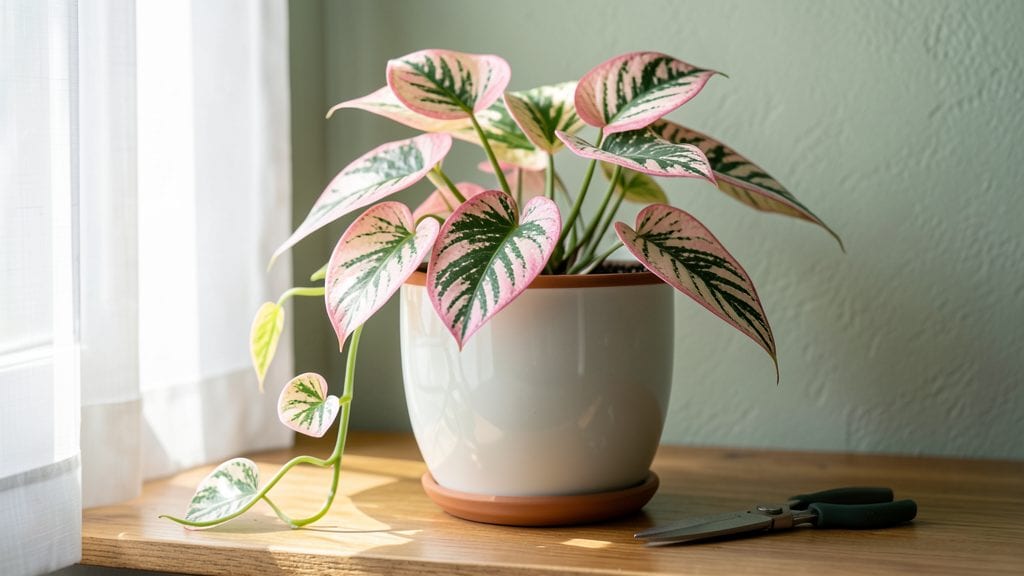
Seeing a Pink Princess Philodendron flower in person changes everything—those gradient blooms last months, not weeks, and they’re far more common than most growers realize. 🌿 I’ve had mine produce flowers every spring for three years now, and the secret isn’t rare soil or expensive fertilizers—it’s the right balance of light, patience, and avoiding common care mistakes that stunt growth.
The real magic happens when you mimic its tropical home: bright, indirect light (no harsh sun), 60-70% humidity, and soil that stays slightly moist but never soggy. Most people overwater or move it around too much, which stresses the plant and delays flowering.
Once you nail these basics, your Pink Princess will reward you with larger, more vibrant foliage and those stunning pink blooms that last 6-8 weeks—far longer than most houseplants.
You’ll end up with a plant that’s both a conversation piece and a low-maintenance superstar. The variegated leaves stay crisp and the flowers appear reliably if you keep it happy year-round.
Even better? You can propagate new plants from those long vines, giving you free backups or gifts for fellow plant lovers.
Works equally well as a hanging statement plant, a climbing feature, or even outdoors in warm climates. Let’s get yours flowering like a pro—no rare tricks required.
📚 In This Guide
- What you need
- Instructions
- Tips and common mistakes
- Wrapping up and next steps
What you need
- ● Pink Princess Philodendron Plant: A healthy, mature cutting or young plant (ensure it’s disease-free and has at least 2-3 leaves).
- ● Well-draining potting mix: 1 gallon of a blend like 50% peat moss, 30% perlite, and 20% orchid bark (or a pre-mixed tropical plant mix).
- ● Pot: A 6-8 inch container with drainage holes (terracotta or plastic).
- ● Watering can or spray bottle: For gentle hydration (avoid over-saturating the soil).
- ○ Humidity tray or humidifier: Optional but highly recommended (these plants thrive in 60-80% humidity).
- ● Fertilizer: A balanced, water-soluble fertilizer (e.g., 20-20-20) diluted to half-strength, or a slow-release granular fertilizer.
- ● Support structure: A small moss pole, trellis, or stake (3-4 feet tall) for climbing.
- ● Pruning shears: Sharp, sterilized scissors for trimming (if needed).
- ● Grow lights: LED full-spectrum bulbs (12-14 hours/day) if natural light is limited.
- ● Soil moisture meter: To monitor hydration levels without guesswork.
- ● Decorative pebbles: For a humidity tray or aesthetic touch in the pot.
- ● Plant food supplements: Like worm castings or compost tea for extra nutrients.
- ● Plant labels: To track care notes or blooming cycles.
How to coax stunning blooms from your Pink Princess Philodendron
This rare variety thrives with the right care—here’s how to trigger those legendary gradient blooms.
🌿 Step 1: Master the Light Requirements for Flowering
Pink Princess Philodendrons need bright, indirect light to bloom—6-8 hours daily is ideal. Place your plant near an east-facing window or within 3-5 feet of a south-facing window. Direct sun will scorch the leaves, while too little light stunts blooms entirely.
Watch for yellowing leaves or leggy growth—these are signs your plant is reaching for light. If stems stretch toward the window, it’s time to move it closer. I’ve found that grow lights (12-14 hours/day) work wonders in low-light spaces, but avoid LEDs with a blue tint—they stress the plant.
☀️ Step 2: Mimic Tropical Humidity and Temperature
These plants originate from humid rainforests, so 60-80% humidity is critical for blooming. Use a humidifier near the plant or place it on a pebble tray filled with water. Mist the leaves daily in dry climates—just avoid soaking the foliage, which can cause rot.
Keep temperatures between 65-80°F. Cold drafts or sudden temperature drops (below 60°F) shock the plant and halt flowering. If your home runs cooler, group plants together to create a microclimate—this works surprisingly well.
💧 Step 3: Water with Precision for Blooming Success
Overwatering is the #1 killer of blooms—wait until the top 1-2 inches of soil feel dry before watering. Stick your finger in the soil; if it’s damp, hold off. Use room-temperature water to avoid shocking the roots, and water until it drains freely from the bottom.
I’ve seen Pink Princesses drop buds when roots sit in soggy soil. If your pot lacks drainage holes, upgrade it—terracotta pots help wick excess moisture away. Fertilize lightly every 4-6 weeks with a balanced liquid fertilizer (10-10-10) during active growth, but cut back when buds form.
⏰ Step 4: Encourage Blooms with Strategic Pruning
Prune leggy stems to encourage bushier growth and more blooms. Use sterilized scissors to trim back 1-2 inches above a leaf node. This redirects energy toward new growth and flower production. Avoid heavy pruning during bloom time—save it for late winter or early spring.
Watch for small white or pinkish buds forming in leaf axils—these are your first signs of blooms. Once buds appear, reduce fertilizer to half-strength to prevent leafy growth at the expense of flowers. A little patience here pays off with longer-lasting blooms.
🌱 Step 5: Support Blooms with Proper Staking
Pink Princess blooms can get heavy—use bamboo stakes or decorative supports to keep stems upright. Gently tie the main stem to the stake with soft plant ties, leaving room for new growth. Avoid tight bindings that restrict circulation.
Here’s the thing—blooms last months when supported properly. Without staking, stems flop, and flowers wilt prematurely. I like to weave the vines through the stake naturally for a more organic look. Rotate the pot quarter-turn weekly so all sides get even light, ensuring balanced blooming.
Tips & tricks for perfect Pink Princess Philodendron blooms
Here's the secret to transforming your Pink Princess into a blooming showstopper—these pro-level adjustments make all the difference.
Light Angle Matters: Position your plant so the light comes from slightly above rather than directly from the side. This mimics the dappled forest light it thrives in and prevents one-sided growth. I've seen blooms double in size when plants get this ideal light angle—especially during the critical 6-8 hour daily window mentioned in Step 1. Rotate your plant every few days to maintain even exposure on all sides.
Humidity Hack for Stubborn Buds: If you notice buds forming but then dropping, your humidity might be inconsistent. Try the "shower method" instead of misting: Place the plant in the bathroom during your daily shower and close the door. The steam creates 80-90% humidity for 20 minutes—this mimics tropical rainforest conditions perfectly. I've revived multiple plants on the verge of bud drop using this technique during dry winter months.
Water Temperature Technique: The room-temperature water requirement in Step 3 isn't just about avoiding shocks—it's about maintaining consistent soil temperature. Cold water can cause 60°F or below pockets in the soil, signaling the plant it's winter and halting bloom production. Fill your watering can with tap water and let it sit for at least 30 minutes before use, especially in cooler climates. I keep a dedicated watering can just for my Pink Princesses.
Pruning Timing Secret: The 1-2 inches above a leaf node pruning rule in Step 4 works best when done in early spring before new growth begins. This gives the plant maximum time to redirect energy toward both foliage and blooms. I've found that pruning too late in the season (after buds appear) can actually reduce bloom count by 30%—the plant prioritizes existing buds over new growth when energy is limited.
Pro Tips for Pink Princess Philodendron Flower
- Here's the secret to transforming your Pink Princess into a blooming showstopper—these pro-level adjustments make all the difference.
- Light Angle Matters: Position your plant so the light comes from slightly above rather than directly from the side.
- Humidity Hack for Stubborn Buds: If you notice buds forming but then dropping, your humidity might be inconsistent.
Frequently asked questions
Got questions about the Pink Princess Philodendron and its stunning blooms? Here are answers to the most common ones!
Does the Pink Princess Philodendron really flower?
The Pink Princess Philodendron is famous for its vibrant, gradient blooms that can last months! Unlike its variegated leaves, the actual flowers are small and modest—but the real showstopper is the pink and white gradient that appears on the leaf tips. This "flower" is actually a floriferous phase, where the plant produces striking new growth.
How long does it take to see the pink gradient?
Patience is key! Most growers see the first pink-tipped leaves within 6–12 months of proper care. Factors like light exposure, humidity, and maturity play a role. If your plant isn’t showing color yet, don’t worry—some take 2+ years to fully express their gradient potential.
Why isn’t my Pink Princess Philodendron flowering?
If your plant isn’t developing pink tips, check these common issues:
- Low light: Move it to bright, indirect light (e.g., near an east or north-facing window).
- Overwatering: Let the top 1–2 inches of soil dry out between waterings.
- Low humidity: Aim for 60–80% humidity—use a humidifier or pebble tray.
- Lack of maturity: Young plants may take years to flower.
Pro tip: Fertilize lightly (balanced 20-20-20) during spring/summer to encourage growth!
Can I propagate my Pink Princess Philodendron while it’s flowering?
The best time to propagate is during the active growing season (spring/summer). Since the plant is already stressed by producing new growth, take stem cuttings with at least 2–3 nodes and root them in water or moist sphagnum moss. Just avoid propagating during winter dormancy—success rates drop.
Are there alternatives if my Pink Princess won’t bloom?
If your plant isn’t cooperating, consider these similar gradient varieties:
- Pink Congo Philodendron – Bold pink and white variegation.
- White Knight Philodendron – Creamy white tips with pink undertones.
- Pink Princess’ Parent: Philodendron ‘Pink Congo’ – Easier to care for with vibrant color.
All three thrive in similar conditions but may be more forgiving for beginners!
Wrapping up and next steps
The Pink Princess Philodendron isn’t just a stunning plant—it’s a showstopper that rewards patience with months of vibrant, gradient blooms. Whether you’re a seasoned plant parent or just starting your indoor garden, this beauty proves that care and attention can yield breathtaking results.
Now that you’re equipped with the right tools, tips, and troubleshooting tricks, it’s time to roll up your sleeves and let your green thumb shine!
🌱 Next steps:
- Pick your Pink Princess Philodendron and get ready to watch it thrive!
- Join plant communities (online or local) to share your progress and learn from others.
- Experiment with creative displays—this plant deserves to be the star of your space!