
Flowers
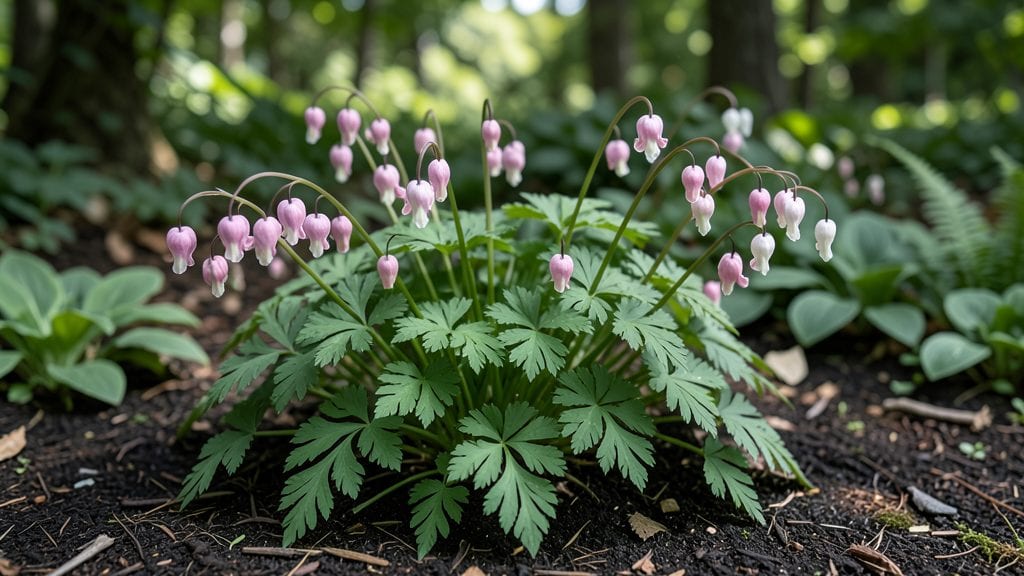
The bleeding heart flower's story begins with Victorian mourning traditions and Chinese legends of love and sacrifice. 💔 Its delicate, heart-shaped blooms dangling like tears have captivated gardeners for centuries, blending sorrow and beauty in one striking package.
This isn't just a plant—it's a living poem, whispering tales of grief and devotion through its unique vertical cascades.
In Victorian gardens, bleeding hearts became symbols of remembrance, often planted near graves or in memorial spaces where their weeping blooms seemed to mourn alongside families.
Meanwhile, Chinese folklore tells of a maiden's tears turning to flowers after her tragic death—a legend that still lingers in the way these plants sway gently in the breeze. The contrast between their ethereal beauty and their somber associations makes them perfect for gardens where history and emotion intertwine.
For designers, bleeding hearts offer a chance to create dramatic vertical focal points in shady corners, their arching stems reaching toward the sky like nature's own stained glass.
Pair them with ferns for a lush, woodland feel or contrast them against dark foliage like heucheras to make the pink blooms pop. Their story-rich presence elevates any garden from simple to deeply meaningful—where every bloom carries a whisper of the past.
Whether you're designing a memorial garden or simply adding layers of meaning to your shade garden, bleeding hearts deliver both visual drama and emotional depth. Their unique shape and cultural weight make them the perfect bridge between beauty and memory—where every plant tells a story worth remembering.
📚 In This Guide
- What you need
- Instructions
- Tips and common mistakes
- Wrapping up and next steps
What you need
- ● Bleeding heart plants: 1–3 Dicentra spectabilis plants (pink or white varieties) – choose healthy, established specimens from a nursery.
- ● OR Seeds (if starting from scratch) – requires patience (germination can take 2–4 weeks).
- ● Soil: 1–2 bags of well-draining, rich compost (mix with native soil for optimal results).
- ● Mulch: 1–2 cubic feet of organic mulch (e.g., shredded bark or leaves) to retain moisture.
- ● Garden trowel or shovel – for digging holes (6–8 inches deep).
- ● Garden gloves – to protect your hands from thorns (if pruning later).
- ● Watering can or hose with a gentle spray nozzle – bleeding hearts love moisture!
- ○ Pruners (optional) – for trimming spent blooms or overgrowth.
- ● A shady or partially shaded spot (3–6 hours of dappled sunlight daily).
- ● Well-draining soil with a slightly acidic to neutral pH (6.0–7.0).
- ● Patience! – Bleeding hearts thrive in USDA Hardiness Zones 3–9 and may take 1–2 years to fully flourish.
How to grow bleeding heart flowers for stunning vertical drama
These heart-shaped blooms thrive in shade—here's how to coax their signature cascades.
🌱 Step 1: Choose the Perfect Shady Spot
Bleeding hearts adore partial to full shade, with morning sun at most. I plant mine where trees filter light—think dappled sunlight through leaves. Avoid harsh afternoon rays, which scorch delicate foliage. The ideal location gets 3-6 hours of indirect light daily.
Here's the thing—these plants spread slowly but grow 2-3 feet tall with 2-3 foot wide clumps. Give them 18-24 inches of space between plants so they don't compete. I always mark the area with stakes before digging, since bleeding hearts resent root disturbance once established.
☀️ Step 2: Prepare Rich, Moist Soil
Bleeding hearts demand well-draining but moisture-retentive soil. Amend your native soil with 3-4 inches of compost and a handful of peat moss to improve texture. These plants hate dry roots—think of them as woodland natives. I dig in a slow-release fertilizer (like 10-10-10) at planting time to give them a nutrient boost.
The key is keeping soil consistently moist but never soggy. If your soil drains too fast, mix in 1 part perlite to the top 6 inches. You'll know you've got it right when water soaks in slowly but doesn't pool. Test by squeezing a handful—it should hold together but not drip.
🪴 Step 3: Plant Bare-Root or Container-Grown Plants
For bare-root plants, soak roots in lukewarm water for 1-2 hours before planting. Dig holes twice as wide as the root ball but only as deep as the plant's crown. Bleeding hearts hate being buried too deep—this causes rot. I always check the crown sits just above soil level after backfilling.
For container-grown plants, remove from pots and loosen any circling roots gently. Place in the hole, then fill with native soil mixed with compost. Water deeply right after planting to eliminate air pockets. You'll see new leaves emerge within 2-3 weeks—that's your sign everything's working.
💧 Step 4: Water Deeply and Mulch Generously
Water once weekly during the first growing season, providing 1 inch of water each time. The soil should feel damp 2 inches down—stick your finger in to check. Once established, bleeding hearts tolerate drought better, but they'll reward consistent moisture with longer blooming periods.
Spread 3-4 inches of mulch (like shredded bark) around the base, keeping it 2 inches away from stems. This conserves moisture and keeps roots cool. I always refresh mulch in early spring—it breaks down over winter and loses effectiveness. Watch for white flowers in spring, followed by those iconic heart-shaped blooms by late spring.
✂️ Step 5: Prune and Divide for Long-Term Health
After blooming, cut back spent stems to the ground in early summer. This encourages fresh foliage and next year's flowers. I never cut back before mid-July, as the plant needs leaves to photosynthesize for fall growth. You'll notice new shoots emerging from the base within 3-4 weeks.
Divide clumps every 3-4 years in early spring or fall. Dig up the plant, separate sections with 2-3 shoots each, and replant immediately. This prevents overcrowding and rejuvenates blooms. Real talk: I've seen neglected bleeding hearts produce fewer flowers—they need this refresh to perform their best.
Tips & tricks for perfect bleeding heart flower dramatics
Here's how to turn your shady garden corner into a lush, cascading showstopper.
Location is Everything: That 3-6 hours of indirect light is non-negotiable—bleeding hearts will sulk in full sun. I've planted mine under a mature maple tree where the light dances through leaves all morning. If your yard lacks natural shade, create it with a sheer curtain or lattice structure. The secret to those signature vertical cascades? Plant near a fence or trellis where stems can drape naturally. Think of it as their built-in support system.
Soil Science Matters: The compost-peat moss mix isn't just fluff—it's the difference between wilted disappointment and thriving drama. I always test my soil's moisture by squeezing a handful: it should crumble when dry but not drip. If your soil drains too fast, mix in that perlite to the top 6 inches—it's like adding tiny water reservoirs for roots. And here's what nobody tells you: these plants actually prefer slightly acidic soil (pH 6.0-7.0). A simple soil test kit solves this mystery.
Planting Precision: That 1-2 hour root soak before planting is your secret weapon for shock-free establishment. I use lukewarm water because cold water stresses roots, while hot water can cook them. For container plants, gently tease apart those circling roots—it's like giving them a spa treatment before their new home. And remember: the crown must sit just above soil level. If you bury it too deep, you'll get rot instead of romance.
Watering Wisdom: The once-weekly 1-inch watering rule works best with morning sessions—it gives plants all day to drink before evening cools. I use a rain gauge to track exactly 1 inch, but you can also use a tuna can: fill it to the rim, place it in your garden, and water until the can's empty. That damp 2 inches down check? It's your moisture litmus test. And here's my pro move: I water the soil, not the leaves, to prevent fungal issues that can ruin those delicate blooms.
Pro Tips for The Story Of The Bleeding Heart Flower
- Here's how to turn your shady garden corner into a lush, cascading showstopper.
- Location is Everything: That 3-6 hours of indirect light is non-negotiable—bleeding hearts will sulk in full sun.
- Soil Science Matters: The compost-peat moss mix isn't just fluff—it's the difference between wilted disappointment and thriving drama.
Frequently asked questions
Got questions about the bleeding heart flower? You’re not alone! Here are some of the most common queries—and their answers—to help you grow these dramatic beauties with confidence.
What’s the best time to plant bleeding heart flowers?
Plant bleeding heart flowers in early spring (as soon as the soil is workable) or in fall (4-6 weeks before the first frost). These shade-loving perennials thrive when given time to establish roots before extreme heat or cold. Avoid planting in summer—hot weather can stress young plants!
Why aren’t my bleeding heart flowers blooming?
If your plants are healthy but not flowering, check these common culprits:
- Too much sun: They need partial to full shade (6+ hours of shade/day).
- Poor soil: Amend clay or sandy soil with organic matter (compost or peat moss) for better drainage.
- Over-fertilizing: Too much nitrogen = lush foliage, fewer blooms. Use a balanced fertilizer (10-10-10) sparingly.
- Age: Young plants may take 2-3 years to bloom. Be patient!
Pro tip: Deadhead spent blooms to encourage more flowers!
Can bleeding heart flowers grow in containers?
Choose a large container (at least 12 inches deep) with well-draining soil and place it in a shady spot. Use a moisture-retentive potting mix (add perlite or orchid bark for aeration) and water regularly. Note: Container-grown bleeding hearts may need winter protection in cold climates (move to a garage or wrap the pot).
Are bleeding heart flowers toxic to pets or humans?
Yes, all parts of the bleeding heart plant (Dicentra spectabilis) are toxic if ingested, thanks to isoquinoline alkaloids. Symptoms in pets (or kids) may include drooling, vomiting, or diarrhea. Keep plants out of reach and consult a vet if exposure occurs. Good news: They’re non-toxic to butterflies and bees!
What’s a good alternative if I can’t grow bleeding heart flowers?
If your climate is too hot/dry or your soil is challenging, try these shade-loving, heart-shaped bloomers:
- Japanese Anemone (Anemone × hybrida) – Late-summer blooms, drought-tolerant.
- Astilbe – Feathery plumes in pink/white; loves moist soil.
- Lungwort (Pulmonaria) – Unique spotted leaves + early spring blooms.
- Hellebore (Helleborus) – "Lenten rose" blooms in winter/spring.
All thrive in similar shady, woodland-garden conditions!
Wrapping up and next steps
The bleeding heart flower isn’t just a stunning addition to your garden—it’s a living symbol of resilience, beauty, and the quiet magic of nature. 🌿 From its dramatic vertical blooms to its rich folklore, this plant teaches us that even the most delicate things can leave a lasting impact.
Whether you’re drawn to its story, its care, or its symbolism, there’s always more to explore.
Ready to bring a touch of whimsy to your shady spots? Start by planting one today—or dive deeper into the world of unique flowers to find your next garden favorite! 🌸