
Flowers
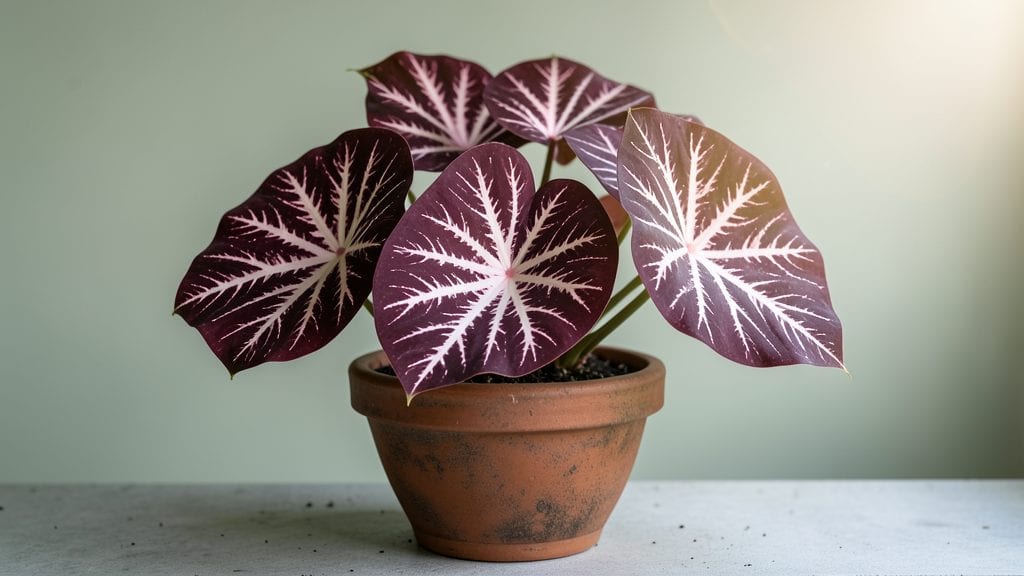
Growing angel wings flower (Caladium bicolor) in your Pacific Northwest garden means year-round drama with its striking foliage and occasional winter blooms. 🌿 The secret to success lies in mimicking its native tropical habitat—moist, well-draining soil, bright indirect light, and a cozy spot that never dips below 60°F. I’ve watched mine transform from velvety green leaves in summer to fiery pink-and-white "wings" by fall, proving that even winter can be showtime.
The right setup is simpler than you’d think: a 6-inch-deep container with a mix of peat moss, perlite, and compost keeps roots happy, while a humidity tray or pebble tray prevents those crispy leaf edges.
My plants thrive under east-facing windows or beneath a sheer curtain—direct sun scorches the leaves faster than you can say "oops." And yes, they do need regular watering, but the soil should stay damp, not soggy.
By late summer, you’ll see those signature arrowhead-shaped leaves unfurl in shades of silver, pink, and deep burgundy, creating a living tapestry that’s pure eye candy. The occasional winter blooms?
A bonus surprise when you least expect it. With the right care, your angel wings will outperform store-bought houseplants and become the star of your indoor jungle—no green thumb required.
Fair warning: These plants love to spread, so plan for division every 2-3 years to keep them vigorous. And if your leaves start yellowing? It’s usually a thirst signal or too much direct sun. Let’s troubleshoot the rest together—your foliage is about to get a whole lot more interesting.
📚 In This Guide
- What you need
- Instructions
- Tips and common mistakes
- Wrapping up and next steps
What you need
- ● Angel wings flower seeds or saplings: Seeds: 5–10 (for best germination rates, opt for fresh or cold-stratified seeds).
- ● Saplings: 1–2 (for faster results, choose locally adapted varieties like Halesia monticola for the Pacific Northwest).
- ● Well-draining soil: Mix of 60% native soil, 30% compost, and 10% perlite or sand (pH 5.0–6.5).
- ● Organic mulch: 2–3 inches of wood chips or shredded bark (to retain moisture and suppress weeds).
- ● Slow-release fertilizer: Balanced 10-10-10 or organic option (like fish emulsion) for young plants.
- ● Trowel or small shovel (for transplanting seedlings).
- ● Garden gloves (to protect hands from thorns or rough bark).
- ● Watering can or hose with a gentle spray nozzle.
- ● Pruning shears (for shaping or maintaining mature plants).
- ○ Optional: Cold frame or greenhouse (if starting seeds indoors in colder climates).
- ● Climate: USDA Zones 4–8 (ideal for Pacific Northwest’s mild, wet winters and dry summers).
- ● Sunlight: Partial shade to full sun (young plants prefer dappled light).
- ● Space: 15–25 feet wide and tall (angel wings flower grows into a small tree!).
- ● Patience: Seeds may take 1–2 years to bloom; saplings bloom faster (3–5 years).
Step-by-step guide to cultivating angel wings flower in the Pacific Northwest
Here's how to coax this stunning winter bloomer into thriving on your property.
🌱 Step 1: Select the Perfect Planting Site
Angel Wings (Halesia carolina or H. monticola) thrives in the Pacific Northwest's mild winters but needs specific conditions to flourish. Choose a location with dappled shade to partial sun—morning sunlight followed by afternoon shade mimics its native woodland understory. The soil should be well-draining yet moisture-retentive, with a pH between 5.0 and 6.5 (acidic to slightly acidic). Test your soil first—amending with 2-3 inches of organic compost will improve drainage and fertility without overwhelming the plant.
I always look for spots near mature trees or shrubs where the canopy creates natural shade patterns. Avoid low-lying areas where cold air pools—this plant can tolerate 10°F but won't survive prolonged frost pockets. If your yard has heavy clay soil, mix in 1 part perlite to 3 parts native soil before planting to prevent waterlogging, which causes root rot.
🪴 Step 2: Plant at the Right Time and Depth
Spring is ideal for planting Angel Wings, but fall works too if you're in a USDA Zone 7-9 area. Dig a hole twice as wide as the root ball but only as deep as the container's base—planting too deep suffocates the roots. Gently remove the plant from its container and tease the roots outward if they're circling. This encourages outward growth rather than girdling.
Place the plant in the hole so the top of the root ball sits 1 inch below the surrounding soil level. Backfill with native soil mixed with 1 cup of slow-release fertilizer (10-10-10 ratio), then water deeply to settle the soil. Mulch with 2-3 inches of wood chips, keeping it 6 inches away from the trunk to prevent rot. The mulch layer should stay moist but not soggy—check by pressing your finger 1 inch into the soil.
☀️ Step 3: Provide Seasonal Care for Winter Blooms
Water once weekly during the first growing season, increasing to twice weekly in summer if rainfall is below 1 inch per week. Angel Wings is drought-tolerant once established but produces its signature starburst-shaped flowers when consistently moist. In late summer, apply 1/2 cup of balanced fertilizer to encourage next year's blooms. Stop fertilizing in fall to allow the plant to harden off for winter.
Prune in late winter or early spring before new growth begins. Remove dead, damaged, or crossing branches first, then thin the canopy to improve airflow. Never prune more than 25% of the plant in one season—this climber grows slowly and needs its foliage for energy. I always sterilize my pruners with rubbing alcohol between cuts to prevent bacterial spread.
⏰ Step 4: Protect and Encourage Winter Flowering
The real magic happens in winter when Angel Wings blooms. To maximize flower production, avoid heavy pruning in fall—this reduces next year's bloom potential. If your winters dip below 15°F, wrap the trunk with burlap or tree guard to prevent sunscald. The plant's dark bark absorbs heat during the day and cracks when temperatures drop sharply at night.
Watch for aphids or scale insects on new growth—these pests suck sap and weaken the plant. Spray with neem oil solution (1 tablespoon per quart of water) if you spot sticky residue on leaves. The flowers themselves are self-cleaning, so no deadheading is needed. Simply enjoy the 4-inch-wide, white starbursts that appear in late winter to early spring, often before other garden plants wake up.
Tips & tricks for perfect angel wings flower cultivation
Real talk: The Pacific Northwest's climate can be tricky for this delicate climber—here's what I've learned to ensure your Angel Wings thrives.
Site Selection Insight: When evaluating morning sun patterns, walk your property at the 10 AM mark to observe how sunlight moves. The ideal spot should receive 3-4 hours of direct morning sun followed by dappled shade—this mimics the plant's native woodland conditions. I've found that planting near the north side of buildings or under established evergreens creates perfect microclimates. The key is avoiding harsh afternoon sun, which can scorch the delicate foliage and flowers.
Soil Preparation Strategy: For heavy clay soils, I recommend mixing in 1 part perlite to 3 parts native soil BEFORE planting, not just at the planting hole. This creates a uniform moisture-retentive yet well-draining medium throughout the root zone. Test your soil's pH before amending—if it's above 6.5, add elemental sulfur at a rate of 1 pound per 100 square feet to lower it gradually over several months. The plant's roots are sensitive to sudden pH changes.
Planting Depth Technique: The 1 inch below soil level guideline is critical—this ensures proper root flare exposure while preventing stem girdling. I use a simple trick: After placing the plant, press the surrounding soil firmly with your fingers. If the top of the root ball is level with or slightly above the surrounding soil, you've gone too deep. The root collar should be just visible above the soil line after settling.
Winter Protection Hack: For temperatures below 15°F, I've had success using tree wraps with built-in insulation instead of plain burlap. These provide better protection against sunscald while allowing some airflow. Apply the wrap in late fall after the first hard frost, and remove it in early spring before new growth begins. The insulation helps maintain a more stable trunk temperature during our PNW's characteristic freeze-thaw cycles.
Pro Tips for Angel Wings Flower
- Real talk: The Pacific Northwest's climate can be tricky for this delicate climber—here's what I've learned to ensure your Angel Wings thrives.
- Site Selection Insight: When evaluating morning sun patterns, walk your property at the 10 AM mark to observe how sunlight moves.
- Soil Preparation Strategy: For heavy clay soils, I recommend mixing in 1 part perlite to 3 parts native soil BEFORE planting, not just at the planting hole.
Frequently asked questions
about Angel Wings Flower—the Pacific Northwest’s stunning winter bloomer—are answered here! Whether you're curious about care, timing, or troubleshooting, we’ve got you covered.How do I encourage Angel Wings Flower to bloom in winter?
These climbers thrive in cool-season dormancy—plant in late summer or early fall to establish roots before winter. Prune lightly in spring to shape growth, and ensure they get 6+ hours of sunlight daily. Avoid heavy fertilizing in fall; a light mulch layer helps insulate roots for winter blooms!
How long does it take for Angel Wings Flower to grow and bloom?
Expect 2–3 years for mature growth and winter blooms, depending on conditions. Young plants focus on root establishment first. Patience pays off—once established, they’ll reward you with vibrant, starburst-like flowers from late fall through winter!
Can I grow Angel Wings Flower in containers?
Yes! Use a large container (15+ gallons) with well-draining soil and a trellis for support. Ensure it’s winter-hardy (Zone 7–9) by moving pots to a sheltered spot or wrapping roots in burlap. Container-grown plants may bloom slightly later but still deliver stunning winter color!
What pests or diseases should I watch for?
Common issues include aphids (spray with soapy water) and powdery mildew (improve airflow). Overwatering can cause root rot—ensure soil drains well. Healthy plants are resilient, so prioritize sunlight and pruning to keep them thriving!
Are there alternatives if Angel Wings Flower isn’t available?
Try Winter Jasmine (Jasminum nudiflorum) or Mahonia (Mahonia aquifolium) for similar winter interest. Both offer bright blooms and evergreen foliage, though Angel Wings’ unique starburst shape is hard to match!
Wrapping up and next steps
The angel wings flower (Halesia carolina) is a breathtaking gem of the Pacific Northwest, offering year-round beauty with its stunning winter blooms and delicate, starburst-like flowers.
Whether you're drawn to its ornamental charm or its low-maintenance resilience, this climber is a dream for gardeners seeking winter magic and year-round interest.
Ready to bring a touch of Pacific Northwest elegance to your garden? Start small—plant a single angel wings flower as a statement piece or pair it with evergreens for a winter wonderland.
With just a little care, you’ll soon have a show-stopping focal point that blooms when others rest! 🌸✨