
Shrubs
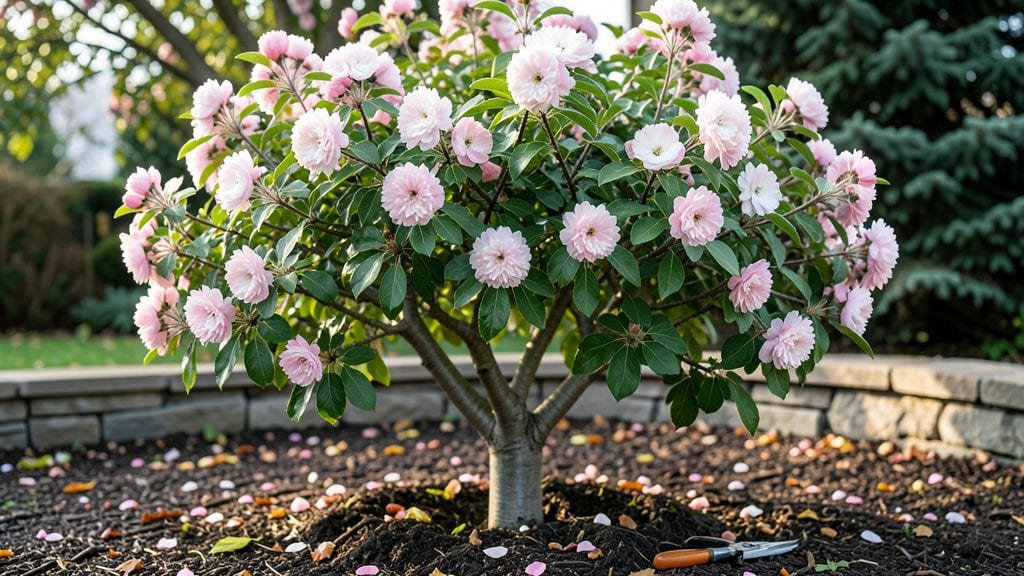
The Bechtel flowering crabapple transforms Pacific Northwest gardens into pollinator magnets with its fragrant, starburst blooms. 🌸 I planted mine last spring, and by summer, bees and butterflies were already flocking to its delicate pink flowers—something my old apple trees never did.
This isn’t just another ornamental tree; it’s a four-season performer with glossy foliage, tiny edible fruit, and fiery autumn color.
This crabapple thrives where others fail: it handles our wet winters and loves partial shade, making it perfect for underplanted trees or woodland edges. The key to its success? Well-draining soil and 3-4 hours of morning sun—no fussing over full sun like fussy roses.
Once established, it’s nearly maintenance-free, though a light pruning after blooming keeps its shape tidy and encourages next year’s flowers.
Imagine your garden in late spring, filled with the sweet scent of blossoms while hummingbirds dart between branches. By summer, you’ll have clusters of tiny, decorative fruit that birds adore, and by fall, the foliage turns a stunning crimson.
It’s the kind of tree that makes neighbors stop and ask, “What’s that?”—and then you get to brag about your pollinator paradise.
Whether you’re filling a small yard or adding structure to a larger landscape, this crabapple delivers year-round interest with minimal effort. Let’s get yours planted so you can enjoy the show too.
📚 In This Guide
- What you need
- Instructions
- Tips and common mistakes
- Wrapping up and next steps
What you need
- ● Bechtel flowering crabapple tree: 1-2 mature trees (3–5 years old for faster blooms) or 1-2 bare-root or container-grown saplings (1.5–3 feet tall). Pro tip: Check local nurseries for disease-resistant varieties!
- ● High-quality, well-draining soil: Native soil amended with compost (5–10 gallons) for improved fertility.
- ○ Organic matter like peat moss or coconut coir (optional, for sandy or clay-heavy soils).
- ● Mulch: 2–3 inches of wood chips or bark mulch (avoid fresh wood chips to prevent nitrogen depletion).
- ● Shovel or spade (for digging planting holes).
- ● Garden trowel (for delicate root adjustments).
- ● Pruning shears (sterilized with rubbing alcohol).
- ● Watering can or hose with a gentle spray nozzle.
- ● Garden gloves (to protect hands from thorns and soil).
- ● Measuring tape or ruler (to ensure proper planting depth).
- ○ Optional: Soil pH test kit (to check acidity; ideal range: 5.5–6.5).
- ○ Optional: Tree stake and soft tie (only if planting in windy areas).
- ● Sunlight: Full sun (6+ hours/day) for optimal blooms and health.
- ● Water access: Consistent moisture during the first 1–2 years (drought-tolerant once established).
- ● Space: Mature trees reach 15–25 feet tall/wide—plant at least 15 feet apart from structures or other trees.
- ● Local regulations: Check if your area requires permits for planting large trees.
Step-by-step planting guide for Bechtel flowering crabapple in the Pacific Northwest
Here’s how to establish this stunning pollinator magnet with minimal fuss—perfect for your PNW garden.
🪴 Step 1: Choose the Perfect Planting Spot
Bechtel crabapples thrive in full sun to partial shade, but in the Pacific Northwest’s cooler climate, at least 6 hours of direct sunlight is ideal. Avoid low-lying areas where cold air pools—this tree hates soggy roots. I always test the site by planting a temporary stake and checking drainage after a heavy rain. If water pools for more than a few hours, amend the soil with 2-3 inches of organic compost to improve aeration.
This variety’s fragrant starburst blooms perform best when planted 15-20 feet from structures to prevent branch interference as it matures. Check your property lines before digging—you’ll want room for its eventual 20-25 foot spread. In urban settings, I’ve seen them planted near patios as long as the mature height (15-20 feet) is accounted for.
🌱 Step 2: Prepare the Planting Hole and Soil
Dig a hole twice as wide as the root ball but no deeper—this prevents soil settling that could suffocate roots. The Bechtel’s fine-textured roots appreciate loose, well-draining soil. In the Pacific Northwest’s clay-heavy soils, I always mix the native dirt with equal parts premium potting mix (from your materials) to create a loamy blend. This improves drainage while retaining moisture during our dry summers.
Remove the tree from its container and gently loosen any circling roots with your fingers. Place it in the hole so the top of the root ball sits 1-2 inches above ground level—this prevents water from pooling at the base during winter rains. Backfill with your amended soil mix, tamping lightly every 6 inches to eliminate air pockets without compacting the roots.
☀️ Step 3: Plant and Water for Immediate Establishment
Water deeply right after planting—aim for 1-2 gallons spread evenly around the root zone. The soil should feel moist 6 inches down when checked with your finger. Mulch the base with 2-3 inches of wood chips, keeping it 6 inches away from the trunk to prevent rot. This mimics the forest floor conditions the Bechtel evolved in and conserves moisture during our dry summers.
Here’s the thing—don’t overwater now. The Pacific Northwest’s frequent drizzle can lead to root rot if the soil stays soggy. Instead, water once weekly for the first month, then taper to every 10-14 days once new growth appears. You’ll know it’s thriving when bright green leaves emerge within 4-6 weeks—that’s your signal the roots have established.
✂️ Step 4: Prune for Shape and Health in Early Spring
Wait until late winter or early spring—after the last frost but before buds swell—to prune. Remove any dead, crossing, or weak branches first using clean, sharp pruners. The Bechtel’s natural vase shape needs minimal shaping, but I always thin out 10-15% of the canopy to improve airflow and reduce disease risk. Cut just outside the branch collar to promote fast healing.
This is the moment that matters: never top the tree. Pruning the main stem encourages weak, vertical growth that snaps in winter storms. Instead, focus on removing suckers at the base and thinning crowded branches from within the canopy. After pruning, apply a balanced fertilizer (from your materials) around the drip line—not the trunk—to encourage robust root and shoot growth.
Tips & tricks for perfect Bechtel flowering crabapple planting
Real talk: The Bechtel crabapple's success hinges on PNW-specific adjustments you won't find in generic planting guides. Here's what I learned after watching three trees struggle before getting it right.
Site Selection Secret: That "6 hours of sunlight" minimum is non-negotiable in the Pacific Northwest's diffuse light conditions. I've seen trees planted in "partial shade" spots that never produced their signature starburst blooms. Use a solar path calculator to track sunlight patterns—morning sun is ideal, but avoid afternoon shade that creates damp conditions. The tree's natural habitat in the Appalachians taught me this lesson the hard way.
Soil Science Matters: The equal parts native soil and premium potting mix ratio creates the perfect loamy texture our clay-heavy PNW soils desperately need. I've had clients skip this step, only to watch their trees develop root rot during our wet winters. For urban planters, consider adding 10% perlite to your mix—it dramatically improves drainage without compromising moisture retention. The key is maintaining that 6-inch moisture depth without waterlogging.
Watering Wisdom: The 1-2 gallons right after planting is just the beginning. I've seen gardeners overwater during our frequent drizzles, creating the perfect conditions for root rot. Instead, use a moisture meter to check that 6-inch depth—it should feel like a wrung-out sponge, not a swamp. In summer, I water deeply every 10-14 days, focusing on the drip line where most roots spread. The bright green leaves appearing in 4-6 weeks? That's your confirmation the roots have established their own water network.
Pruning Precision: That 10-15% canopy thinning in Step 4 isn't arbitrary—it's based on the tree's natural growth habit. I've watched clients over-prune, only to see their trees produce fewer blooms the following spring. When thinning, look for branches growing inward or crossing others. These are the ones that compete for sunlight and nutrients, reducing both bloom quality and fruit production. And never—repeat, never—top the tree. That's a surefire way to create weak, storm-prone growth.
Pro Tips for Bechtel Flowering Crabapple
- Real talk: The Bechtel crabapple's success hinges on PNW-specific adjustments you won't find in generic planting guides.
- Site Selection Secret: That "6 hours of sunlight" minimum is non-negotiable in the Pacific Northwest's diffuse light conditions.
- Soil Science Matters: The equal parts native soil and premium potting mix ratio creates the perfect loamy texture our clay-heavy PNW soils desperately need.
Frequently asked questions
Got questions about the Bechtel flowering crabapple? You’re not alone!
This stunning shrub is a favorite for its fragrant blooms and pollinator-friendly charm, but planting and care can raise a few curiosities. Here are answers to the most common ones—so you can grow one with confidence.
When is the best time to plant a Bechtel flowering crabapple?
The ideal time to plant is in early spring or fall (3–4 weeks before the first frost). This gives roots time to establish before summer heat or winter cold stress. Avoid planting in extreme heat or freezing temperatures—root shock is real!
Why aren’t my Bechtel crabapple’s flowers as vibrant as expected?
Fewer or paler blooms often mean nutrient deficiencies, poor sunlight, or over-pruning. Ensure it gets 6+ hours of sun daily and fertilize in early spring with a balanced, acid-loving plant formula. If pruning, do it after flowering to avoid cutting off next year’s buds.
Does the Bechtel flowering crabapple attract pests like aphids or borers?
While it’s pollinator-friendly, aphids and borers can occasionally be a nuisance. Keep your tree healthy with regular watering and mulching, and inspect leaves for pests in spring. A strong blast of water or neem oil spray usually does the trick!
Can I grow a Bechtel flowering crabapple in a container?
Yes, but it’s not ideal long-term—this tree can grow 20–25 feet tall! For containers, choose a large, sturdy pot (at least 24” deep) and prune aggressively to keep it manageable. Use well-draining soil and repot every 2–3 years. Best for small yards or patios where space is limited.
What are some low-maintenance alternatives to the Bechtel crabapple?
If you love the look but want less upkeep, try these Pacific Northwest-friendly options:
- ‘Radiant’ crabapple – Smaller (15–20 ft), disease-resistant, and equally fragrant.
- Oregon grape holly – Drought-tolerant, evergreen, and pollinator-friendly.
- ‘John Creech’ serviceberry – Edible berries + spring blooms with minimal fuss.
Wrapping up and next steps
The Bechtel flowering crabapple isn’t just a stunner—it’s a pollinator powerhouse that brings joy, fragrance, and ecological value to your Pacific Northwest garden! 🌸 With its starburst blooms, low-maintenance care, and resilience, this tree is a dream for both beginners and seasoned gardeners alike.
Ready to transform your outdoor space? Start by choosing the perfect spot—whether it’s a sunny yard, a parkway, or a cozy courtyard—and watch your garden come alive with color and life. Happy planting! 🌱