
Size
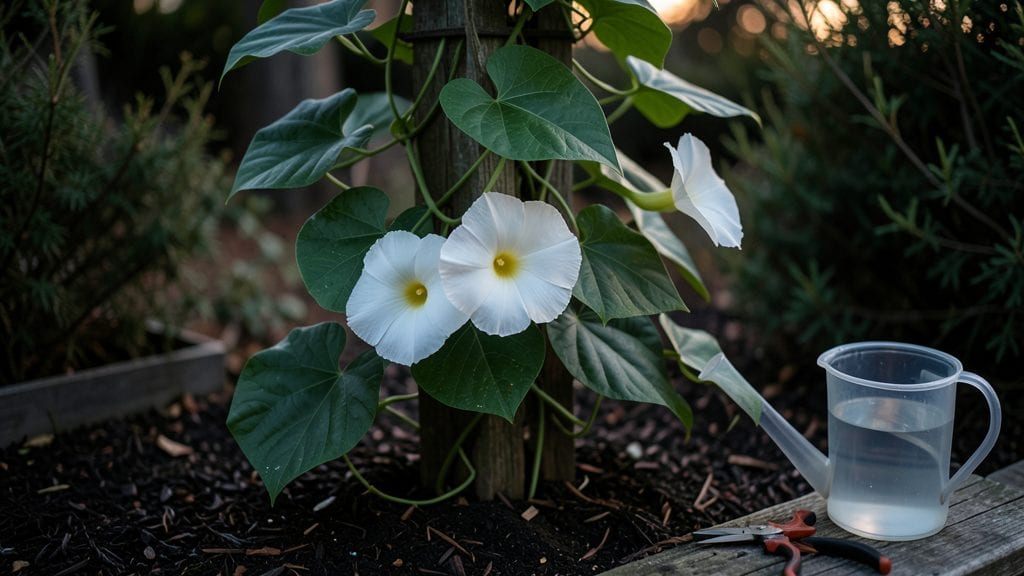
Growing moon flowers (Ipomoea alba) in your Pacific Northwest garden means frost-resistant starbursts that bloom at night and stay vibrant through cool summers. ✨ I planted mine last spring, and within weeks, they transformed a bare fence into a fragrant, moonlit canopy—no fuss, just fast-growing vines that thrive where other flowers struggle.
The secret starts with well-draining soil and a sturdy trellis—these climbers can reach 10-15 feet if given space. Morning sun and afternoon shade work best here, mimicking their native tropical habits while keeping roots cool.
Water deeply once a week (more in heatwaves), and watch them send out silvery-green leaves and delicate white trumpets by midsummer.
By late June, you’ll have night-blooming displays that attract moths and fill the air with a sweet, citrusy scent—something rare in PNW gardens. Prune leggy growth in spring to encourage bushier vines, and deadhead spent blooms to keep the flowers coming.
Even better? They self-seed happily, so you’ll have free plants for years.
Pests are minimal—just watch for aphids or spider mites, which you can wash off with water. Frost? No problem—these beauties handle light freezes down to 25°F once established. Perfect for cutting gardens, trellises, or even container growing with a strong support. Ready to grow yours?
📚 In This Guide
- What you need
- Instructions
- Tips and common mistakes
- Wrapping up and next steps
What you need
- ● Moon flower seeds: 10–20 seeds (or 1–2 starter plants from a nursery). Opt for organic, non-GMO seeds for best results.
- ● Well-draining potting mix: 2–3 cubic feet (for containers) or enrich your garden soil with compost (1–2 inches mixed into the top 6–12 inches of soil).
- ● Support structure: For climbing varieties: A trellis (6–8 ft tall), arbor, or sturdy fence.
- ● For bushier growth: A cage or stakes (4–5 ft tall).
- ● Slow-release fertilizer: 5–10 lbs (10–20% nitrogen) or a balanced 10-10-10 blend to kickstart growth.
- ● Mulch: 2–3 inches of straw or wood chips to retain moisture and protect roots from frost.
- ● Garden trowel or hand shovel (for planting seeds/transplants).
- ● Watering can or hose with a gentle spray nozzle (moon flowers love consistent moisture!).
- ● Pruning shears (to trim dead blooms and encourage new growth).
- ○ Gloves (optional but handy for thorny vines or messy soil).
- ● Sunlight: At least 6–8 hours of direct sun daily (partial shade in hot afternoons is fine).
- ● Soil pH: 6.1–7.5 (slightly acidic to neutral). Test your soil or amend with lime/sulfur if needed.
- ○ Frost tolerance: Moon flowers handle light frosts (28°F/-2°C) but may need row covers (optional) for harsh PNW winters.
- ● Space: Vines spread 10–15 ft—plan for vertical or horizontal growth zones!
- ● Epsom salt (1 tbsp/gallon of water) for magnesium boosts (spray leaves monthly).
- ● Decorative lights to highlight night-blooming flowers.
- ● Companion plants: Marigolds (pest control) or basil (improves flavor if you harvest blooms for tea!).
Step-by-Step guide for planting moon flowers in Pacific Northwest gardens
Here’s how to grow these frost-hardy beauties with minimal fuss—perfect for PNW’s cool, damp climate.
🌱 Step 1: Choose the Right Location and Soil
Moon flowers thrive in partial shade to full sun (at least 4-6 hours of morning sunlight), making them ideal for PNW gardens where afternoon sun can scorch tender blooms. I always pick a spot near a fence or trellis—their vining habit needs sturdy support to climb and display their starburst flowers.
Amend your native soil with 2-3 inches of compost to improve drainage, which is critical in the PNW’s wet winters. Moon flowers tolerate clay but struggle in soggy, compacted soil. Test drainage by digging a 6-inch hole, filling it with water, and checking if it drains within 30 minutes. If not, raise beds or mix in sand or perlite to loosen the soil.
🌿 Step 2: Plant Seeds or Transplants at the Right Time
For direct sowing, plant seeds 4-6 weeks before your last frost date (typically late March to early April in the PNW). Press seeds ½ inch deep into moist soil—too deep delays germination, and too shallow risks drying out. Space seeds 12-18 inches apart to allow vines room to spread without crowding.
If using transplants, wait until after the last frost (mid-May in most of the PNW) to avoid cold damage. Dig holes twice as wide as the root ball and just as deep. Gently remove the plant, loosen roots if pot-bound, and place it in the hole. Backfill with soil, firming lightly to eliminate air pockets. Water deeply to settle roots—1 gallon per plant is a good rule of thumb.
💧 Step 3: Water and Mulch for Frost Resistance
Moon flowers are drought-tolerant once established but need consistent moisture during their first growing season. Water deeply 1-2 times per week, aiming for 1-2 inches of water per week. In the PNW’s rainy climate, you’ll likely need to supplement during dry spells (June-August). Watch for wilting leaves—a sign the roots need more water.
Apply a 2-inch layer of mulch (straw or shredded bark) around plants to insulate roots and retain moisture. This is especially important in the PNW’s cool, wet springs and fall, where temperature swings can stress young plants. Keep mulch 2 inches away from stems to prevent rot. Replenish mulch annually in early spring to protect against late frosts.
✂️ Step 4: Support Vines and Prune for Better Blooms
Install a 5-6 foot trellis or sturdy fence near planting time—moon flowers can grow 10-15 feet in a season! Train vines by gently weaving them through the trellis as they grow. Avoid tying them tightly; let them climb naturally to prevent stem damage. If vines sprawl, they’ll produce fewer flowers and weaker stems.
Prune lightly to encourage bushier growth and more blooms. Pinch back new growth by ⅓ in early summer to promote branching. Deadhead spent flowers (those with brown centers) to redirect energy into new blooms. In the PNW, you can leave some seed pods for wildlife—birds love the seeds—but remove them if you want to prevent self-seeding in unwanted areas.
☀️ Step 5: Protect from Late Frosts and Pests
Moon flowers are frost-tolerant but may suffer damage from late spring frosts (below 28°F). Cover young plants with frost cloth or a lightweight blanket if a frost is forecast. Remove covers during the day to avoid overheating. Once established, mature plants handle frost well, but young seedlings can be killed by unexpected cold snaps.
Watch for aphids and spider mites, which can stress plants in the PNW’s humid summers. Spray infested areas with neem oil or a soapy water solution (1 tsp mild soap per quart of water). Encourage beneficial insects like ladybugs by planting dill or fennel nearby—they’ll keep pests in check naturally.
Tips & tricks for growing thriving moon flowers in the Pacific Northwest
Here's what I've learned from years of growing moon flowers in the PNW's unpredictable climate—these details make all the difference.
The Light Balance: While moon flowers tolerate partial shade, the 4-6 hours of morning sunlight is non-negotiable for robust growth. I've noticed that plants receiving afternoon sun often develop sunburned leaves by mid-July. If your garden only gets afternoon sun, consider planting them near a north-facing wall or under deciduous trees that provide summer shade.
Soil Test Hack: That 30-minute drainage test in Step 1 is worth repeating after your first rain. The PNW's heavy winter rains can compact soil over time, even with compost. If water pools after 30 minutes, mix in 1 part sand or perlite to 3 parts soil—this creates tiny air pockets that prevent root rot while still holding moisture. I've seen plants struggle in "good" soil that didn't drain properly after winter.
Transplanting Timing: When planting transplants after the last frost, I wait until soil temperatures reach 55°F at 4 inches deep. You can test this with a soil thermometer—cold soil slows root establishment. In cooler PNW zones, this might mean waiting until late May. The 1 gallon of water per plant should soak in completely within 15 minutes—if not, your hole needs to be wider.
Pruning Precision: That ⅓ pinch back in early summer isn't just about bushiness—it triggers lateral branching that produces more flowers. I time this pruning for when new growth reaches 6-8 inches tall, using clean scissors to make cuts just above leaf nodes. For established plants, I deadhead flowers when the centers turn brown but before seeds form—this redirects energy to new blooms rather than seed production.
Pro Tips for Moon Flower Grow A Garden
- Here's what I've learned from years of growing moon flowers in the PNW's unpredictable climate—these details make all the difference.
- The Light Balance: While moon flowers tolerate partial shade, the 4-6 hours of morning sunlight is non-negotiable for robust growth.
- Soil Test Hack: That 30-minute drainage test in Step 1 is worth repeating after your first rain.
Frequently asked questions
Got questions about growing moon flowers in your Pacific Northwest garden?
Here are some of the most common ones—plus straightforward answers to help you cultivate these dreamy blooms with confidence!
How cold can moon flowers tolerate?
Moon flowers (Ipomoea alba) are highly frost-resistant for tender perennials, surviving light freezes down to 25°F (-4°C). In the PNW, they’ll often regrow from the roots after winter, especially if mulched. Just protect young seedlings with row covers if temps dip below freezing!
When is the best time to plant moon flowers in the PNW?
Start seeds indoors 6–8 weeks before your last frost (typically late March–early April in the PNW) or sow directly outdoors after soil warms to 60°F (15°C), usually mid-May to June. They thrive in warm soil but hate soggy roots—wait for consistent daytime temps above 65°F (18°C).
Can I grow moon flowers in containers?
Use a 5-gallon pot or larger with well-draining soil and a trellis for climbing. Place containers in full sun and water consistently—containers dry out faster. Just ensure the pot has drainage holes to prevent root rot, and fertilize lightly every 4–6 weeks for bigger blooms.
Why aren’t my moon flowers blooming?
Moon flowers need full sun (6+ hours/day) and warm soil to trigger blooms. If they’re leggy with few flowers, try:
- Moving to a sunnier spot (even partial shade can reduce blooms).
- Fertilizing with low-nitrogen, high-phosphorus food (like 5-10-10) to encourage flowering.
- Deadheading spent blooms to prompt more flowers.
Are moon flowers annuals or perennials in the PNW?
In most of the PNW, they’re grown as tender perennials—they’ll die back in winter but often self-seed prolifically or regrow from roots if protected. In Zone 8+ (e.g., parts of Oregon’s Willamette Valley), they may overwinter reliably. In colder areas (Zone 7 or below), treat them as annuals or start fresh each spring.
Wrapping up and next steps
Growing moon flowers in your Pacific Northwest garden is a rewarding journey—these frost-resistant beauties bring stunning starburst blooms with minimal fuss! Whether you’re a seasoned gardener or a beginner, their adaptability and resilience make them a perfect addition to your outdoor space.
Now that you’re armed with the right tips, take the next step: grab your gloves, prep that sunny spot, and watch your garden transform into a magical nighttime display. 🌙✨
Pro tip: Share your progress with fellow gardeners—inspiration spreads faster when we grow together!