
Flowers
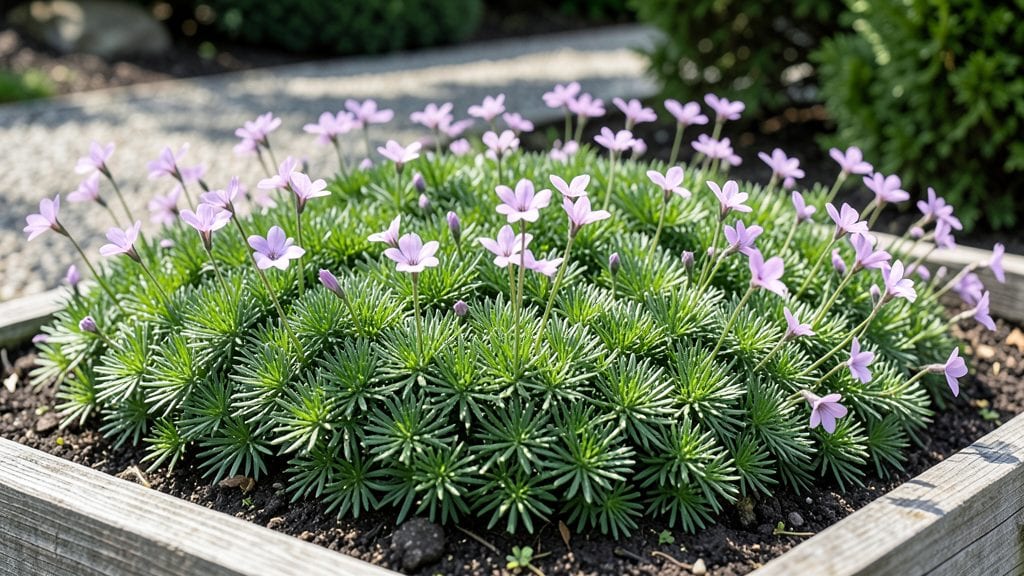
Transform your Pacific Northwest garden into a frost-resistant starburst of moss phlox flowers, starting with this hardy groundcover that thrives where others falter. 🌿 winter’s chill.
The secret lies in its placement: nestled between rocks, cascading over retaining walls, or framing pathways, it creates a living carpet that’s both practical and stunning.
Pairing moss phlox with evergreen shrubs like heather or silver foliage from lamb’s ear creates striking contrasts, while adding spring bulbs like crocuses beneath it ensures year-round interest.
Its shallow roots make it perfect for rocky soils or shallow pockets where other plants struggle. The key is keeping it moist during establishment—once settled, it’s nearly indestructible.
Imagine stepping into a garden where soft violet blooms spill over edges like a watercolor masterpiece, their fragrance light but inviting. Moss phlox delivers that effortlessly, with minimal care.
Plant it in sunny spots where winter winds scour other plants, and watch it bounce back with vigor. For the Pacific Northwest gardener, it’s the ultimate low-maintenance showstopper.
Whether you’re designing a rock garden, softening a steep slope, or adding seasonal color to a border, moss phlox adapts beautifully. Try mixing varieties for a gradient of hues or using it as a living edging—its versatility turns ordinary spaces into breathtaking landscapes.
Let’s bring that starburst to your garden!
📚 In This Guide
- What you need
- Instructions
- Tips and common mistakes
- Wrapping up and next steps
What you need
- ● Moss phlox plants: 3–5 per square foot (or 10–15 per 10 sq ft for dense coverage). Choose Phlox subulata varieties like 'Sherwood Purple' or 'Emerald Blue' for PNW resilience.
- ● Well-draining soil: Mix 60% native soil with 40% compost or perlite (amend clay-heavy soil with sand). Aim for a pH of 5.5–7.0.
- ● Organic mulch: 2–3 inches of pine bark, cedar chips, or shredded leaves to retain moisture and suppress weeds.
- ● Slow-release fertilizer: 10-10-10 or a low-nitrogen option (e.g., 5-10-10) for spring planting. Use 1–2 tbsp per plant.
- ● Watering can or hose with nozzle: For gentle, deep watering (avoid overhead sprinklers to prevent fungal issues).
- ● Pruners (sterilized): Sharp bypass pruners for trimming spent blooms or overgrowth.
- ● Garden gloves: Heavy-duty nitrile gloves to protect against prickly stems and soil-borne pathogens.
- ● Drip irrigation kit: For automated watering in dry spells (moss phlox thrives with 1 inch of water weekly).
- ● Soil test kit: To fine-tune pH and nutrient levels (PNW soil can be acidic!).
- ● Rocks or pebbles: For a low-maintenance groundcover look—place 1–2 inches over mulch.
- ● Epsom salt: 1 tbsp dissolved in a gallon of water (monthly spray for magnesium boosts vibrant blooms).
- ● Companion plants: Pair with heuchera, sedum, or ferns for a layered, shade-tolerant garden.
How to plant and maintain moss phlox for year-round Pacific Northwest color
This hardy groundcover thrives with minimal fuss—just follow these steps for vibrant blooms that outlast frost.
🌱 Step 1: Choose the Perfect Planting Location
Moss phlox loves sun but tolerates part shade—ideal for Pacific Northwest gardens where full sun can scorch delicate foliage. Aim for 4-6 hours of morning sun with afternoon shade in hotter microclimates. The key is well-draining soil; moss phlox rots quickly in soggy conditions, so avoid low spots where water pools.
Test your spot by digging a 6-inch hole—if water stands after 30 minutes, amend the soil with 2-3 inches of coarse sand or grit mixed into the top 12 inches of soil. I always plant mine on a slight slope to encourage natural drainage. Mulch lightly with 1 inch of pine needles or shredded bark after planting to retain moisture without smothering roots.
🪴 Step 2: Plant with Proper Spacing for Full Coverage
For 4 plants, space them 9-12 inches apart in rows 12-18 inches apart—this gives them room to spread and fill gaps naturally. Dig holes just deep enough to accommodate the root ball without burying the crown too deeply. Moss phlox hates sitting in wet soil, so never plant deeper than the top of the root ball.
Gently tease out any circling roots before placing the plant in the hole. Backfill with native soil mixed with a handful of compost to encourage establishment. Press the soil firmly around the base to eliminate air pockets, then water deeply until moisture reaches 6 inches down. You'll know it's right when the soil surface looks slightly damp but not glistening.
☀️ Step 3: Water Strategically for Frost Resistance
Water newly planted moss phlox twice weekly for the first month, then taper to once weekly once established. The goal is to keep the root zone consistently moist but never waterlogged. In the Pacific Northwest's mild winters, moss phlox often needs no supplemental water—just monitor soil moisture during dry spells.
Here's the thing—moss phlox stores water in its fleshy leaves, so deep, infrequent watering encourages deeper root growth. Water in the early morning to reduce evaporation and fungal risks. You'll see healthy plants developing a dense mat of foliage within 6-8 weeks, signaling they're thriving.
✂️ Step 4: Prune and Maintain for Continuous Blooms
Deadhead spent blooms every 2-3 weeks during the growing season to encourage more flowers. Use clean, sharp shears to snip stems just above the first set of leaves. This prevents seed formation and redirects energy into new growth. I always prune after a rain shower when stems are pliable and less likely to tear.
In late summer, cut back the entire plant by one-third to rejuvenate growth and prepare for winter. Moss phlox handles frost beautifully, but a light trim prevents flopping stems. Mulch again with 1-2 inches of organic material in fall to insulate roots through cold snaps. You'll see fresh growth emerge early the following spring.
Tips & tricks for perfect moss phlox planting
Took me a while to figure these out, so here goes—these tricks will help your moss phlox thrive like a pro.
Site Selection Secret: The 4-6 hours of morning sun is non-negotiable for vibrant blooms, but here's what nobody tells you—watch for afternoon shade in your specific microclimate. I've seen moss phlox scorch in full sun afternoons, even in the PNW. If your yard gets hotter than 80°F in summer afternoons, prioritize that afternoon shade to prevent leaf burn and keep plants healthy.
Drainage Test: That 30-minute water test in Step 1 is your best friend. If water still stands after 30 minutes, you're not just dealing with poor drainage—you're risking root rot. I've had to replant moss phlox twice because I ignored this step. The fix is simple: mix that coarse sand or grit into the top 12 inches of soil, but don't stop there. Consider building a slight mound or raised bed if your soil is naturally compacted.
Planting Depth Matters: Never bury the crown deeper than the top of the root ball—this is where most gardeners go wrong. I learned this the hard way when my first batch of moss phlox struggled. The crown should sit just above soil level. This prevents water from pooling around the base and keeps the plant's natural growth pattern intact. Think of it like planting a tree—you wouldn't bury the trunk, would you?
Watering Wisdom: Those twice-weekly waterings in the first month are critical, but here's the thing—morning watering isn't just about evaporation. It's also about fungal prevention. Wet foliage that stays damp overnight creates perfect conditions for powdery mildew. I've found that watering at dawn gives leaves time to dry completely before evening dew sets in. And when you see that dense mat of foliage within 6-8 weeks? That's your plant telling you it's thriving.
Pro Tips for Moss Phlox Flowers
- Took me a while to figure these out, so here goes—these tricks will help your moss phlox thrive like a pro.
- Site Selection Secret: The 4-6 hours of morning sun is non-negotiable for vibrant blooms, but here's what nobody tells you—watch for afternoon shade in your specific microclimate.
- Drainage Test: That 30-minute water test in Step 1 is your best friend.
Frequently asked questions
Got questions about moss phlox? You’re not alone!
This hardy groundcover is a favorite, but even pros have curiosities. Here are the most common questions—and answers—to help you grow moss phlox like a pro.
When is the best time to plant moss phlox?
Plant moss phlox in early spring or fall when soil temperatures are cool (50–60°F). This gives roots time to establish before summer heat or winter frost. Avoid planting in peak summer—it can stress the plant. Pro tip: If planting in containers, use well-draining soil and keep them shaded until roots take hold!
How cold can moss phlox tolerate?
Moss phlox thrives in USDA Zones 3–9, making it perfect for the Pacific Northwest’s chilly winters. It handles frost down to -30°F with no issues! Just ensure it’s planted in full sun to partial shade and mulch lightly in extreme cold snaps for extra protection.
Why aren’t my moss phlox flowers blooming?
If blooms are sparse, check these fixes:
- Light levels: Needs 6+ hours of sun daily.
- Soil: Ensure it’s well-draining (sandy or loamy).
- Fertilizer: Use a low-phosphorus feed (like 5-10-5) in early spring.
- Age: Young plants may take 1–2 years to fully bloom.
Are moss phlox flowers deer-resistant?
While not deer-proof, moss phlox is less appealing than many other flowers. Deer may nibble if other food is scarce. To deter them, try:
- Planting near deer-resistant companions like lavender or Russian sage.
- Using physical barriers (like fencing) for young plants.
- Applying deer repellent sprays (pet-safe options) in high-risk areas.
What are good alternatives if moss phlox doesn’t thrive in my garden?
If your site has poor drainage or heavy shade, try these Pacific Northwest-friendly groundcovers with similar charm:
- Creeping thyme (drought-tolerant, fragrant, loves sun).
- Heuchera (coral bells) (shade-loving, colorful foliage).
- Ajuga (bugleweed) (low-maintenance, spreads quickly).
- Sedum (stonecrop) (succulent-like, thrives in dry soil).
Wrapping up and next steps
Moss phlox isn’t just another pretty face—it’s a low-maintenance, frost-hardy superstar that breathes life into Pacific Northwest gardens with its vibrant blooms and lush carpet of green. Whether you’re a seasoned gardener or just starting out, this resilient groundcover proves that beauty and durability go hand in hand. 🌸
Ready to transform your garden? Start small—plant a few patches in sunny spots this spring, and watch your outdoor space bloom into a thriving, year-round masterpiece. Happy gardening! 🌱