
Flowers
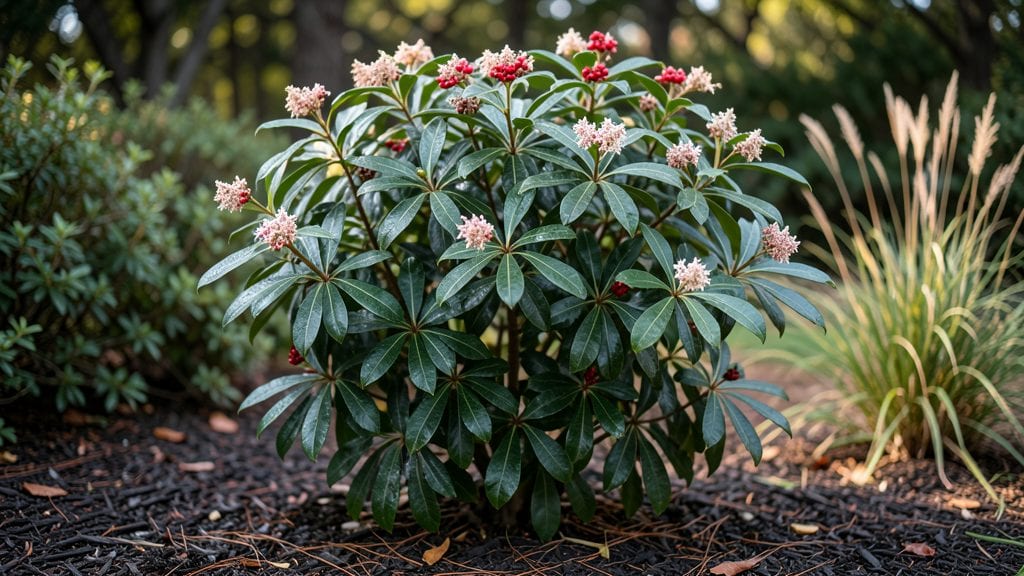
When Nandina domestica flowers burst into bloom in late spring, they transform your Pacific Northwest garden into a pollinator magnet. 🌸 I’ve watched bees and hummingbirds swarm my clumps of heavenly bamboo—its delicate, star-shaped blooms stand out against the deep red foliage, and the berries that follow add a dramatic winter touch.
The secret to coaxing those vibrant flowers lies in well-draining soil and morning sun—this plant thrives where others struggle. Prune lightly after flowering to encourage bushier growth, and you’ll get years of low-maintenance beauty with minimal effort. Even in rainy climates, Nandina stays lush and productive.
You’ll end up with a plant that works year-round: spring flowers, summer shade, fiery fall foliage, and winter berries that birds adore. It’s the kind of plant that makes neighbors ask, “What’s that?”—and then you get to brag about your pollinator powerhouse. Let’s get yours planted right.
Works as a hedge, container specimen, or mixed-border stunner—its versatility makes it a Northwest garden essential. Here’s how to make it shine in your space.
📚 In This Guide
- What you need
- Instructions
- Tips and common mistakes
- Wrapping up and next steps
What you need
- ● Nandina domestica plants: 1-3 nursery-grown plants (3-5 ft tall, hardy in Zones 6-10)
- ● OR seeds (collect fresh berries in fall or buy from reputable suppliers)
- ● Well-draining soil: Mix 1 part native soil + 1 part compost + ½ part perlite/pumice (for sandy or clay-heavy PNW soil).
- ● Organic mulch: 2-3 inches of cedar chips or pine needles (to retain moisture and deter weeds).
- ● Slow-release fertilizer: 10-10-10 or balanced organic fertilizer (apply in early spring).
- ● Garden trowel or transplant spade
- ○ Gloves (optional but recommended for handling prickly stems)
- ● Watering can or hose with a gentle spray nozzle
- ● Pruning shears (for shaping or harvesting seeds)
- ● Epsom salt (for magnesium boost, if leaves yellow)
- ● Pollinator-friendly companion plants (e.g., Salvia or Lavender)
- ● Decorative stakes (to support taller varieties in windy PNW areas)
- ● Bird netting (to protect berries from wildlife if growing for seeds)
How to cultivate stunning Nandina domestica blooms in the Pacific Northwest
This shrub thrives where others falter—here's how to coax its iconic berries and delicate flowers to life.
🌱 Step 1: Select the Perfect Planting Site
Nandina domestica adores partial shade but tolerates full sun with consistent moisture. In the Pacific Northwest's mild climate, I plant mine where morning sun warms the soil but afternoon shade prevents leaf scorch. The key is well-draining soil—this plant hates soggy roots, so amend heavy clay with 2-3 inches of organic compost before planting.
Dig a hole twice as wide as the root ball but only as deep. The plant's crown should sit level with the soil surface—burying it too deep suffocates roots, while planting too high risks drought stress. Water the hole thoroughly before placing the plant, then backfill with native soil mixed with compost. Pat gently to eliminate air pockets.
☀️ Step 2: Provide Seasonal Light and Water Adjustments
Young plants need bright, indirect light to establish strong stems. Mature Nandina handles full sun but rewards you with more vibrant flowers when given 4-6 hours of morning sunlight. In summer's dry spells, water deeply once a week—soak until water drains 6 inches deep, then let the top 2 inches dry before watering again.
Here's the thing—Nandina's deep root system makes it drought-tolerant once established, but new plants wilt fast if underwatered. Mulch with 3-4 inches of shredded bark to retain moisture and regulate soil temperature. In winter, reduce watering to once every 3-4 weeks unless we get heavy rain—this plant's native to Japan, where winters are cold but dry.
✂️ Step 3: Prune Strategically for Flower and Berry Production
Pruning encourages bushier growth and more flowers. I remove dead or crossing branches in late winter or early spring, cutting just above a leaf node. Never prune after midsummer—new growth won't harden off before winter, and tender shoots will freeze.
For established plants, I thin out 10-20% of oldest stems each year to improve air circulation. This prevents fungal issues and directs energy toward producing those iconic red berries. The berries form on current season's growth, so avoid heavy pruning—you'll sacrifice next year's fruit display.
🌿 Step 4: Fertilize for Optimal Flowering and Pollinator Appeal
Nandina isn't heavy feeder but responds well to balanced fertilizer in early spring. Use 5-10-10 at half-strength—too much nitrogen produces lush leaves but fewer flowers. I apply it when I see new growth emerge, about 4-6 weeks after last frost. Water thoroughly after application to prevent root burn.
For pollinator appeal, I avoid systemic pesticides. Instead, I plant companion flowers like bee balm and coneflowers nearby—their nectar attracts pollinators that visit the Nandina's delicate white spring blooms. The berries that follow become a winter food source for birds, making this plant a year-round ecosystem builder.
Tips & tricks for showstopping Nandina domestica blooms
These insider secrets will help you transform your Pacific Northwest garden into a pollinator paradise with vibrant Nandina blooms.
Soil Science: The 2-3 inches of organic compost you mix into your native soil isn't just filler—it's the foundation for those stunning flowers. Nandina's roots need that perfect balance of aeration and moisture retention. I always test soil drainage by making a small hole and filling it with water—if it drains in under 30 minutes, you're good to go. For heavy clay areas, consider adding perlite to improve drainage further.
Light Strategy: That 4-6 hours of morning sunlight is critical for flower production, but timing matters. In our Pacific Northwest climate, afternoon sun can scorch leaves, especially during summer's intense heat waves. I've found the sweet spot is planting near deciduous trees—their summer shade protects leaves while allowing winter sun to reach the plant. This creates the perfect light conditions for continuous blooming.
Pruning Precision: When you're thinning those 10-20% of oldest stems, aim for the "third from the bottom" rule—this maintains the plant's natural shape while maximizing flower production. The key is to make clean cuts just above a leaf node where new growth can emerge. I always prune on a dry day when the plant isn't actively growing, typically in late winter when the ground isn't frozen yet. This timing gives the plant time to recover before spring growth begins.
Fertilizer Timing: Applying that half-strength 5-10-10 fertilizer exactly when you see new growth emerge—about 4-6 weeks after last frost—is more precise than it sounds. I've learned to watch for the first unfurling leaves as my cue. Too early, and you'll encourage leafy growth at the expense of flowers. Too late, and you miss the critical window for establishing next year's blooms. Think of it as planting flowers in time—they need that nutrient boost when they're just getting started.
Pro Tips for Nandina Domestica Flowers
- These insider secrets will help you transform your Pacific Northwest garden into a pollinator paradise with vibrant Nandina blooms.
- Soil Science: The 2-3 inches of organic compost you mix into your native soil isn't just filler—it's the foundation for those stunning flowers.
- Light Strategy: That 4-6 hours of morning sunlight is critical for flower production, but timing matters.
Frequently asked questions
Got questions about Nandina domestica flowers? You’re not alone! Here are answers to the most common inquiries—from care tips to blooming secrets—so you can make the most of this Pacific Northwest favorite.
When do Nandina domestica flowers bloom, and how long do they last?
Nandina domestica typically blooms in late spring to early summer (May–June in the PNW), producing clusters of tiny, fragrant white or pale pink flowers. The blooms last 2–4 weeks, but their show is short-lived—so plant them where you can appreciate their delicate beauty up close!
Are Nandina domestica flowers good for pollinators like bees and butterflies?
Yes! While Nandina flowers aren’t a bee magnet like lavender, they attract native bees, syrphid flies, and occasional butterflies. For a pollinator powerhouse, pair them with Ceanothus or Salvia nearby. Bonus: The berries later in the season feed birds!
How do Nandina domestica flowers handle rain or wind?
These flowers are tough but delicate—heavy rain or wind can drip or close them temporarily. For a longer-lasting display, plant in sheltered spots (e.g., near walls or under larger shrubs). If petals droop, a gentle shake or morning sun often revives them!
Can I propagate Nandina domestica from cuttings or seeds?
Propagation is easiest from softwood cuttings in summer (root in perlite/peat mix) or layering (bend a stem to the ground and bury a node). Seeds are slow and unreliable—most gardeners prefer divisions or nursery plants. Pro tip: Use rooting hormone for higher success!
Are Nandina domestica flowers toxic to pets or humans?
While the berries are toxic to dogs/cats (causing vomiting), the flowers and leaves are non-toxic to humans and pets. Still, keep pets from nibbling any part of the plant—when in doubt, consult your vet.
What are some great companion plants for Nandina domestica flowers?
Pair Nandina with shade-tolerant perennials like Heuchera, Ferns, or Hellebores for texture. For color contrast, try Pieris japonica (early spring blooms) or Camellia (winter interest). Avoid aggressive spreaders like Mondo grass—they’ll compete for space!
Wrapping up and next steps
Nandina domestica flowers aren’t just a Pacific Northwest gem—they’re a resilient, pollinator-friendly powerhouse that thrives with minimal fuss. Whether you’re drawn to their striking red berries, year-round interest, or their role in supporting local ecosystems, these plants offer beauty and practicality in one package. 🌸
Ready to bring Nandina domestica into your garden? Start by reviewing the essentials—soil prep, sunlight needs, and companion plants—to set your pollinator haven up for success. Happy planting!