Container Gardens
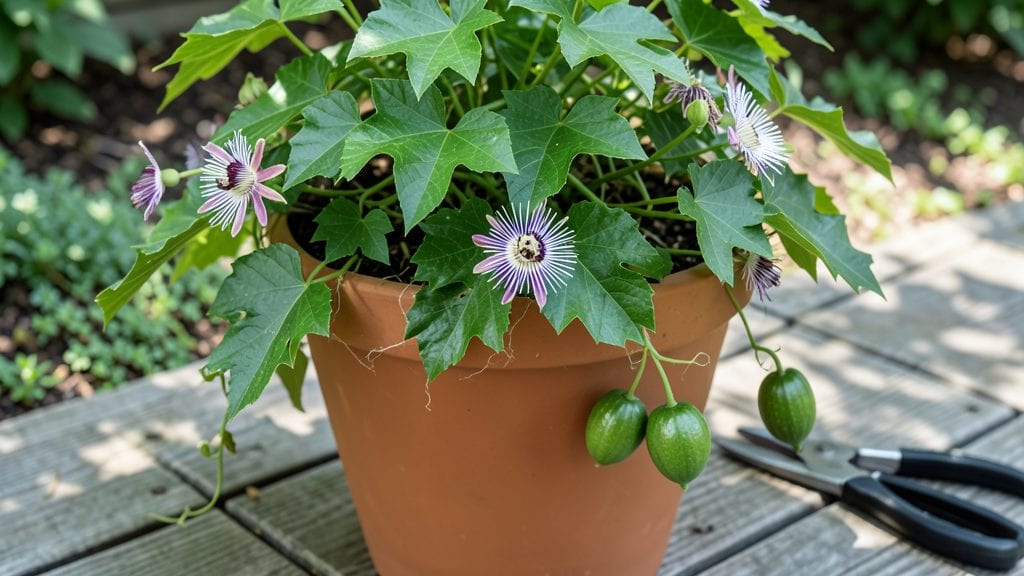
A potted passion flower vine can turn your balcony into a tropical jungle of starburst blooms that last all year—just master a few key tricks to watch it thrive. 🌿 I’ve watched these vines transform from scraggly starts into dramatic, flowering powerhouses—even in small spaces—by. tricks.
The secret isn’t complicated: it’s about the right container, soil, and a little patience to coax those exotic flowers into action.
You’ll need a 5-gallon or larger pot with drainage holes, well-draining soil mixed with compost, and a sturdy trellis or cage for climbing. Passion vines love morning sun and afternoon shade, especially in hotter climates, and they drink water like there’s no tomorrow—keep the soil moist but never soggy.
Pruning after flowering keeps them tidy and encourages more blooms, while overwintering in cooler zones means moving pots indoors before frost hits.
What you end up with is a vibrant, fragrant vine that attracts hummingbirds and butterflies while producing those iconic, otherworldly flowers. The first blooms arrive within 6-8 months of planting, and with proper care, you’ll have year-round color that outshines any annual.
The best part? These vines thrive in containers, so you’re not tied to a yard—just a sunny spot and a little attention.
Whether you’re dealing with root-bound issues, slow growth, or struggling to get flowers, I’ll walk you through the fixes. From fertilizing tips to winter survival strategies, this guide covers everything you need to keep your potted passion vine lush, productive, and show-stopping—no green thumb required.
📚 In This Guide
- What you need
- Instructions
- Tips and common mistakes
- Wrapping up and next steps
What you need
- ● Passion flower plant: Choose a healthy Passiflora variety (e.g., Passiflora caerulea for hardiness or Passiflora edulis for fruit). Start with a 1-gallon potted plant or a young cutting.
- ● Container: A 5–15 gallon pot (depending on vine size) with drainage holes. Opt for terracotta or fabric pots for airflow.
- ● Well-draining potting mix: A blend of 60% peat moss/coco coir, 30% perlite or pumice, and 10% compost (avoid heavy garden soil).
- ● Slow-release fertilizer: A balanced 10-10-10 or 20-20-20 granular fertilizer (follow package instructions for dosage).
- ● Support structure: A trellis, wire cage, or bamboo stake (at least 6–8 feet tall for climbing varieties).
- ● Gloves (to protect from thorns).
- ● Pruning shears (sterilized, for trimming).
- ● Watering can or hose with a gentle nozzle (avoid overwatering!).
- ○ Mulch (optional): Pine bark or straw to retain moisture and regulate soil temp.
- ● Sunlight access: 6+ hours of direct sunlight daily (south or west-facing spot ideal).
- ○ Indoor grow lights (optional): For low-light spaces (LED full-spectrum bulbs work best).
Step-by-Step guide for cultivating potted passion flower vines
Here’s how to coax those dramatic starburst blooms from your container-grown passion vines—no garden bed required.
🌱 Step 1: Select the Right Container and Soil Mix
Passion vines need room to sprawl, so choose a container at least 12-15 inches deep and wide—deeper is better for their extensive root systems. I opt for terra cotta pots because they wick away excess moisture, preventing the root rot that can plague these tropical beauties. If using plastic, ensure it has multiple drainage holes to avoid waterlogging.
Fill the pot with a well-draining mix—I blend equal parts potting soil, perlite, and compost for aeration and nutrients. Avoid garden soil; it compacts and suffocates roots. Press the mix down gently to remove air pockets, then water until it’s evenly moist but not soggy. The surface should hold together when squeezed but not drip water.
☀️ Step 2: Position for Maximum Sunlight and Support
Passion vines thrive in full sun (6-8 hours daily), but they’ll tolerate morning sun with afternoon shade in hotter climates. Place your pot where it gets bright, indirect light if direct sun causes leaf scorch—you’ll notice crispy edges as a warning sign. A south- or west-facing patio works best in most regions.
Install a strong trellis or obelisk immediately—these vines grow 10-20 feet annually and need support to climb. I use a metal or wooden trellis at least 6 feet tall to accommodate their rapid growth. Train the main vine along the trellis as it grows; without support, the plant sprawls awkwardly and produces fewer blooms.
💧 Step 3: Water Deeply and Maintain Consistent Moisture
Passion vines despise drying out but hate soggy roots even more. Water deeply when the top 2 inches of soil feel dry, which usually means every 2-3 days in summer and every 5-7 days in winter. Stick your finger in the soil—if it’s dry past your first knuckle, it’s time to water. Overwatering causes yellowing leaves and fungal issues, while underwatering leads to drooping, crispy foliage.
Always water at the base of the plant, avoiding the leaves to prevent powdery mildew. Mulch the soil surface with 1-2 inches of organic mulch (like shredded bark) to retain moisture and regulate soil temperature. This is especially critical in containers, where soil dries out faster than in-ground plantings.
✂️ Step 4: Prune for Health and Encourage Blooms
Pruning isn’t just about tidying up—it’s essential for bloom production and vine health. In late winter or early spring, cut back one-third of the previous year’s growth to stimulate new, vigorous shoots. Remove any dead, diseased, or weak stems at the base. I also trim overly long vines that aren’t producing flowers, redirecting the plant’s energy toward blooms.
Throughout the growing season, deadhead spent blooms by snipping the stem just above a leaf node. This encourages the plant to produce more flowers rather than focusing on seed development. Watch for suckers (small shoots growing at the base of the main stem)—pinch these off early to avoid overcrowding. Pruning might feel harsh, but you’ll reward yourself with more dramatic starburst flowers come summer.
🌿 Step 5: Fertilize and Protect for Year-Round Growth
Feed your passion vine monthly during the growing season (spring to fall) with a balanced, water-soluble fertilizer (10-10-10 or 20-20-20). I dilute it to half-strength to avoid burning the roots—these vines are heavy feeders but sensitive to excess salts. In winter, reduce fertilization to every 6-8 weeks or stop altogether if the plant goes dormant.
Watch for aphids, spider mites, or whiteflies, which love the sap of passion vines. Spray infested areas with neem oil or insecticidal soap at the first sign of pests. If your vine’s leaves start yellowing or curling, it may be nutrient-deficient or struggling with pests. Adjust care accordingly—passion vines are resilient but need consistent attention to thrive in containers.
Tips & tricks for thriving potted passion flower vines
These insider tricks will help you coax spectacular starburst blooms from your container-grown passion vines all year long.
Container Selection: While terra cotta pots are ideal, don't overlook fabric grow bags as an alternative—they allow even better moisture regulation while still providing excellent drainage. If using plastic containers, ensure they have at least four drainage holes spaced evenly around the bottom. I've found that wider containers (up to 18 inches) actually encourage more vigorous root development, which translates to more abundant blooms. The key is balancing depth for roots with width for stability.
Soil Mix Optimization: The equal parts potting soil, perlite, and compost mix is perfect, but for even better results, consider adding 10% worm castings to the mix. These provide a gentle, slow-release nutrient boost without the risk of burning roots. Another pro move: sprinkle a handful of orchid bark chips into the mix before planting—this improves aeration and mimics the vine's natural tropical habitat. When pressing down the soil, don't compact it too firmly; passion vines need good air circulation around their roots.
Sunlight Strategy: For those in hotter climates, I recommend positioning your container where it receives morning sun with afternoon shade—this prevents the crispy edge damage mentioned in Step 2. If you notice new growth showing signs of sunburn (yellowing or brown patches), move the plant to a slightly shadier spot immediately. In cooler climates, supplement natural light with a grow light during winter months to maintain that crucial 6-8 hours of daily light requirement. The difference in bloom production between properly lit and underlit vines is truly dramatic.
Watering Technique: When checking soil moisture in Step 3, insert your finger about 2 inches deep—this is the critical zone where roots actively seek water. If you're unsure whether to water, err on the side of slightly drier soil rather than soggy conditions. For containers on patios or balconies, I recommend watering in the early morning to allow excess moisture to evaporate during the day. During heatwaves, you might need to water daily—just monitor the soil and adjust accordingly. The mulch layer you add is especially valuable in preventing rapid moisture loss from container soil.
Pro Tips for Passion Flower Potted
- These insider tricks will help you coax spectacular starburst blooms from your container-grown passion vines all year long.
- Container Selection: While terra cotta pots are ideal, don't overlook fabric grow bags as an alternative—they allow even better moisture regulation while still providing excellent drainage.
- Soil Mix Optimization: The equal parts potting soil, perlite, and compost mix is perfect, but for even better results, consider adding 10% worm castings to the mix.
Frequently asked questions
How often should I water my potted passion flower?
Passion flowers love moisture but hate soggy roots. Water when the top 1-2 inches of soil feel dry. In hot climates, check daily; in cooler months, every 3-4 days is usually enough. Ensure pots have drainage holes to prevent root rot. Pro tip: Morning watering helps reduce fungal risks!
Can passion flowers survive winter in pots?
Most passion vines are tropical or subtropical and need protection when temps drop below 20°F (-7°C). Move pots to a sheltered spot (like a garage or under eaves) or wrap them in bubble wrap. If freezing is expected, mulch the soil with straw or leaves. Warning: Some varieties (like Passiflora caerulea) are hardier and can tolerate brief cold snaps!
What’s the best potting mix for passion flowers?
Use a well-draining mix with 50% potting soil, 30% perlite or orchid bark, and 20% compost. Avoid heavy garden soil—it compacts and suffocates roots. For tropical varieties, add a bit of coconut coir for extra moisture retention. Bonus: Repot every 2-3 years to refresh nutrients!
Why are my passion flower leaves turning yellow?
Yellow leaves usually signal overwatering or nutrient deficiency. Check the soil—if it’s soggy, reduce watering. For yellowing with brown edges, it’s likely underwatering or chlorosis (iron deficiency). Feed with a balanced fertilizer (like 10-10-10) every 4-6 weeks in growing season. Fix: Flush the soil with water to reset pH!
How do I encourage more blooms on my potted passion flower?
Blooms thrive with sunlight (6+ hours daily), regular pruning, and balanced fertilizer. Pinch back leggy growth in spring to promote bushiness. Deadhead spent flowers to redirect energy to new blooms. Fun fact: Some varieties (like Passiflora edulis) need a cool winter rest to trigger spring blooms!
Can I grow passion fruit in a pot?
Yes! Dwarf varieties like Passiflora edulis ‘Golden Gift’ thrive in pots (15+ gallon size). Provide a trellis for support, full sun, and consistent watering. Expect smaller fruit than vine-grown plants, but they’re just as sweet! Tip: Use a slow-release fertilizer to avoid overfeeding.
Wrapping up and next steps
Growing passion flower potted is a rewarding journey that brings vibrant blooms and lush greenery to your space—no matter the season! 🌸 With the right container, well-draining soil, and a little TLC, you’ll enjoy those stunning starburst flowers year after year.
Whether you’re a beginner or a seasoned gardener, these vines are a fantastic way to add drama and beauty to patios, balconies, or even indoor spaces.
Ready to dive in? Start by gathering your supplies—then pick a sunny spot, plant with care, and watch your passion flower thrive! Soon, you’ll be sharing your stunning blooms with neighbors (or admiring them yourself). Happy gardening! 🌿✨