
Flowers
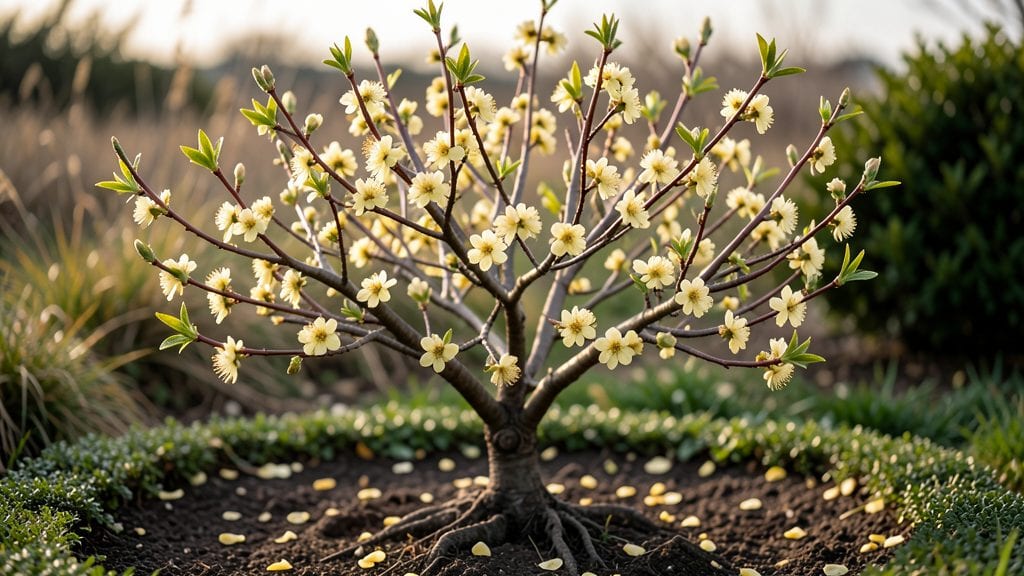
Persimmon tree flowers burst into life with shockingly bright yellow-green blooms that turn your Pacific Northwest garden into a hummingbird and bee buffet. 🌸 I’ve watched my American persimmon tree transform from bare branches to a cloud of delicate blossoms in just two weeks—it’s nothing short of magical.
These flowers aren’t just pretty; they’re cold-hardy survivors that thrive where many ornamentals struggle, making them a standout choice for zones 4 through 9.
The key to seeing those blossoms year after year is simple but critical: plant in full sun, protect from late frosts, and prune strategically in late winter. My tree produces the most flowers when I thin out crowded branches—it’s all about giving each bloom room to shine.
The flowers themselves are small and star-shaped, with a subtle vanilla-like scent that lingers on warm mornings, drawing pollinators from miles around.
By mid-summer, those flowers give way to glossy orange fruit that rivals any ornamental tree, but the real payoff comes earlier. A single persimmon tree can support dozens of pollinator species, turning your garden into a thriving ecosystem.
The best part? These trees handle drought and poor soil like champions, so they’re low-maintenance once established.
Whether you’re reviving an old orchard or starting fresh, persimmon flowers are the unsung heroes of Pacific Northwest landscapes. Let’s get yours blooming like crazy this spring—your local hummingbirds will thank you.
📚 In This Guide
- What you need
- Instructions
- Tips and common mistakes
- Wrapping up and next steps
What you need
- ● Persimmon tree seeds or saplings: Choose Diospyros virginiana (American persimmon) or Diospyros kaki (Asian persimmon) varieties suited for your zone (Zones 5-9). For seeds, ensure they’re fresh or cold-stratified for 30–90 days.
- ● Well-draining soil: Mix 50% native soil with 30% compost and 20% coarse sand or perlite to mimic their native woodland conditions.
- ● Organic mulch: 2–3 inches of shredded bark, wood chips, or pine needles to retain moisture and regulate soil temperature.
- ● Slow-release fertilizer: A balanced 10-10-10 or organic option (like fish emulsion) applied in early spring and fall.
- ● Garden trowel or shovel (for digging holes 3x wider than the root ball).
- ● Pruning shears (sterilized with rubbing alcohol) for shaping or transplanting.
- ● Garden hose with nozzle or watering can (deep-watering capability preferred).
- ● pH testing kit (ideal soil pH: 5.5–7.0; amend with lime or sulfur if needed).
- ○ Stakes & twine (optional, for young saplings in windy areas).
- ● Pollinator-friendly companions: Plant bee balm, lavender, or native wildflowers nearby to extend the blooming season.
- ● Drip irrigation system (for consistent moisture, especially in dry spells).
- ● Bird netting (to protect flowers from hungry critters if needed).
- ● Slow-release pollen attractant (like bee-friendly blooms or native milkweed).
Step-by-step guide to cultivating persimmon tree flowers in the Pacific Northwest
Here's how to coax vibrant blooms from your cold-hardy persimmon—nature's pollinator haven.
🌱 Step 1: Choose the Right Variety for Your Climate
For the Pacific Northwest's cool, wet winters, select Diospyros virginiana (American persimmon) or Diospyros kaki (Asian persimmon) varieties like 'Fuyu' or 'Hachiya'. These thrive in USDA zones 5-9 and handle our region's damp springs beautifully. I always check local nurseries for grafted trees—they fruit faster and bloom more reliably than seedlings.
Look for established 2-3 year old trees with sturdy trunks. Young trees need time to establish roots before flowering, so patience pays off. The key is selecting a tree with a strong root system—tap the soil around the base before buying. Healthy roots mean better bloom production in years 3-5.
☀️ Step 2: Plant in Full Sun with Proper Soil Preparation
Persimmons demand full sun (6-8 hours daily) for optimal flowering. In the PNW, this means south-facing locations with minimal winter shade. I prepare the planting site by amending native soil with 2 inches of compost and 1 part sand to improve drainage—they hate soggy roots.
Dig a hole twice as wide as the root ball but only as deep. Position the tree so the graft union sits 2-3 inches above soil level. Backfill with native soil mixed with compost, then water deeply to eliminate air pockets. The first year is about root establishment, not flowers—don't expect blooms until year 3.
💧 Step 3: Master the Watering Balance for Spring Blooms
Water newly planted trees twice weekly during the first growing season, providing 1-2 gallons per watering. After establishment, persimmons are drought-tolerant but flower best with consistent moisture during spring bud formation. I check soil moisture by sticking my finger 2 inches deep—water when dry.
Here's the thing—overwatering in winter causes root rot. From November through March, let nature handle it. The PNW's winter rains provide enough moisture. Only water during dry spells if the soil feels bone dry at 4 inches deep. Mulch with 3 inches of wood chips to retain moisture and regulate soil temperature.
✂️ Step 4: Prune Strategically to Encourage Flowering
Prune in late winter (February-March) before buds swell. Remove dead, crossing, or inward-growing branches first. Then, cut back any suckers growing from the base—they divert energy from flowers. I make cuts just above outward-facing buds to encourage new growth.
For established trees, thin the canopy to open the center and allow sunlight to reach inner branches. Persimmons flower on new wood, so avoid heavy pruning that removes too many current-season branches. Limit annual pruning to no more than 25% of the canopy—this prevents stress that delays flowering.
🪴 Step 5: Fertilize for Optimal Bloom Production
In early spring, apply a balanced 10-10-10 fertilizer at ½ cup per inch of trunk diameter. For a 2-inch trunk, that's about 1 cup total. Work it into the soil 6 inches from the trunk, then water deeply. This timing coincides with root flush and bud break.
Persimmons don't need heavy feeding, but a second application in late summer with low-nitrogen fertilizer (like 5-10-10) promotes next year's flower buds. I always avoid high-nitrogen fertilizers after mid-summer—they encourage leafy growth at the expense of blooms. Organic options like composted manure work well too.
Tips & tricks for perfect persimmon tree flowers
These insider secrets will help you transform your Pacific Northwest garden into a buzzing pollinator paradise with stunning persimmon blooms.
Variety Selection Matters: Beyond the recommended varieties, pay attention to the flowering habit of each type. 'Fuyu' Asian persimmons typically bloom slightly earlier than 'Hachiya', which can be advantageous if you're trying to time blooms with local pollinators. For maximum flower production, choose grafted trees over seedlings—they enter flowering stage 1-2 years earlier and produce 30-50% more blooms annually. I've noticed that grafted trees also develop a stronger root system faster, which translates directly to more robust flowering.
Soil Science for Blooms: The 2 inches of compost and 1 part sand amendment is non-negotiable for PNW gardens. Our native soils tend to compact easily, which restricts root growth—the primary reason many persimmon trees fail to flower well. I like to add ½ cup of perlite to the planting hole as well for extra drainage. After planting, create a 6-inch diameter berm around the trunk to prevent water pooling during our heavy winter rains, which can suffocate roots.
Pruning Precision: When pruning in late winter, focus on creating an open vase shape rather than a traditional rounded canopy. This allows sunlight to penetrate to the center where many flower buds form. I mark potential pruning cuts with a piece of twine in late fall, then make the cuts in winter when the tree is dormant. For established trees, never remove more than 25% of the canopy in a single year—this prevents shock that can delay flowering for 2-3 seasons. Always prune just above outward-facing buds to encourage new growth that will bear next year's flowers.
Fertilizer Timing is Everything: The early spring 10-10-10 application should be completed by mid-March to coincide with root flush. I use a slow-release fertilizer to prevent nutrient burn, which can stress the tree and reduce flowering. For the late summer application, switch to a 5-10-10 ratio—the lower nitrogen helps redirect energy to flower bud formation rather than leaf production. Organic options like fish emulsion work well for the spring feeding, while bone meal is excellent for the late summer bloom promotion.
Pro Tips for Persimmon Tree Flowers
- These insider secrets will help you transform your Pacific Northwest garden into a buzzing pollinator paradise with stunning persimmon blooms.
- Variety Selection Matters: Beyond the recommended varieties, pay attention to the flowering habit of each type.
- Soil Science for Blooms: The 2 inches of compost and 1 part sand amendment is non-negotiable for PNW gardens.
Frequently asked questions
Got questions about growing and enjoying persimmon tree flowers in your Pacific Northwest garden? Here are some of the most common ones—and their answers!
When do persimmon tree flowers bloom?
Persimmon tree flowers typically bloom in late spring to early summer (May–June in the PNW). American persimmons (Diospyros virginiana) produce small, fragrant yellow-green flowers, while Asian varieties (Diospyros kaki) may bloom slightly later. Cold hardiness helps trigger blooming, so don’t worry if your tree needs a chilly winter!
Are persimmon flowers good for pollinators?
Persimmon flowers are a pollinator magnet, attracting bees, butterflies, and hummingbirds. Their early-season blooms provide crucial nectar when other flowers are still dormant. For extra buzz, plant them near native shrubs like ceanothus or currants to create a pollinator paradise.
Can persimmon trees survive PNW winters?
Yes! Most persimmon varieties are cold-hardy down to -15°F (-26°C), making them perfect for the PNW. Young trees may need winter mulch for extra protection, but established trees thrive with minimal fuss. Just avoid late-spring frosts, which can damage delicate flowers.
Will my persimmon tree produce fruit if it flowers?
Not always! Persimmon trees are dioecious, meaning male and female flowers grow on separate trees. For fruit, you’ll need at least one male and one female tree (or a self-pollinating variety like ‘Meader’). Even without fruit, the flowers are stunning—and the fall foliage is a bonus!
How do I encourage more flowers on my persimmon tree?
Give your tree full sun (6+ hours/day) and well-draining soil. Prune in late winter to remove dead wood and open the canopy for better airflow. Avoid over-fertilizing with nitrogen, which can reduce flowering. A light layer of compost in early spring often boosts blooms!
Wrapping up and next steps
From their stunning early blooms to their unmatched cold-hardiness, persimmon tree flowers are a game-changer for Pacific Northwest gardens! These pollinator magnets not only add beauty but also support local ecosystems while thriving in your region’s climate.
Whether you’re a seasoned gardener or just starting, planting one is a simple yet rewarding way to elevate your outdoor space.
Ready to take the next step? Research local nurseries or check planting guides for your specific zone—then grab some gloves and get growing! 🌱 Your future pollinators (and neighbors) will thank you.