
Planting
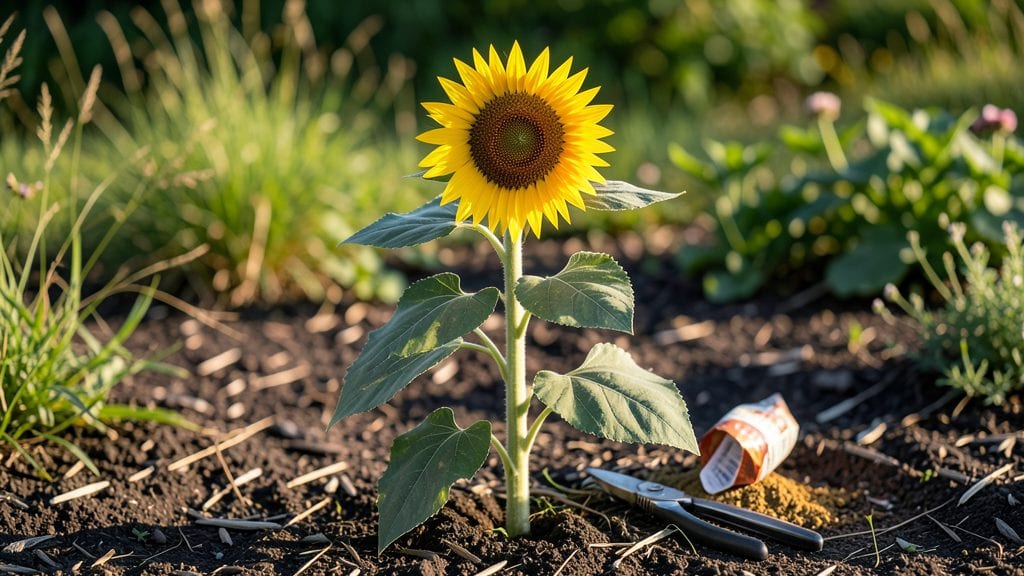
The sunflower plant roots plunge far deeper than you’d expect—some stretching 6 feet or more to chase moisture and nutrients. 🌱 I once watched a sunflower’s roots spread like a hidden network, anchoring that towering stem through droughts and wind.
The secret to those 10-foot giants isn’t just sunlight; it’s what’s happening underground.
Plant seeds just 1-2 inches deep in loose, well-draining soil—too shallow and roots struggle to anchor, too deep and they rot. Sunflowers hate soggy soil; their roots need air to thrive. A mix of compost and sand helps them grow strong, while clay or compacted dirt slows them down.
Think of their roots like a straw: wide and deep, not shallow and tangled.
You’ll know you’re doing it right when those first leaves unfurl bold and bright, signaling roots have found their footing. Water deeply but infrequently—1-2 inches per week—to encourage deep growth, not weak, surface-hugging roots.
Overwatering is the #1 way to stunt their potential, turning a tower into a flop.
This works for all sunflower varieties, from dwarf to mammoth, though giants need extra space. Skip the mulch pile if you’re in dry climates—roots need to stretch, not suffocate. Now, let’s get those seeds in the ground where they belong.
📚 In This Guide
- What you need
- Instructions
- Tips and common mistakes
- Wrapping up and next steps
What you need
- ● Sunflower seeds: Choose a variety suited to your climate (e.g., Helianthus annuus). Buy 10-20 seeds per plant, depending on your desired yield.
- ● Well-draining soil: A mix of 60% topsoil, 30% compost, and 10% perlite or sand for loose, fertile soil.
- ● Garden bed or containers: For in-ground planting: A sunny spot with at least 6 hours of sunlight and 2-3 feet of loose soil depth.
- ● For containers: 5-gallon pots or larger (minimum 12 inches deep) with drainage holes.
- ● Watering can or hose: With a gentle spray nozzle for even moisture distribution.
- ○ Fertilizer (optional but recommended): Balanced 10-10-10 fertilizer (1 tbsp per plant at planting).
- ● Phosphorus-rich fertilizer (e.g., bone meal) to encourage root growth (1 tsp per plant).
- ● Mulch: Straw or wood chips (2-3 inches thick) to retain moisture and suppress weeds.
- ● Soil pH tester: Sunflowers thrive in slightly acidic to neutral soil (pH 6.0-7.0).
- ● Plant supports: Stakes or cages (4-6 feet tall) for windy areas.
- ● Seedling heat mat: If starting indoors in cool climates.
- ● Organic compost tea: For an extra nutrient boost during root development.
How to cultivate sunflower roots for maximum height and stability
Here's the method I trust to grow sunflowers that reach their full potential—with roots as impressive as their blooms.
🌱 Step 1: Prepare the Soil for Deep Root Development
Sunflowers need loose, well-draining soil that encourages roots to grow 3-5 feet deep. Start by testing your soil—if it's compacted or clay-heavy, mix in 3 inches of compost and 1 inch of coarse sand per square foot to improve aeration. I always work in a 12-inch deep hole for each plant to eliminate resistance as roots push downward.
Sunflowers thrive in full sun, but their roots need warmth to establish quickly. If planting in early spring, wait until soil temperatures reach at least 60°F—cold soil slows root growth and makes plants vulnerable to disease. A simple soil thermometer tells you when conditions are ideal.
🌿 Step 2: Plant Seeds at the Correct Depth and Spacing
Sunflower seeds should go 1-2 inches deep, depending on soil moisture—dry soil needs deeper planting to hold moisture for germination. I plant 4 seeds per hole (they’re cheap!) and thin to the strongest seedling after 10-14 days. Spacing matters too: 18-24 inches apart gives roots room to spread without competing.
Here’s the trick: Don’t cover seeds with fine soil. Use a mix of coarse sand and compost for the top inch—this prevents crusting and lets roots break through easily. Water gently after planting, but avoid soaking the soil until germination.
💧 Step 3: Water Strategically to Encourage Deep Root Growth
Sunflowers hate shallow watering. Instead of daily light sprinkles, water deeply 2-3 times per week—aim for 1-1.5 gallons per plant—to push roots downward. You’ll know you’re doing it right when the top 6 inches of soil stay dry between waterings; this forces roots to seek moisture deeper.
Mulch with 2-3 inches of straw or wood chips right after planting to lock in moisture and keep soil temperatures stable. Avoid synthetic mulches—they can suffocate roots as they grow. Watch for yellowing lower leaves—this is your signal to water more deeply, not more often.
✂️ Step 4: Support and Monitor Root Health as Plants Grow
By the time sunflowers hit 2 feet tall, their roots need support. I stake tall varieties (6+ feet) with 3-foot bamboo stakes buried 12 inches deep—this stabilizes the plant and prevents wind damage. For shorter types, a wide-base cage works better to distribute weight evenly.
Check root health by gently loosening soil around the base every 2 weeks. Healthy roots should be white or light tan, not dark or mushy. If you spot blackened roots, reduce watering immediately—overwatering is the #1 killer of sunflower roots. Strong roots smell earthy, not sour.
☀️ Step 5: Adjust Care for Peak Bloom and Root Maturity
When buds form, reduce watering slightly—this triggers deeper root growth before flowering. Sunflowers need full sun (6+ hours daily), but afternoon shade in hot climates prevents stress. You’ll see taller, sturdier stems when roots have fully established by this stage.
Harvest seeds when the back of the flower head turns yellow-brown and petals drop. Cut the stem 2 inches above the base to leave roots intact—this lets you compost the plant and return nutrients to the soil for next year’s growth.
Tips & tricks for perfect sunflower root cultivation
Mastering sunflower root development takes more than just planting seeds—these insights will help you grow plants that reach their full potential.
Soil Preparation Secret: When amending your soil with compost and sand, mix them into the full 12-inch depth of your planting hole. Many gardeners only amend the top few inches, but sunflower roots need loose soil all the way down to establish properly. I like to use a garden fork to loosen compacted layers before adding amendments—this creates channels for roots to grow straight downward.
Planting Depth Intelligence: The 1-2 inch planting depth recommendation isn't arbitrary—it's about moisture balance. In dry climates, plant seeds 2 inches deep to protect them from drying out. In humid areas, stick with 1 inch so they don't suffocate. I test moisture by pressing my finger into the soil: if it's dry below 1 inch, go deeper with the seeds.
Watering Wisdom: The 2-3 times per week watering schedule only works if you're consistent with the 1-1.5 gallons per plant amount. I use a simple watering can with measurement markings to ensure accuracy. A good test is to check soil moisture at 6 inches deep—if it's damp, you're doing it right. Shallow watering creates weak, shallow roots that can't support tall plants.
Root Health Monitoring: When checking roots every 2 weeks, focus on three key indicators: color (white/light tan), texture (firm but flexible), and smell (earthy). Dark or mushy roots mean overwatering, while brittle roots indicate underwatering. I always check roots after heavy rain or drought periods—they're more vulnerable then. This proactive approach prevents problems before they appear.
Pro Tips for Sunflower Plant Roots
- Mastering sunflower root development takes more than just planting seeds—these insights will help you grow plants that reach their full potential.
- Soil Preparation Secret: When amending your soil with compost and sand, mix them into the full 12-inch depth of your planting hole.
- Planting Depth Intelligence: The 1-2 inch planting depth recommendation isn't arbitrary—it's about moisture balance.
Frequently asked questions
Got questions about sunflower roots?
You’re not alone! Here are some of the most common queries—plus expert answers to help your sunflowers thrive.
How deep do sunflower roots grow?
Sunflower roots can grow 6–10 feet deep (or even deeper in loose soil)! Their taproot system anchors the plant and accesses water/nutrients from far below. Pro tip: Avoid disturbing the soil around young plants to protect their developing roots.
When should I plant sunflowers for the best root development?
Plant sunflower seeds after the last frost when soil temps reach 50–60°F (10–15°C). Early planting (e.g., late spring) gives roots time to establish before summer heat. Cold soil? Wait—roots struggle to grow in chilly conditions.
Can sunflower roots handle transplanting?
Sunflowers hate being transplanted—their delicate taproots break easily. Solution: Direct-sow seeds 1–1.5 inches deep in well-drained soil. If you must move seedlings, do it only when tiny (2–3 inches tall) and keep roots intact.
What if my sunflower roots rot or look mushy?
Root rot (from overwatering or poor drainage) turns roots brown/soft. Fix it: Improve drainage, reduce watering, and add compost. Prevent it by planting in raised beds or sandy soil. Signs of rot? Wilting despite moist soil—act fast!
Are sunflower roots edible like the rest of the plant?
Yes! Young sunflower roots (harvested before flowering) are crunchy and nutty, often eaten raw or cooked like parsnips. Warning: Older roots become woody. Try ‘Mammoth’ varieties—they’re the most tender.
Bonus Tip:
Mulch around sunflowers to protect roots from heat and retain moisture. Use straw or grass clippings—just keep mulch 2–3 inches away from the stem to prevent rot.
Wrapping up and next steps
Sunflower roots are the hidden superheroes behind those stunning, towering blooms—deep, strong, and full of potential! 🌱 Whether you're a seasoned gardener or just starting, understanding their power will help you grow healthier, happier sunflowers.
Now that you know the key takeaways—like proper spacing, soil prep, and root care—it’s time to roll up your sleeves and give your sunflowers the best start possible.
Ready to watch your garden thrive? Start planting today! Grab your supplies, mark your calendar, and enjoy the journey of nurturing these sun-soaked giants. Happy growing! 🌻