
Flowers
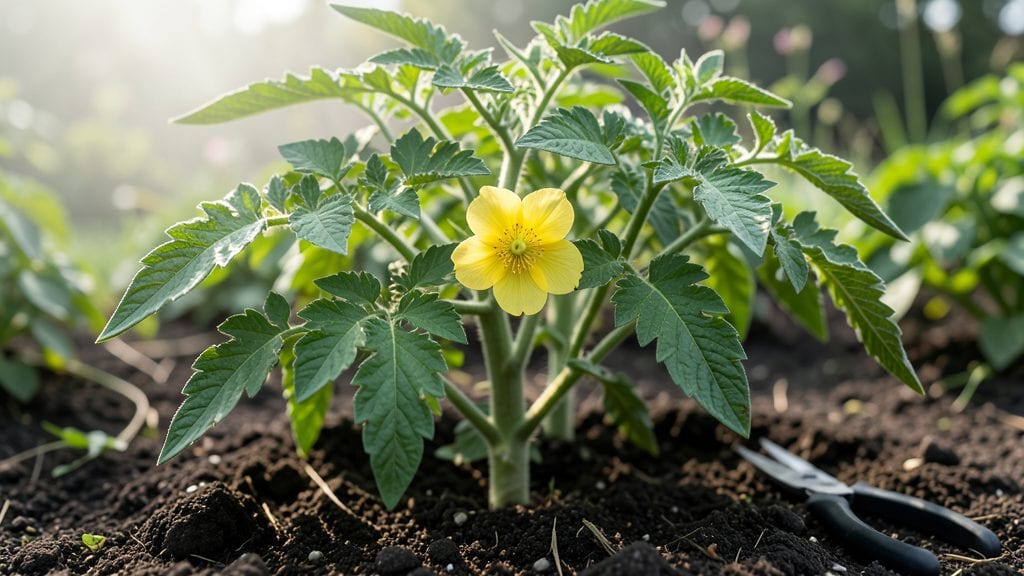
Understanding tomato flower anatomy is the first step to perfect fruit set every season. 🌱 Those delicate yellow blooms hold the secret to whether your plants produce a handful of tomatoes or a bountiful harvest.
The stamen, pistil, petals, and ovary all play critical roles—each one either helps or hinders pollination.
Most gardeners overlook how the flower’s structure works against them. The stamen’s pollen needs to reach the pistil’s sticky top, but wind or bees often miss the mark.
Petals protect this process, while the ovary (where fruit forms) waits patiently for fertilization. Knowing these parts helps you intervene when nature falls short.
With this knowledge, you’ll hand-pollinate stubborn flowers, choose varieties that pollinate themselves, and troubleshoot why some blooms drop without setting fruit. Your tomato plants will thank you with heavier, more consistent yields all season long.
Whether you’re growing heirlooms or hybrids, this guide makes pollination predictable. Let’s turn those blooms into fruit—no guesswork required. Here’s how each flower part works together to grow the tomatoes you’ve been dreaming of.
📚 In This Guide
- What you need
- Instructions
- Tips and common mistakes
- Wrapping up and next steps
What you need
- ● Fresh tomato plants: Choose healthy, flowering varieties (e.g., Solanum lycopersicum). Aim for 3–5 plants with open flowers for best results.
- ● Hand lens or magnifying glass: 10x–20x magnification to inspect flower structures (e.g., National Optical or Loupe brands).
- ● Ruler or caliper: For measuring flower parts (e.g., petal length, stamen height). Precision within ±0.1mm is ideal.
- ● Fine paintbrushes: Size 0 or 00 (e.g., Princeton Velvetouch) for gentle pollen transfer.
- ● Pollen collection tools: Small paintbrush or cotton swab (sterile).
- ○ Glass slide + cover slip (for microscope analysis, optional but recommended).
- ● Notebook & pencil: For recording observations (e.g., flower stages, pollen viability).
- ● Camera or smartphone: With macro mode (e.g., iPhone 13+ or Sony RX100) for close-up shots.
- ● Dissecting kit: Scalpel, forceps, and petri dishes for deeper anatomical study.
- ● Iodine solution (2%): To test pollen viability (stains viable pollen blue-black).
- ● Grow lights or UV flashlight: Some tomato flowers’ UV patterns are invisible to the naked eye!
- ● Reference guides: Books like “The Tomato: Botany, Evolution, and Genetics” or online databases (e.g., PLANTS Database).
How to identify and support tomato flower parts for maximum fruit production
Understanding these key structures turns guesswork into guaranteed harvests.
🌱 Step 1: Locate the Stamen and Pistil in Each Flower
The stamen is the male part—look for the yellow pollen-covered anthers that sit atop thin, wiry filaments. These release pollen when mature. The pistil, the female center, is the green, cone-shaped structure with a sticky top that catches pollen. I always check flowers in the morning when pollen is freshest and most abundant.
Here's the thing—you'll see some flowers with both parts fully developed, while others might have one part underdeveloped. The perfect flowers have both stamen and pistil mature simultaneously. Use a magnifying glass if your eyes aren't sharp; you'll spot pollen grains glistening on the anthers.
💧 Step 2: Recognize Pollen Transfer Signs
Successful pollination leaves visible clues. First, check for pollen dusting on the pistil's sticky tip—that's your first sign. Then look for the swollen ovary at the flower's base within 24 hours, which means fertilization has occurred. I tap tomato plants gently during bloom to encourage natural pollen transfer, especially on cloudy days when bees are less active.
Watch for drooping or wilting flowers—this often means pollination failed. Sometimes the flower simply didn't receive enough pollen, or the weather was too hot. If you see this consistently, it's time to hand-pollinate using a small paintbrush to transfer pollen between flowers.
☀️ Step 3: Create Ideal Conditions for Pollen Development
Tomato flowers need 70-80°F temperatures for proper pollen production. Below 55°F, pollen becomes sterile and won't fertilize. I've learned the hard way—cooler mornings often mean poor fruit set unless I intervene. Keep plants in full sun (6+ hours daily) and avoid overhead watering during bloom to prevent pollen from washing away.
Humidity matters too. In dry conditions, I mist the plants lightly in the morning to create a more pollen-friendly environment. The key is balance—too much moisture causes disease, but some humidity helps pollen grains stick to the pistil. You'll know you've got it right when you see consistent fruit swelling within a week of bloom.
✂️ Step 4: Remove Problem Flowers for Better Fruit Quality
Not all flowers should become fruit. I always remove small, underdeveloped flowers and those with abnormal shapes—they'll produce poor-quality tomatoes. Focus on keeping just 3-5 main flowers per cluster for the best-sized fruit. This might seem counterintuitive, but it directs the plant's energy where it matters most.
Here's my trick: I wait until the flower opens fully before deciding to keep it. If the stamen looks weak or the pistil isn't developing properly, I snip it off. This prevents the plant from wasting resources on low-quality fruit. You'll see stronger stems and larger tomatoes as a result—it's worth the extra attention.
Tips & tricks for perfect tomato flower pollination
Here's what nobody tells you about maximizing your tomato harvest with these simple but game-changing insights.
Morning Inspection: The best time to check tomato flowers is between 8-10 AM when pollen is freshest and most abundant. I've found that flowers examined at this time show the clearest signs of pollen development—those glistening anthers are easiest to spot with a magnifying glass. This morning routine helps you identify which flowers are ready for pollination before the heat of the day affects their condition.
Temperature Matters: When temperatures drop below 55°F, pollen becomes sterile and won't fertilize—this is why cool mornings often lead to poor fruit set. I've learned to monitor my plants closely during temperature dips and use row covers to maintain warmth around 70-80°F during bloom. The 24-hour window after successful pollination is critical for that initial ovary swelling, so protecting your plants during this vulnerable period makes all the difference.
Hand-Pollination Technique: If you notice drooping flowers or consistently poor fruit set, grab a small paintbrush and gently transfer pollen between flowers. Focus on the sticky pistil tips—you'll know you're doing it right when you see pollen dusting on them. I always hand-pollinate on cloudy days when bees are less active, and it's been the key to consistent fruit production even in less-than-ideal weather conditions.
Pro Tips for Tomato Flower Anatomy
- Here's what nobody tells you about maximizing your tomato harvest with these simple but game-changing insights.
- Morning Inspection: The best time to check tomato flowers is between 8-10 AM when pollen is freshest and most abundant.
- Temperature Matters: When temperatures drop below 55°F, pollen becomes sterile and won't fertilize—this is why cool mornings often lead to poor fruit set.
Frequently asked questions
Got questions about tomato flower anatomy and pollination? You’re not alone! Here are some of the most common queries—and their answers—to help you grow bigger, healthier tomatoes.
Why aren’t my tomato flowers turning into fruit?
This usually happens due to poor pollination. Tomato flowers are self-pollinating, but wind or gentle shaking (like a soft tap) can help. Low humidity, extreme heat, or weak flowers can also prevent fruit set. Try hand-pollinating with a small brush or check for pests damaging flowers.
How long does it take for a tomato flower to turn into a fruit?
After successful pollination, a tomato flower typically takes 5–10 days to drop its petals and begin forming a tiny fruit. Full-sized tomatoes develop over 30–60 days, depending on the variety and growing conditions. Patience is key—don’t rush it!
Can I pollinate tomato flowers by hand if it’s too windy?
Grab a soft paintbrush, cotton swab, or even your finger to transfer pollen from the anther (male part) to the stigma (female part) of the flower. Do this in the morning when flowers are open. Pro tip: Focus on flowers that are fully open but haven’t dropped petals yet for best results.
What should I do if my tomato flowers keep falling off?
Flower drop (or "blossom end rot") can happen due to stress, like inconsistent watering, temperature swings, or nutrient deficiencies (especially calcium). Ensure your plants get 1–2 inches of water weekly and mulch to keep roots stable. Avoid over-fertilizing with nitrogen—balance it with phosphorus and potassium for flowering.
Are there tomato varieties that don’t need hand pollination?
Most heirloom and hybrid tomatoes are self-pollinating, but some determinate varieties (like ‘Roma’ or ‘Celebrity’) produce smaller flowers that may benefit from a little help. Greenhouse or indoor growers should hand-pollinate to guarantee fruit set. If you’re growing cherry tomatoes, they’re often easier to pollinate naturally due to their size.
Wrapping up and next steps
Understanding the anatomy of tomato flowers unlocks the secret to healthier plants and bountiful harvests! From the stamens and pistil to the role of pollen and pollinators, every part plays a crucial role in fruit development.
With this knowledge, you’re now equipped to troubleshoot issues like poor pollination and boost your garden’s success.
Ready to put your newfound expertise to work? Start observing your tomato flowers closely—hand-pollinate if needed, and watch your plants thrive! 🌱 For even deeper insights, explore advanced gardening techniques or dive into tomato varieties best suited for your climate.