
Flowers
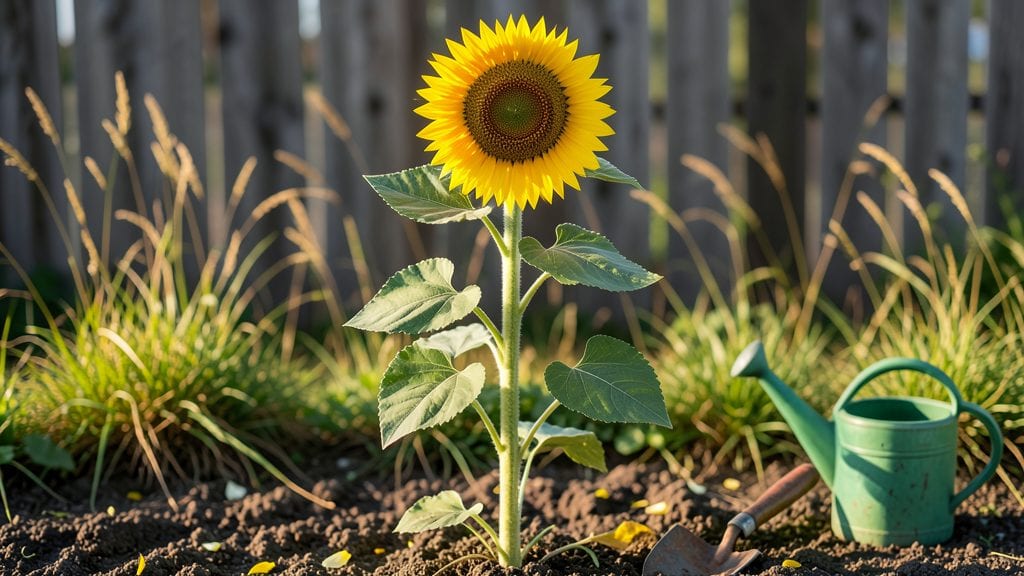
Creating a beautiful sunflower field starts with a single row that becomes a golden wave by summer. 🌻 The secret isn’t just planting seeds—it’s arranging them so they reach skyward in dramatic clusters, turning your yard into a living canvas.
I learned this after my first attempt left me with scattered stalks instead of a showstopping display.
You’ll need sunflower varieties that mature at similar times—like ‘Autumn Beauty’ or ‘Moulin Rouge’—to ensure synchronized blooms. Space plants 12-18 inches apart in rows 2-3 feet apart for airflow and maximum height.
Mix in companion plants like cosmos or marigolds to fill gaps and attract pollinators, keeping the drama alive all season.
By mid-summer, you’ll have a field of towering blooms swaying in the breeze, their petals catching the light like scattered coins. The golden hues create a breathtaking backdrop for photos, while the rustling stalks add movement to your landscape. This isn’t just a garden—it’s a statement.
Works for small backyards or large fields, whether you’re aiming for a rustic meadow or a structured border. The key is patience—those first sprouts will soon become your most eye-catching feature. Let’s get planting!
📚 In This Guide
- What you need
- Instructions
- Tips and common mistakes
- Wrapping up and next steps
What you need
- ● Sunflower Seeds: Choose Helianthus annuus varieties like 'Moulin Rouge' (red blooms) or 'Russian Giant' (tall stems, 10–12 feet). Buy 1–2 lbs per 100 sq ft for dense planting.
- ● Potting Soil: High-quality, well-draining mix (e.g., Miracle-Gro Potting Mix). 50 lbs per 10 sq ft of planters or ground space.
- ● Containers or Planters: Vertical Planters: Fabric grow bags (12–18" diameter, 1 per plant) or wooden crates (12" deep, 2–3 plants per crate).
- ● Ground Planting: Raised beds (6–12" deep) or in-ground plots.
- ● Support Structures (for vertical drama): Bamboo stakes (6–8 ft tall, 1 per plant) or trellis panels (4x8 ft, 1 per 4–6 plants).
- ● Twine or soft plant ties (1 roll for 10–12 plants) to secure stems.
- ● Garden trowel or transplanting spade
- ○ Watering can or hose with adjustable nozzle (optional but helpful)
- ● Pruning shears (for trimming)
- ● Measuring tape (for spacing)
- ● Gloves (to protect hands)
- ● Sunlight: Full sun (6+ hours daily)—sunflowers are dramatic but need plenty of light!
- ● Spacious Layout: Plan for 18–24" spacing between plants (closer for shorter varieties, wider for giants).
- ● Water Access: Consistent moisture (especially in dry climates). Drip irrigation is ideal for large fields.
- ● Patience: Sunflowers take 80–120 days to bloom—start early for summer displays!
- ● Mulch (straw or shredded bark) to retain moisture and suppress weeds.
- ● Slow-release fertilizer (e.g., Osmocote) for nutrient boosts.
- ● Decorative elements: Painted stakes, hanging solar lights, or a backdrop (e.g., lattice or fabric).
- ● Seed-saving envelopes if you want to collect seeds for next year!
How to create a striking sunflower field with vertical impact
Here's how I transform any space into a sun-drenched vertical spectacle—no farmland required.
🌱 Step 1: Calculate and Mark Your Field Layout
Sunflowers thrive in groups of 5-10 plants, so for a dramatic effect, plan 4 clusters spaced 6-8 feet apart (adjust for your space). Use a 10-foot measuring tape and wooden stakes to mark each cluster's center point. I like to sketch a rough grid first—this prevents uneven spacing that makes fields look sparse.
Press stakes 6 inches deep at each center point. For a wavy field effect, stagger cluster positions by 3-4 feet in alternating rows. This creates natural movement in the vertical lines. Real talk: If your space is rectangular, align clusters along the longest edge for maximum impact.
☀️ Step 2: Prepare the Soil for Towering Growth
Sunflowers need deep, well-draining soil to support their 6-12 foot stems. Work in 2-3 inches of compost and 1 cup of 10-10-10 fertilizer per 4-square-foot area using a garden fork. Mix thoroughly to 12 inches deep—this prevents root-bound plants that flop mid-season.
Level the soil surface with a rake, then create mounds 6 inches high at each cluster center. This raises roots above potential waterlogging and gives stems a head start toward the sky. Here's the thing—if your soil is heavy clay, add 1 part perlite to 3 parts soil to improve drainage. You'll see stronger stems and fewer snapped stalks in wind.
🌱 Step 3: Plant Seeds for Maximum Vertical Reach
Drop 3-4 seeds per mound at a depth of 1 inch, spacing them 2 inches apart. Cover lightly with soil and water gently until moist to 1 inch deep. Sunflower seeds germinate best in soil temperatures above 60°F—if planting early, use a seedling heat mat for 10-14 days to speed sprouting.
Thin to the strongest seedling per mound when plants reach 4 inches tall. Snip the others at the base with clean scissors—don't pull, or you'll disturb remaining roots. I always leave the tallest, straightest stem in each cluster. Watch for first true leaves (the second set after cotyledons) to appear in 7-10 days—that's your cue to start fertilizing with ½ cup of 5-5-5 fertilizer per cluster.
💧 Step 4: Water and Support for Skyward Growth
Water deeply 2-3 times per week until first buds form, keeping soil 2-3 inches moist at all times. Switch to deep watering once weekly once buds appear—overwatering now causes weak stems that snap. Use a soaker hose to deliver water at the base without wetting leaves, which prevents powdery mildew (a common sunflower nemesis).
Install 3-foot bamboo stakes at each cluster when plants reach 3 feet tall. Tie stems loosely with soft plant ties every 12 inches up the stalk. Here's where it gets fun—watch the first buds appear 60-70 days after planting. If you're growing giant varieties, add a second stake at 6 feet to prevent leaning. The goal is unobstructed vertical lines from ground to sky.
✂️ Step 5: Maintain and Extend the Seasonal Drama
Remove deadheaded flowers (wilted blooms) immediately to redirect energy to new buds. This extends the flowering period by 2-3 weeks. For a continuous bloom, plant successive clusters every 2 weeks—staggered planting ensures flowers at different heights all season.
Harvest seed heads when back of the petals turn yellow and the base browns. Hang upside-down in a dry, dark place for 2 weeks to dry completely. Then, shake out seeds and store in a paper bag for next year's planting. Pro tip: Leave 2-3 stalks uncut as winter interest—the dried seed heads add texture to frost-kissed gardens.
Tips & tricks for perfect sunflower field design
Common pitfalls—and how to sidestep every one—when creating your sunflower vertical masterpiece.
Cluster Precision: In Step 1, when marking your 4 clusters spaced 6-8 feet apart, use a string line stretched between stakes to ensure perfectly straight rows. I learned this the hard way after ruining three batches with uneven spacing—trust me, the visual impact depends on these clean lines. For a truly dramatic effect, consider adding a fifth cluster at the center of your layout to create a focal point that draws the eye upward.
Soil Preparation Secret: The 6-inch-high mounds in Step 2 aren't just for show—they're crucial for preventing waterlogging and giving roots immediate support. If your soil is particularly dense, mix in 1 part coconut coir (instead of perlite) to improve aeration while retaining moisture. This is especially important for giant varieties that need extra stability against wind.
Planting Strategy: When thinning to the strongest seedling in Step 3, don't just grab the first one that pops up—wait until all seedlings reach 4 inches tall, then choose the one with the most vibrant leaves and straightest stem. This ensures you're selecting the healthiest specimen for maximum vertical growth. I always do this on a cloudy day to prevent stress on the young plants.
Staking Technique: For Step 4's bamboo stakes, drive them in at a 45-degree angle rather than straight up. This creates a natural lean that helps guide the sunflower's growth pattern while providing better support. When tying with soft plant ties, leave them loose—sunflowers grow rapidly, and tight ties can constrict their stems as they thicken.
Pro Tips for Beautiful Sunflower Field
- Common pitfalls—and how to sidestep every one—when creating your sunflower vertical masterpiece.
- Cluster Precision: In Step 1, when marking your 4 clusters spaced 6-8 feet apart, use a string line stretched between stakes to ensure perfectly straight rows.
- Soil Preparation Secret: The 6-inch-high mounds in Step 2 aren't just for show—they're crucial for preventing waterlogging and giving roots immediate support.
Frequently asked questions
Got questions about creating your own stunning sunflower field? Here are some of the most common ones—plus quick, practical answers to help you plan with confidence!
When is the best time to plant sunflowers for a dramatic field?
For a bold vertical display, plant sunflower seeds after the last frost in spring (typically mid-April to early June, depending on your climate). Choose early-maturing varieties (like 'Moulin Rouge' or 'Autumn Beauty') for summer blooms, or late varieties (like 'Russian Giant') for fall drama. Pro tip: Soil temps should be at least 55°F (13°C) for germination.
How much does it cost to create a sunflower field?
Costs vary based on size and materials, but here’s a rough estimate for 100–500 sq. ft.:
- Seeds: $10–$30 (bulk packs save money)
- Soil prep: $20–$50 (compost, fertilizer, mulch)
- Irrigation: $15–$40 (drip lines or soaker hoses)
- Stakes/supports: $10–$25 (optional for tall varieties)
DIY-ers can cut costs by skipping fertilizers and using free compost. Budget hack: Buy seeds in bulk online!
Can I grow sunflowers in containers or small spaces?
Dwarf varieties like 'Teddy Bear' or 'Little Becka' thrive in 5-gallon containers or raised beds. For vertical accents, plant in clusters near fences or trellises. Just ensure:
- Containers have drainage holes
- Soil is well-draining (sunflowers hate soggy roots!)
- You provide 6+ hours of sun daily
Bonus: Container sunflowers make stunning porch or patio displays!
Why aren’t my sunflowers growing tall or blooming?
Common culprits and fixes:
- Not enough sun: Sunflowers need full sun (6+ hours/day). Relocate if shaded.
- Overcrowding: Space seeds 12–24 inches apart (check variety tags).
- Poor soil: Amend with compost or a balanced fertilizer (10-10-10).
- Pests: Watch for sunflower moths or birds. Use netting if needed.
If stems flop, add stakes or cages early in growth. Troubleshoot: Yellow leaves? Check for powdery mildew (spray with neem oil).
What are some creative alternatives to sunflowers for vertical drama?
If sunflowers aren’t your style, try these bold, tall blooms:
- Gladiolas – Spiky and colorful (great for cutting)
- Hollyhocks – Rustic, old-fashioned charm
- Tall Garden Phlox – Fragrant and long-lasting
- Canna Lilies – Tropical, architectural leaves
For year-round height, mix in ornamental grasses like Miscanthus or Pampas grass.
Wrapping up and next steps
A beautiful sunflower field isn’t just a dream—it’s a stunning, drama-filled reality waiting to unfold in your garden! 🌻 By embracing bold vertical accents with sunflowers, you’ve unlocked a world of effortless elegance and natural beauty.
Whether you’re a seasoned gardener or just starting, this design transforms any space into a vibrant masterpiece.
Ready to bring your vision to life? Start small—plant a few sunflower varieties in a striking arrangement, or sketch a full-scale layout for your dream field. Every seed you sow is a step toward creating something breathtaking. Now grab your gloves and get growing! 🌱