
Transplanting
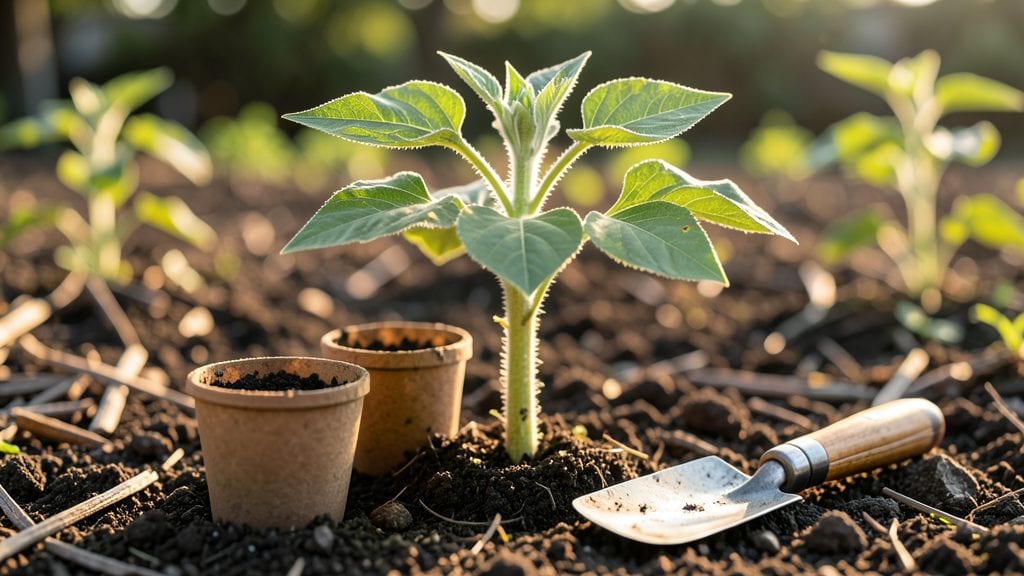
Turning those spindly seedlings into 10-foot sunflowers starts with one simple move: timing the transplant just right. 🌻 I’ve watched sunflower seedlings flop when moved too soon, then thrived when given the perfect moment—strong stems, deep roots, and blooms that make neighbors stop and stare.
The secret isn’t complicated, but the details matter: soil warmth, leaf count, and that first real sunbath.
You’ll need a sunny spot with 6+ hours of direct sunlight (morning sun is ideal), well-draining soil mixed with compost, and a sturdy stake for taller varieties. Most beginners overlook the soil prep—amending with compost or aged manure makes all the difference for hungry sunflower roots.
And here’s the kicker: transplant on a cloudy day or late afternoon to reduce shock, then water deeply right after.
What you’ll end up with is a garden showstopper—velvety petals in gold, rust, or deep red, towering over your fence by late summer. Even the edible varieties (like ‘Mammoth’ or ‘Autumn Beauty’) produce seeds worth roasting or sharing.
The best part? Sunflowers forgive mistakes: they bounce back from leggy seedlings, tolerate drought once established, and attract pollinators like magnets.
Whether you’re growing for cut flowers, birdseed, or just pure joy, this method works for all sunflower types—dwarf, standard, or giant. Let’s get those seedlings in the ground before they outgrow their pots!
📚 In This Guide
- What you need
- Instructions
- Tips and common mistakes
- Wrapping up and next steps
What you need
- ● Sunflower seedlings: 5–10 healthy, sturdy seedlings (variety of your choice, e.g., 'Mammoth' or 'Teddy Bear').
- ● Transplanting container: A 5–6 inch pot per seedling (or a large tray for group transplanting).
- ● High-quality potting mix: 5–10 gallons, well-draining and nutrient-rich (look for labels like "all-purpose" or "seedling mix").
- ● Fertilizer: A balanced, slow-release fertilizer (10-10-10 or 5-10-5 ratio) or organic options like compost or worm castings.
- ● Watering can or hose: With a gentle spray nozzle for hydration.
- ● Garden trowel or transplanting spade: For digging and relocating seedlings.
- ● Garden gloves: To protect your hands from dirt and thorns (some varieties have them!).
- ○ Stakes or cages (optional but recommended): 6–8 foot tall stakes or tomato cages to support tall varieties.
- ● Mulch: Straw or shredded leaves to retain moisture and suppress weeds.
- ● Plant food: A liquid fertilizer (like fish emulsion) for a mid-season boost.
- ● Sunflower companion plants: Marigolds or basil to deter pests.
- ● Garden markers: To label varieties and track growth.
- ● Pruning shears: For trimming dead leaves or encouraging bushier growth.
How to transplant sunflower seedlings for maximum height
Here's the foolproof method I use to turn delicate sunflower seedlings into sturdy, towering giants.
🌱 Step 1: Harden Off Seedlings Gradually
Start 10-14 days before transplanting by moving seedlings outside during mild daytime temperatures (above 50°F). Place them in a sheltered spot—like under a patio cover or against a north-facing wall—where they'll get indirect light and protection from wind.
Each day, increase their outdoor time by 1-2 hours, watching closely for wilting or yellowing leaves. These are signs they're getting too much sun or wind too soon. By day 7, they should handle 4-6 hours of direct sun without stress. Real talk: If you rush this step, you'll end up with sunburned seedlings that struggle to recover.
🪴 Step 2: Choose the Right Transplant Location
Sunflowers need full sun (6+ hours daily) and deep, well-draining soil. Pick a spot with at least 2 feet of space between plants—they'll spread as they grow. If your soil is heavy clay, amend it with 2-3 inches of compost mixed into the top 6 inches to improve drainage and fertility.
Dig holes twice as wide as the seedling's root ball but only as deep as the container. Loosen the roots gently if they're circling the pot—this encourages them to spread into the new soil. Here's the thing: Sunflowers hate having their roots disturbed, so handle them like you're carrying fragile glass.
☀️ Step 3: Transplant at the Correct Depth and Support
Remove the seedling from its container, gently squeeze the root ball to encourage roots to spread, then place it in the hole so the top of the root ball sits level with the soil surface. Press soil firmly around the base to eliminate air pockets, then water deeply until moisture reaches 6 inches down. You'll know it's enough when water runs out the drainage holes.
Install a 6-foot tall stake or strong bamboo support right away—even if the seedling is small. Tie it loosely with soft plant ties (not wire, which can cut into stems). Sunflowers grow fast, and waiting to stake them often leads to flopping stems that never recover. I always add a second stake later for extra stability, especially in windy areas.
💧 Step 4: Water and Fertilize for Rapid Growth
Keep soil consistently moist (not soggy) for the first 2 weeks after transplanting. Water deeply every 2-3 days—check by sticking your finger 2 inches into the soil. If it feels dry, water again. Overwatering now causes root rot, while underwatering stresses young plants.
After 4 weeks, switch to drip irrigation or soaker hoses to deliver water slowly at the base. Add a balanced fertilizer (10-10-10) at half strength when the plants reach 12 inches tall, then repeat every 3-4 weeks. You'll see a visible growth spurt within a week—this is your signal the roots are establishing well.
✂️ Step 5: Prune and Protect for Towering Blooms
When the main stem reaches 3-4 feet tall, remove any side shoots that form below the lower 6 inches of the stem. These compete for energy and weaken the main flower. Use clean, sharp pruners to cut just above the node where the shoot emerges. Here's where it gets fun—watch the remaining stem bolt upward like a rocket.
As the flower bud forms, protect it from birds with a lightweight mesh cage or netting. I've lost too many sunflowers to hungry birds to skip this step. Once the bloom opens, enjoy 6-inch-wide flowers that'll turn heads all summer. And if you're growing multiple plants, space them 18-24 inches apart for better air circulation—this prevents powdery mildew that can ruin foliage.
Tips & tricks for perfect sunflower transplanting
These game-changing strategies will help you transform fragile seedlings into sunflower giants that reach their full potential.
Harden Off with Precision: During the 10-14 day hardening process, I recommend using a small shade cloth (30-50% coverage) for the first 3 days to gradually introduce seedlings to outdoor conditions. This mimics the natural transition and prevents shock. Watch for subtle leaf curling—this is your early warning sign they're getting too much sun too soon. Confession: I skipped this step early on and ended up with seedlings that looked like they'd been sunburned!
Soil Preparation Secret: Before transplanting, mix in 1 cup of bone meal into the bottom of each planting hole—this gives your sunflowers a phosphorus boost for strong root development. The bone meal should be mixed into the top 6 inches of soil as mentioned, but adding it concentrated at the bottom creates a nutrient-rich zone where roots will naturally grow. This is particularly helpful if your soil tests low in phosphorus.
Staking Strategy: When installing that 6-foot stake in Step 3, drive it in at a slight angle (about 15 degrees) rather than straight up. This creates a natural lean that helps the sunflower stem grow thicker and stronger against wind resistance. I also recommend using two stakes for each plant—one on each side of the stem—when the plant reaches 3 feet tall. The extra support prevents the classic "flopping" problem that ruins so many sunflowers.
Watering Wisdom: The first 2 weeks after transplanting are critical for root establishment. I've found that watering in the early morning (between 6-8 AM) gives the soil time to absorb moisture before the heat of the day. Use a moisture meter to check that water reaches 6 inches deep—this is harder than it sounds! If you don't have one, dig down with a trowel and check the soil moisture at that depth. Overwatering at this stage is just as damaging as underwatering.
Pro Tips for Seedlings To Sunflowers
- These game-changing strategies will help you transform fragile seedlings into sunflower giants that reach their full potential.
- Harden Off with Precision: During the 10-14 day hardening process, I recommend using a small shade cloth (30-50% coverage) for the first 3 days to gradually introduce seedlings to outdoor conditions.
- Soil Preparation Secret: Before transplanting, mix in 1 cup of bone meal into the bottom of each planting hole—this gives your sunflowers a phosphorus boost for strong root development.
Frequently asked questions
Got questions about growing sunflowers from seedlings to sunflowers? You’re not alone! Here are some of the most common queries—and their answers—to help you cultivate those towering blooms with confidence.
How soon after planting seedlings should I expect sunflowers to bloom?
Sunflowers typically bloom 80–120 days after transplanting, depending on the variety. Dwarf varieties may bloom in as little as 6 weeks, while giant varieties can take up to 5 months. Keep an eye on the weather—warmer temperatures and longer daylight hours speed up the process!
What’s the best temperature range for transplanting sunflower seedlings?
Sunflowers thrive in warm soil (at least 55°F/13°C) and air temperatures above 60°F (15°C). Avoid transplanting when nighttime temps dip below 50°F (10°C), as cold stress can stunt growth. If your climate is chilly, wait until after the last frost or use row covers for protection.
Can I transplant sunflower seedlings in containers, or do they need to be in the ground?
Yes! Sunflowers adapt well to containers (at least 12–18 inches deep) as long as they have good drainage. Use a lightweight potting mix, and place the container in a sunny spot. Just be mindful—container-grown sunflowers may not reach their full height but will still produce stunning blooms!
Why are my sunflower seedlings wilting or turning yellow after transplanting?
Wilting or yellowing can signal transplant shock, overwatering, or nutrient deficiency. Let the soil dry slightly between waterings, and avoid soggy roots. If leaves turn yellow, check for pests (like aphids) or adjust your fertilizer to include more nitrogen. Give them time to recover—they’ll bounce back!
Do sunflowers need support, or will they grow tall on their own?
Most sunflowers are self-supporting, but tall varieties (6+ feet) may need staking in windy areas or heavy soil. Use bamboo stakes or cages for extra stability. If you’re growing sunflowers for seeds, avoid over-supporting—they need to lean slightly for proper seed development!
Wrapping up and next steps
Watching your tiny sunflower seedlings grow into majestic, towering blooms is one of gardening’s most rewarding experiences! 🌻 With the right tools, timing, and care, you’ve got everything you need to nurture thriving sunflowers—whether you’re a beginner or a seasoned green thumb.
Now that you’re armed with transplanting tips and troubleshooting know-how, it’s time to roll up your sleeves and dig in.
Your next step? Mark your calendar for the ideal transplanting window (usually after the last frost) and gather your crew—kids, neighbors, or fellow plant lovers—to make it a fun, collaborative project.
Before you know it, those little sprouts will be reaching for the sky, turning your garden into a sunshine-filled paradise. Happy planting! 🌱✨