
Pruning
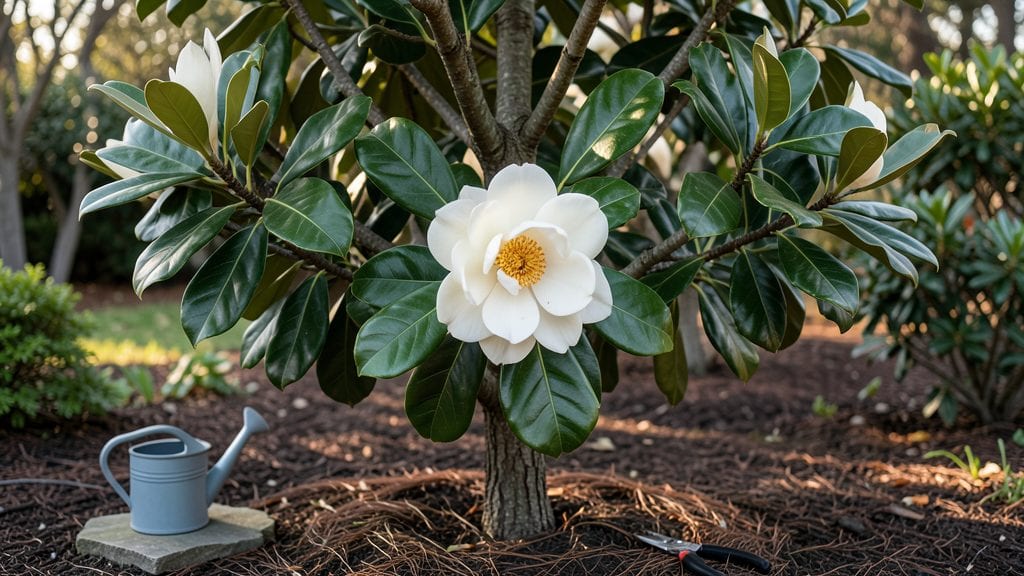
The Southern magnolia flowering tree thrives when pruned with care, and I’ve learned the best way to shape it without stressing the plant. 🌿 Its glossy leaves and fragrant blooms make it a standout in any landscape, but improper cuts can weaken its natural beauty.
The key is timing—prune lightly after flowering or in late winter to avoid disturbing the buds that form for next year’s show.
You’ll need sharp pruning shears, a ladder for higher branches, and a clear day to work. Focus on removing dead or crossing branches first, then thin out crowded growth to improve airflow.
Southern magnolias handle pruning better when you make clean cuts just outside the branch collar, never leaving stubs. This method keeps the tree healthy while maintaining its iconic shape.
What you’ll end up with is a tree that stays lush and vibrant year-round, with fewer pests and diseases creeping in. The blooms remain abundant, and the leaves stay thick and glossy.
Pruning this way turns a routine task into a way to enhance the tree’s natural elegance—no harsh cuts, just gentle shaping that works with the plant’s growth cycle.
Works for any mature Southern magnolia in zones 6 through 10, whether it’s a backyard centerpiece or a street tree. Start with small adjustments and watch how the tree responds—this approach builds trust between you and the plant over time.
📚 In This Guide
- What you need
- Instructions
- Tips and common mistakes
- Wrapping up and next steps
What you need
- ● Pruning shears: Bypass pruners (for small branches, ¼"–¾" diameter) – 1 pair
- ● Loppers: Long-handled (for medium branches, ¾"–2" diameter) – 1 pair
- ● Pruning saw: Curved-tooth saw (for thick branches, 2"+ diameter) – 1
- ● Disinfectant: 70% isopropyl alcohol or bleach solution (1 part bleach to 9 parts water) – small spray bottle
- ● Heavy-duty gloves: Cut-resistant (to protect from thorns and sap) – 1 pair
- ● Safety glasses: ANSI-rated (to shield from debris) – 1 pair
- ● Ladder or step stool: Sturdy, non-slip (for hard-to-reach branches) – 1
- ● Trash bags: Heavy-duty (for debris disposal) – 2–3
- ○ Pruning sealant (optional but helpful): Tree wound dressing (for cuts larger than ½") – small tube
- ● Extension pole pruners (for high branches without a ladder)
- ● Sharpie or permanent marker (to mark cuts before pruning)
- ● Wheelbarrow or tarp (for hauling heavy debris)
- ● Hand sanitizer (to keep hands clean post-pruning)
Step-by-Step guide to pruning your southern magnolia for year-round beauty
Here's how to keep your majestic magnolia thriving without sacrificing its iconic blooms.
✂️ Step 1: Prune Immediately After Flowering (Late Spring)
The best time to prune your southern magnolia is right after the spring blooms fade—typically in late May or June. This ensures you don't accidentally remove next year's flower buds, which form on old wood. Look for spent blooms that have dropped or turned brown; these signal it's safe to start shaping.
Focus on removing any dead, diseased, or crossing branches first. These are easy to spot—they're either brown and brittle or rubbing against other limbs. Use clean, sharp pruning shears to make cuts just outside the branch collar (the swollen area where the branch meets the trunk). This prevents unsightly stubs and promotes faster healing.
I like to step back and assess the tree's natural shape after removing problem branches. Southern magnolias have a graceful, vase-like form—let that guide your cuts. Avoid heavy pruning now; you're just tidying up, not reshaping dramatically. The goal is to remove no more than 20-25% of the canopy in any single session.
🌿 Step 2: Light Structural Pruning in Late Summer (August-September)
Wait until late summer to do any structural pruning—this is when the tree has recovered from spring flowering and is preparing for winter. This is your chance to thin the canopy to improve airflow and sunlight penetration. Start by removing any suckers (shoots growing from the base or trunk) and water sprouts (fast-growing vertical shoots).
For thicker branches, use loppers for limbs between ½ to 2 inches in diameter. Make your cuts at a 45-degree angle just outside the branch collar. If you're removing a large branch, cut in three steps: first make an undercut, then a top cut, and finally remove the branch stub. This prevents tearing the bark.
Here's the thing—southern magnolias are slow to respond to pruning, so don't overdo it. Focus on opening up the center of the tree where sunlight struggles to reach. You'll see new growth emerge in spring where you've made strategic cuts—that's your confirmation you're on the right track.
☀️ Step 3: Minimal Winter Pruning (January-February)
Winter is the quietest time for pruning, but it's perfect for removing any remaining deadwood that might have appeared over the past year. The tree is dormant, so it won't bleed sap excessively like in spring. Work on mild days (above 40°F) when the ground isn't frozen, as this makes it easier to move around the tree.
This is also when you can shape the outer canopy if needed. Southern magnolias naturally grow broad and rounded, but if branches are growing too close together, now's the time to thin them out. Use your hand as a guide—if you can't fit it between two branches, they're too crowded. Make your cuts just outside the branch collar as always.
Real talk: winter pruning is often the most overlooked step, but it's crucial for maintaining the tree's health. I've seen magnolias stressed by heavy spring pruning recover beautifully with just a little winter maintenance. The key is patience—these trees grow slowly, and dramatic changes aren't necessary.
🪴 Step 4: Post-Pruning Care for a Stress-Free Recovery
After pruning, give your magnolia some TLC to ensure it recovers well. Water deeply at the drip line (the edge of the tree's canopy) to help the roots support new growth. A 2-3 inch layer of mulch (like the pine straw or shredded bark) spread 3-4 inches away from the trunk will help retain moisture and regulate soil temperature.
I always avoid fertilizing right after pruning—let the tree focus on healing before adding nutrients. If you notice any sap bleeding from cuts (common in spring), don't worry—it's normal and won't harm the tree. Just keep the area clean to prevent disease. Over the next few weeks, you'll see new growth emerge from the pruned areas, signaling the tree is recovering.
This is the moment that matters: watch how the tree responds. If you've pruned correctly, you'll see strong, upright branches filling in any gaps and a more open canopy by next spring. The goal isn't perfection—it's creating a balanced, healthy tree that will keep flowering for decades.
Tips & tricks for perfect southern magnolia pruning
Confession: I skipped winter pruning for years and wondered why my magnolia never looked its best. These small details make all the difference.
Timing is Everything: In Step 1, when pruning after flowering in late May-June, focus on removing only the most obvious dead branches first. The tree's flower buds for next year are already forming on old wood, so avoid cutting back more than necessary. I've seen people remove too much too soon, and their trees barely bloomed the following spring. The 20-25% canopy rule is your safety net—stick to it religiously.
Tool Precision Matters: For Step 2's structural pruning, invest in good loppers and a pruning saw if needed. The 45-degree angle cut just outside the branch collar isn't just theory—it's what prevents those ugly stubs that invite disease. I learned this the hard way after seeing several cuts fail to heal properly. Clean your tools between cuts to prevent spreading any potential infections from diseased branches.
Winter Pruning Secrets: That 40°F minimum temperature in Step 3 isn't arbitrary—it's when the tree's sap flow slows enough to prevent excessive bleeding. Work on days above this threshold, and you'll notice the cuts seal much faster. This is also when you can safely remove any remaining deadwood that might have appeared over winter without stressing the tree.
Pro Tips for Southern Magnolia Flowering Tree
- Confession: I skipped winter pruning for years and wondered why my magnolia never looked its best.
- Timing is Everything: In Step 1, when pruning after flowering in late May-June, focus on removing only the most obvious dead branches first.
- Tool Precision Matters: For Step 2's structural pruning, invest in good loppers and a pruning saw if needed.
Frequently asked questions
Got questions about pruning your Southern magnolia flowering tree? You’re not alone! Here are some of the most common concerns—and expert answers to keep your tree thriving.
When is the best time to prune a Southern magnolia?
The ideal time is late winter to early spring (February–March), just before new growth begins. Avoid pruning in fall or winter, as this can encourage late-season growth that may be damaged by frost. Light shaping can be done year-round, but major cuts should wait for dormant season.
Can I prune a Southern magnolia in summer?
While you can do light pruning in summer (like removing dead branches), avoid heavy cuts. Summer pruning can stress the tree, reduce flowering, and attract pests. If you must prune, do so early summer and keep cuts minimal to avoid stunting growth.
Will pruning reduce my magnolia’s flowers?
Pruning correctly won’t harm flowering—it may even enhance it! Focus on removing dead, crossing, or weak branches (never more than 25% of the canopy at once). Over-pruning can reduce blooms, but strategic cuts improve air circulation and sunlight, leading to healthier, more abundant flowers.
Do Southern magnolias need special care after pruning?
Yes! After pruning, sanitize tools with rubbing alcohol to prevent disease. Apply a balanced fertilizer (like 10-10-10) in early spring to support recovery. Mulch the base 2–3 inches deep (keep it 6 inches from the trunk) to retain moisture and protect roots.
What if my magnolia’s leaves turn brown after pruning?
Brown leaves post-pruning are usually normal if cuts were clean (use sharp tools!) and not too severe. However, if browning spreads or occurs with yellowing or wilting, check for overwatering, fungal issues (like sooty mold), or pest damage. Prune only healthy branches to avoid spreading problems.
Still unsure? Consult a local arborist for tree-specific advice—especially if your magnolia is young or mature!
Wrapping up and next steps
Pruning your southern magnolia flowering tree doesn’t have to be stressful—just strategic! 🌿 With the right tools, timing, and techniques, you can shape its beauty year-round while keeping it healthy and thriving. Remember, minimal cuts and seasonal awareness are key to preserving those stunning blooms and glossy leaves.
Ready to take action? Start by marking your calendar for your next pruning session—whether it’s a light trim in late winter or a deeper shape-up in early summer. Your magnolia will thank you with years of vibrant growth and breathtaking flowers! 🌸