
Picking
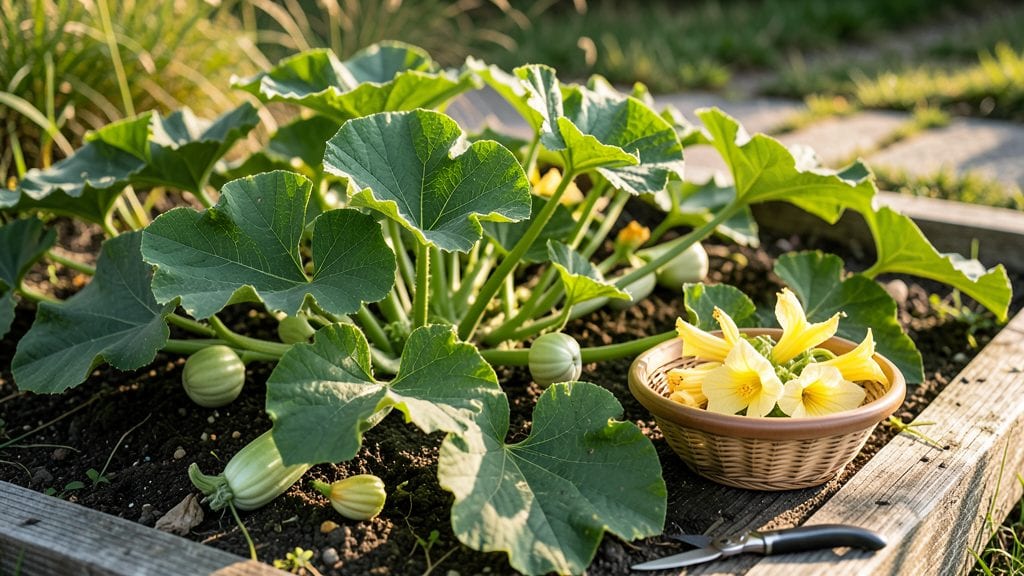
Harvesting squash flowers at their peak means bright, delicate petals that burst with flavor—not tough, wilted blooms that taste like nothing. The secret lies in timing: morning is best, when dew still clings to the petals and the heat of the day hasn’t begun to crisp the edges.
I learned this the hard way after picking afternoon flowers that turned rubbery by dinner.
You’ll need just three things: sharp scissors or pruning shears (to avoid tearing stems), a small bowl of ice water (to keep them fresh), and a clear day (cloud cover means softer petals).
Most importantly, choose fully open flowers with vibrant yellow centers—those are the ones packed with the most delicate, nutty flavor. The stems should snap cleanly, not stretch or tear.
What you end up with is a handful of edible blooms that add a bright, almost citrusy crunch to salads or a delicate sweetness when battered and fried.
The flowers you leave behind will still produce fruit, but the ones you harvest now give you two harvests in one: the blooms for your plate and the squash for your pantry later in the season.
Pro tip: Harvest early in the morning and store them in the fridge for up to 48 hours—any longer and they lose their crisp texture. If you’re not using them right away, try drying them on a wire rack for a pantry staple that lasts months.
This method works for zucchini, summer squash, and even pumpkin flowers, so don’t skip the harvest just because you’re focused on the fruit.
📚 In This Guide
- What you need
- Instructions
- Tips and common mistakes
- Wrapping up and next steps
What you need
- ● Fresh squash plants (butternut, zucchini, or pumpkin varieties—choose unsprayed plants for edible flowers).
- ● Sharp, clean pruning shears or scissors (sterilized with rubbing alcohol to avoid contamination).
- ● Glass jars or containers (with lids) for storing harvested flowers (4–6 oz size works well).
- ● Water spray bottle (to mist flowers and keep them fresh post-harvest).
- ● Paper towels or cheesecloth (for gently drying flowers before storage).
- ○ Twine or rubber bands (optional, for bundling stems if harvesting in bulk).
- ● Food-grade storage bags (with holes for airflow, like breathable produce bags).
- ● Small mesh bags (for transporting flowers without bruising).
- ● Labeling tags (to mark harvest dates if storing long-term).
- ● Gloves (if you’re sensitive to squash plant hairs or prefer extra hygiene).
- ● Recipes or cookbooks (for inspiration—think fritters, tempura, or garnishes!).
Step-by-Step guide to harvesting squash flowers for cooking
Here's how to pick the perfect edible blooms without harming your plants.
Identify the Right Flowers to Harvest
Focus on female flowers—they're the ones with tiny squash forming at their base. These blooms are sweeter and more tender than males. Look for buds that are fully open but haven't yet started developing fruit. The petals should be bright yellow or orange, depending on your variety, and the center will still look fresh and unblemished.
Male flowers grow on long stems and have no squash at their base. While edible, they're less flavorful. If you're short on time, female flowers are your priority. Avoid harvesting anything that looks wilted, brown, or has visible damage—those won't taste good and may attract pests.
Time Your Harvest for Maximum Flavor
Pick flowers in the morning after the dew has dried but before the heat of the day sets in. This ensures they're at their freshest. Use clean, sharp pruning shears or a knife to cut the stem about 1 inch below the flower. This prevents damage to the plant and encourages more blooms to form.
Harvest when the flowers are fully open but before they've had a chance to wilt. Overripe flowers lose their delicate flavor and become tough. If you're harvesting for frying, pick them when they're just beginning to open—they'll crisp up beautifully. For stuffing or tempura, fully open flowers work best.
Handle and Store Flowers Properly
Gently shake off any insects or debris before storing. Place the flowers in a paper towel-lined container to absorb excess moisture. Store them in the refrigerator for up to 3 days if you can't use them immediately. For longer storage, blanch them in boiling water for 30 seconds, then plunge into ice water before freezing in an airtight container.
Don't wash the flowers until you're ready to use them—the moisture can cause them to wilt faster. If you notice any flowers starting to droop before you're ready to cook, give them a quick rinse and pat dry. They'll still be usable, though slightly less crisp.
Encourage More Blooms After Harvesting
After harvesting, water the plant deeply to help it recover. Squash plants are heavy feeders, so if you notice fewer flowers after repeated harvesting, add a balanced 10-10-10 fertilizer (about 1 tablespoon per plant) mixed into the soil. This gives them the nutrients they need to keep producing.
Prune any yellowing or diseased leaves immediately to redirect the plant's energy toward new growth. If your squash plant is producing more fruit than flowers, you can thin out some of the developing squash to encourage more blooms. Just leave the healthiest 2-3 squash per plant and remove the rest.
Tips & tricks for perfect squash flower harvesting
Common pitfalls—and how to sidestep every one—when harvesting edible squash blooms.
Female Flowers First: In Step 1, I can't stress enough how important it is to prioritize female flowers—they're the real flavor stars. Look for that telltale tiny squash forming at the base, which means the flower is packed with sweetness. Male flowers are edible but bland in comparison. Confession: I skipped this step for years and wondered why my fried flowers tasted like nothing special.
Timing Secret: The morning harvest in Step 2 is non-negotiable for peak flavor. Flowers picked after dew dries but before noon stay crisp and vibrant. I learned this the hard way after harvesting wilting afternoon blooms that turned out tough and bitter. For frying, pick just as they begin opening—they'll crisp beautifully. For stuffing, wait until fully open but still firm.
Storage Wisdom: When storing for up to 3 days as mentioned in Step 3, line your container with paper towels to absorb moisture. I used plastic wrap for years and came home to soggy, limp flowers. For freezing, that 30-second blanch is crucial—it preserves texture and color. Don't skip it, even if you're in a hurry. The ice water plunge stops cooking instantly, which prevents mushiness.
Plant Recovery: After harvesting, the deep watering in Step 4 is your secret weapon. I used to just water lightly and wondered why my plants stopped producing. Squash are heavy feeders, and that 1 tablespoon of 10-10-10 fertilizer makes all the difference. Thin out developing squash to 2-3 per plant—this redirects energy back to flower production. I now get twice as many blooms by following this simple step.
Pro Tips for Harvesting Squash Flowers
- Common pitfalls—and how to sidestep every one—when harvesting edible squash blooms.
- Female Flowers First: In Step 1, I can't stress enough how important it is to prioritize female flowers—they're the real flavor stars.
- Timing Secret: The morning harvest in Step 2 is non-negotiable for peak flavor.
Frequently asked questions
Got questions about harvesting squash flowers?
You’re not alone! Here are some of the most common concerns—and their answers—to help you get started with confidence.
When is the best time to pick squash flowers for eating?
Harvest squash flowers in the morning after the dew dries but before the heat of the day sets in. This ensures they’re fresh, vibrant, and packed with flavor. Aim for early bloom—flowers that have just opened (usually 3–5 days after appearing). Overripe or wilted flowers lose their delicate taste and texture.
How often should I harvest squash flowers to keep the plant producing?
Pick flowers every 2–3 days to encourage continuous blooming. Overharvesting won’t harm the plant, but removing too many at once can stress it. Focus on male flowers (they appear first and have a small fruit at the base) since they’re more abundant and easier to harvest. Leave a few female flowers (with tiny squash bumps) to ensure fruit production.
What do I do if my squash flowers keep falling off before I can pick them?
Dropping flowers are often a sign of heat stress, overwatering, or pests. To fix it:
- Water consistently—keep soil moist but not soggy.
- Provide afternoon shade in hot climates (use shade cloth or row covers).
- Check for squash vine borers—look for wilting vines or sawdust-like frass. Treat with neem oil if needed.
- Fertilize lightly with compost or a balanced fertilizer (10-10-10) to boost plant health.
Can I substitute squash flowers if I can’t grow my own?
If fresh squash flowers aren’t available, try these alternatives:
- Zucchini or pumpkin flowers (similar taste and texture).
- Daylily or hibiscus flowers (mild, slightly bitter—best for cooking, not raw).
- Chive or garlic blossoms (milder but add a nice garnish).
- Store-bought edible flowers (like nasturtiums or violets) for decoration or flavor.
Pro tip: Always research before eating wild or unfamiliar flowers—some can be toxic!
How long can I store harvested squash flowers before cooking?
Freshness is key! Use harvested flowers within 24 hours for the best flavor and texture. Store them loosely wrapped in a paper towel in the fridge (don’t seal them in a container—they’ll sweat and wilt). For longer storage, blanch and freeze them (dip in boiling water for 30 seconds, then ice bath, and dry before freezing).
Wrapping up and next steps
Harvesting squash flowers is a rewarding way to elevate your cooking—or even your garden’s productivity! 🌸 By mastering the right timing (morning, before heat sets in) and techniques (gentle twisting or snipping), you’ll enjoy fresh, delicate blooms for salads, fritters, or garnishes.
Don’t let hesitation stop you—these flowers are easier to harvest than you think!
Ready to dive in? Start small—pick a few flowers from your garden this week and experiment with a recipe. Whether you’re a seasoned gardener or a culinary adventurer, every bloom you harvest is a step toward a tastier, more vibrant harvest. Happy picking! 🌱